
 By admin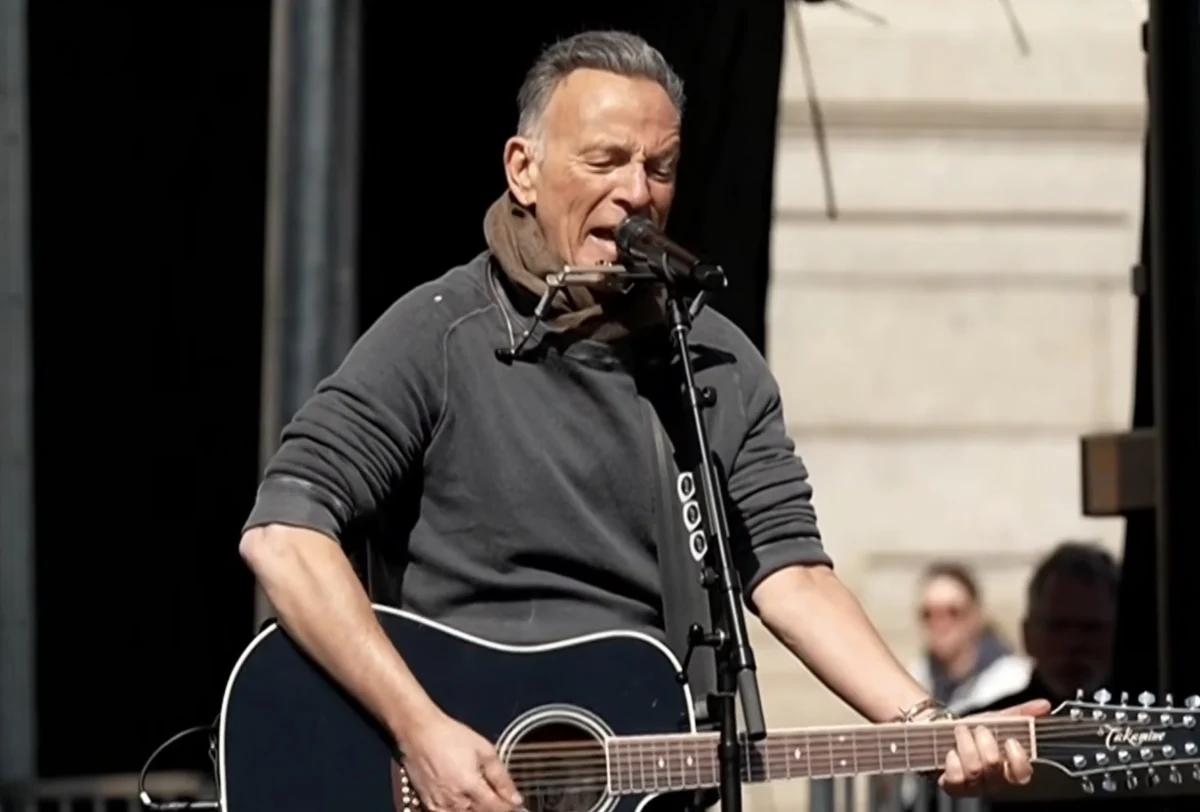
HangupsMusic.com – St. Paul, Minnesota, The Boss, Bruce Springsteen, delivered a potent message of solidarity and defiance on Saturday, commanding the stage at the influential No Kings rally held on the historic grounds of the Minnesota State Capitol. In a performance steeped in emotional resonance, Springsteen unveiled "Streets of Minneapolis," a composition that has swiftly become an anthem for resistance, before a crowd estimated in the tens of thousands, their collective spirit palpable in the crisp autumn air.
The legendary musician’s appearance was more than a mere concert; it was a rallying cry, a testament to the enduring power of community in the face of perceived oppression. As the afternoon sun cast long shadows across the capitol dome, Springsteen, known for his unwavering commitment to the American working class and his profound social commentary, addressed the assembled multitude with a voice brimming with conviction. "Just last winter," he began, his words cutting through the hum of the crowd, "federal forces descended upon the avenues of Minneapolis, bringing with them a shadow of mortality and dread. Yet, in their misjudgment, they chose the wrong urban landscape." The declaration hung in the air, a bold challenge to authority, met with resounding cheers and applause.
Springsteen’s speech continued, painting a vivid picture of the resilience he witnessed. He lauded the "unyielding strength and profound unity displayed by the populace of Minneapolis and the broader Minnesota community," describing it as a beacon of hope for the entire nation. "Your resolve, your steadfastness, served as a powerful reminder that this remains America, a land where such a regressive nightmare – these unwarranted incursions into our cities – simply cannot prevail. You instilled in us courage; you reignited our hope." His voice, though familiar from countless arenas, carried a raw, unvarnished sincerity that resonated deeply with the politically engaged audience.
The emotional core of Springsteen’s address arrived as he somberly invoked the names of those lost in the turmoil that inspired his new work. He spoke of Renee Good, a devoted mother of three, whom he described as "brutally taken," and Alex Pretti, a dedicated VA nurse, "executed by Immigration and Customs Enforcement." The gravity of his tone intensified as he recounted their tragic fates: "Shot from behind and left to perish on the very streets, denied even the basic dignity of an inquiry by our own government, which has seemingly abandoned its principles of law." He pledged that "their valor, their ultimate sacrifice, and their names will forever be etched in our collective memory." It was a moment of profound remembrance, transforming the political rally into a solemn memorial before transitioning into a defiant musical act. Following this heartfelt tribute, Springsteen launched into the opening chords of "Streets of Minneapolis," its melody a somber yet resolute narrative of sorrow and resilience.
The genesis of "Streets of Minneapolis" lies in the very events Springsteen recounted. Penned and recorded in the immediate aftermath of the harrowing ICE shootings that claimed Renee Good and Alex Pretti, the song quickly became a potent symbol of protest and a lament for justice. Springsteen had previously spoken about the critical timing of the "No Kings" movement. In an earlier conversation with The Minnesota Star Tribune, he articulated his artistic philosophy: "There are moments when the opportunity arises to perform a piece where the timing is absolutely paramount. If you possess a powerful narrative to convey through song, it elevates the entire experience, transforming your role into something far more significant." This sentiment underscored the weight he placed on his musical contribution to the ongoing struggle.
The song had seen its live debut earlier in the year, on January 30th, at a benefit concert hosted at Minneapolis’ iconic First Avenue venue. That performance, too, had been a moment of profound connection, a communal expression of grief and resolve. Reflecting on that initial live rendition, Springsteen shared with the Minnesota Star Tribune: "There are specific instances where you find yourself in precisely the right place at the opportune moment, and something profoundly meaningful unfolds, something that transcends the band itself. It is entirely intertwined with the unfolding events of the day, the specific epoch you inhabit." He concluded, "And in that regard, being in Minneapolis [in January] ascends directly to the pinnacle of meaningful performances I have ever given." The resonance of the song, therefore, was not merely its lyrical content but its timing, its direct address to recent, traumatic events, and its ability to channel collective emotion.
Saturday’s St. Paul performance marked the third time Springsteen had brought "Streets of Minneapolis" to a live audience, each rendition deepening its impact and widening its reach. His second performance had taken place earlier in the week at Democracy Now!‘s 30th-anniversary celebration in New York, further cementing the song’s status as a contemporary protest anthem on a national platform. The repeated performances underscore the song’s growing importance in the national dialogue surrounding civil liberties and governmental accountability.
The St. Paul rally also served as a prelude to a much-anticipated musical journey. Springsteen and the legendary E Street Band are poised to commence their "Land of Hope and Dreams Tour" this coming Tuesday, with Minneapolis chosen as the poignant starting point. The tour, as Springsteen revealed to The Star Tribune earlier in the week, is designed to be overtly "political and highly pertinent to the current state of affairs across the nation." His deliberate choice of Minneapolis to inaugurate the tour and Washington D.C. to conclude it is laden with symbolic significance, framing the journey as a cross-country narrative of advocacy and engagement. This strategic itinerary suggests a conscious effort to trace a path from the ground zero of recent civil unrest to the very heart of national power, amplifying the tour’s political message.
Springsteen’s career has long been characterized by his unwavering commitment to giving voice to the voiceless, to articulating the struggles and aspirations of ordinary Americans. From the industrial landscapes of New Jersey to the battlefields of Vietnam and beyond, his music has consistently served as a mirror reflecting the social and political realities of his time. "Streets of Minneapolis" and the "Land of Hope and Dreams Tour" are the latest iterations of this enduring artistic and activist legacy, firmly positioning him as a vital commentator on the contemporary American experience. His presence at the No Kings rally was not just a performance; it was a reaffirmation of his role as a chronicler of conscience, a musical advocate for justice, and a rallying point for those who believe in the power of collective action to shape the nation’s destiny. The roar of the crowd in St. Paul was not merely for a rock star; it was for a voice that articulated their hopes, their fears, and their unyielding determination to confront injustice.
