
 By Azzam Bilal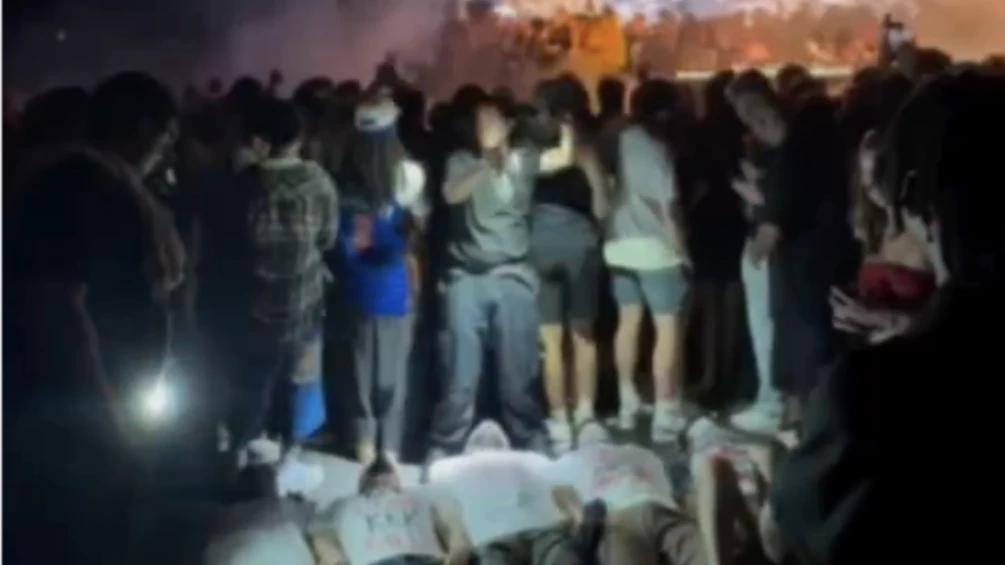
HangupsMusic.com – Brooklyn, the industrial landscape beneath the Kosciuszko Bridge, usually a site for the rhythmic pulse of electronic music, became a flashpoint for political unrest and ideological division last weekend. Boiler Room, the global broadcast platform that has long positioned itself as a champion of underground culture, found its New York City showcase transformed into a theater of protest. Over the course of a two-day residency at the Under The K Bridge venue, the event was marked by organized disruptions, physical altercations, and a coordinated "counter-rave" that highlighted a growing rift between the brand’s corporate ownership and the community it purports to represent.
The demonstrations were spearheaded by the "Boycott Room" movement, a grassroots coalition of activists and artists who have grown increasingly critical of Boiler Room’s parent company, Superstruct Entertainment. Superstruct, a behemoth in the live music industry, is a subsidiary of KKR (Kohlberg Kravis Roberts), one of the world’s most powerful American private equity firms. The activists’ grievances are rooted in KKR’s extensive investment portfolio, which includes significant stakes in sectors that many in the electronic music community find ethically untenable, including weapons manufacturing, the controversial Coastal GasLink Pipeline, and Israeli technological infrastructure and data centers.
The weekend began on Friday, July 10, with protesters establishing a presence at the venue’s entrance. Activists distributed literature to attendees as they queued for entry, detailing the financial links between the ticket prices they paid and the global investments of KKR. The leaflets aimed to strip away the curated aesthetic of the event to reveal the underlying corporate machinery, specifically highlighting KKR’s $1 billion investment in Israeli underground data centers and its role in funding projects that activists argue are complicit in environmental degradation and regional conflict.
As the music began inside, the protest moved from the gates to the dance floor. A group of demonstrators who had successfully entered the venue staged a "die-in," a form of silent protest where participants lie on the ground to symbolize the victims of violence. Wearing t-shirts and holding placards featuring the images of those killed in the ongoing conflict in Palestine, the group created a somber visual contrast to the high-energy environment of the rave. However, the atmosphere quickly soured. Social media footage captured during the event appeared to show a segment of the audience reacting with hostility toward the protesters. In several videos, attendees are seen verbally berating the demonstrators, with some clips appearing to show physical shoving and attempts to forcibly remove the activists from the space.
The friction did not subside as the event moved into its second day on Saturday, July 11. The disruptions took a more direct form when an activist managed to bypass security and reach the main stage. In a high-visibility act of sabotage, the protester unplugged the DJ equipment, momentarily silencing the music. Before being intercepted and removed by security personnel, the individual revealed a shirt emblazoned with the message: "Boiler Room is Owned By Israeli Arms Investors." The moment served as a jarring reminder that for many, the dance floor is no longer a space where global politics can be ignored.
Simultaneously, a few miles away in Ridgewood, Queens, a different kind of resistance was taking place. The "Boycott Room" movement, in collaboration with the Cultural Solidarity Project and the collective Heads Know, organized a "counter-rave" at the venue Trans-Pecos. This alternative event served as a sanctuary for those who felt that the official Boiler Room showcase was ideologically compromised. The lineup for the counter-rave was particularly significant, as it featured several artists who had originally been approached to perform at the Boiler Room event but had declined the invitation on ethical grounds. By hosting a two-stage event that mirrored the musical diversity of the original showcase without the corporate baggage, the organizers sought to prove that a vibrant music scene could exist independently of private equity funding.
A spokesperson for the "Boycott Room" movement issued a scathing critique of the brand’s current standing. The statement argued that Boiler Room’s stated values—often centered on inclusivity, diversity, and the support of marginalized voices—are fundamentally at odds with its financial structure. "No matter what Boiler Room claims are their values, this is the reality of what and who they support," the statement read. The group went on to demand that the platform disband entirely under its current ownership, asserting that any attempt to remain "pro-Palestine" while under the KKR umbrella was an exercise in hypocrisy. "Otherwise, they will meet resistance everywhere they go," the collective warned.
In the wake of the weekend’s events, Boiler Room issued a formal statement to Resident Advisor, focusing primarily on the reports of violence against protesters. The company acknowledged the existence of footage showing attendees acting aggressively toward activists, stating that such behavior "has no place at our events." While the platform reaffirmed its respect for the right to peaceful protest and emphasized its commitment to the well-being of all attendees, it stopped short of addressing the specific financial criticisms regarding KKR. Instead, Boiler Room encouraged anyone who believed they had been a victim of a crime to report the matter to the police, a move that some critics viewed as a deflection of their own responsibility to provide a safe and ethically sound environment.
This is not the first time Boiler Room has faced scrutiny over its sale to Superstruct Entertainment. Last year, following the acquisition, the platform attempted to get ahead of the backlash by issuing a statement clarifying its political stance. At the time, the brand described itself as "unapologetically pro-Palestine" and conceded that KKR’s investment portfolio "categorically do not align with our values." This admission, however, has done little to satisfy activists who argue that "values" are meaningless if the profits generated by the brand continue to flow to a firm like KKR.
The Palestinian Campaign for the Academic and Cultural Boycott of Israel (PACBI) has also weighed in on the controversy. In a previous statement, PACBI called on all music events owned by Superstruct to distance themselves from KKR’s investments, particularly those linked to Israel’s tech sector. The organization argues that the electronic music world is being used as a form of "artwashing," where corporate entities leverage the cultural capital of underground music to mask or sanitize their involvement in controversial industries.
The events in Brooklyn represent a broader trend in the global music industry, where the consolidation of independent brands into massive corporate portfolios is meeting fierce resistance from the ground up. For over a decade, Boiler Room was seen as the gold standard for documenting global club culture, bringing the sounds of local scenes to a worldwide audience. However, as the brand grew from a webcam in a London boiler room to a multi-million dollar asset, its relationship with its core audience has become increasingly strained.
The protest at Under The K Bridge highlights a fundamental question facing the modern music industry: Can a brand maintain its "underground" credibility when its ultimate beneficiaries are titans of global finance? For the activists who stood in the rain in Brooklyn and the artists who chose the DIY stage of Trans-Pecos over the high-definition cameras of Boiler Room, the answer appears to be a definitive no. As the electronic music community continues to grapple with these issues of ownership and ethics, the "resistance" promised by the Boycott Room movement suggests that the era of corporate-sponsored raves may face its most significant challenge yet. The pulse of the music may continue, but the silence that followed the unplugging of the equipment on Saturday night may be the sound that echoes longest in the minds of the industry.
