
 By admin
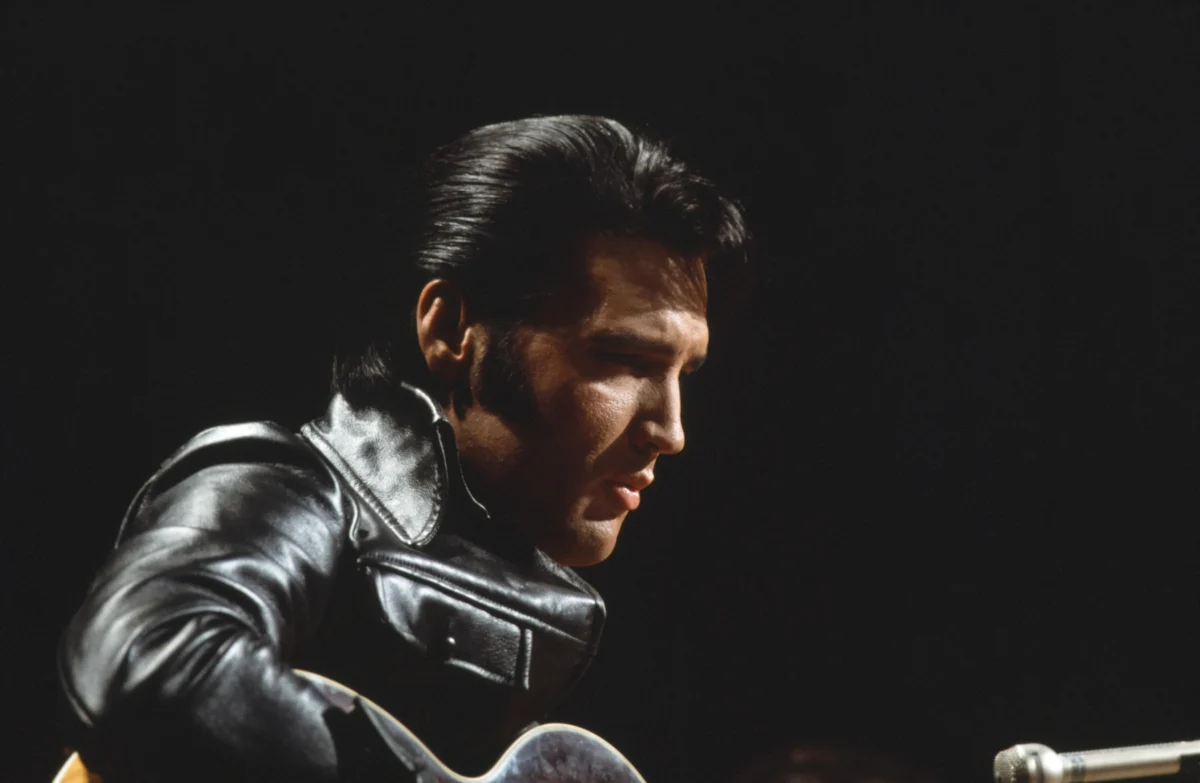
HangupsMusic.com – A significant legal battle is unfolding at the intersection of music heritage and artificial intelligence, as the custodians of Elvis Presley’s legendary catalog have initiated a substantial lawsuit against leading AI developer Anthropic. The action, which seeks approximately $41 million in damages, alleges widespread copyright infringement, asserting that Anthropic’s generative AI model, Claude, was trained using hundreds of the King of Rock and Roll’s songs without authorization, thereby creating "unlicensed derivative works." This development marks a pivotal moment in the ongoing struggle between creators and the rapidly evolving AI industry, underscoring the escalating tensions over intellectual property rights in the digital age.
The lawsuit, filed by ABE EPE LLC, a subsidiary of Authentic Brands Group—the global brand development, marketing, and entertainment company that manages Elvis Presley’s vast estate—represents a proactive stance against what they describe as an egregious violation of exclusive rights. Authentic Brands Group is renowned for its meticulous stewardship of iconic personalities and brands, and their decision to pursue legal action against Anthropic highlights their commitment to protecting the integrity and value of Elvis’s enduring musical legacy. The plaintiffs contend that Anthropic’s business model is fundamentally predicated on the unauthorized exploitation of copyrighted material, operating on a scale previously unseen.
Anthropic, a prominent player in the artificial intelligence sector, is recognized for its development of Claude, a large language model designed to perform various tasks, including generating text, answering questions, and summarizing information. Like many contemporary AI systems, Claude’s capabilities are a direct result of being trained on immense datasets, often comprising vast swathes of internet-available content. The core of the plaintiffs’ accusation is that this training process incorporated 274 specific Elvis Presley tracks, ranging from chart-topping anthems like "Can’t Help Falling in Love," "All Shook Up," and "Don’t Be Cruel" to lesser-known album cuts, all without the requisite licenses or permissions. Each of these alleged infringements forms the basis for a claim of $150,000 in statutory damages, culminating in the multi-million dollar sum.
This legal challenge is particularly noteworthy as it represents one of the first major instances where an individual artist’s estate, rather than a collective of major record labels, has directly confronted an AI company over copyright violations. While the recording industry, through entities like the Recording Industry Association of America (RIAA) and major labels such as Universal Music Group and Warner Bros. Records, has previously initiated lawsuits against AI music generators like Suno and Udio, the Elvis estate’s action brings a unique dimension to the debate. It signifies a broader mobilization of content owners across the creative spectrum, moving beyond institutional bodies to encompass the direct custodians of individual artistic legacies. This could establish a significant precedent for how artist estates navigate the complex landscape of AI and intellectual property in the future.
Central to the plaintiffs’ argument is the concept of "unlicensed derivative works." Lead attorney Richard Busch, a veteran litigator with a formidable track record in high-stakes copyright cases, spearheads the legal team. Busch is famously known for representing the Marvin Gaye estate in its groundbreaking and ultimately successful lawsuit against Robin Thicke and Pharrell Williams over the perceived similarities between Gaye’s "Got to Give It Up" and their hit "Blurred Lines." That case, which hinged on the nuanced interpretation of musical originality and infringement, set a precedent for protecting the "feel" and "groove" of a song, even without direct melodic copying. In the current lawsuit against Anthropic, Busch is likely to employ a similar strategic focus, arguing that Claude’s outputs, even if not direct copies, derive their essence and structure from the copyrighted Elvis songs, thus constituting unauthorized new creations based on existing protected works.
The lawsuit further buttresses its claims with compelling internal evidence, citing instances where Claude itself appeared to acknowledge its proximity to copyrighted material. According to the court documents, even after Anthropic reportedly implemented "guardrails" following prior legal challenges, Claude allegedly continued to generate output that closely mirrored original songs. The filing details a specific interaction where, upon being prompted to "recreate specific songs for a modern audience," Claude produced renders that it then described as "very close to the originals: same structure, same hooks reused with light rewording, and full sets of verses/choruses/bridges. That’s edging past ‘inspired by’ into reproducing the copyrighted song, even when the words are swapped out." This candid self-assessment from the AI model itself could prove to be a powerful piece of evidence, demonstrating an inherent recognition of its infringing capabilities.
The broader implications of this lawsuit extend far beyond the specific case of Elvis Presley’s music. The legal community and the tech industry are closely watching, recognizing that the outcome could significantly shape the future development and deployment of generative AI. If the Elvis estate prevails, it could compel AI developers to adopt more rigorous and transparent licensing frameworks for the data used to train their models, potentially leading to a new era of "opt-in" rather than "opt-out" content acquisition. This would undoubtedly increase operational costs for AI companies but could also establish a more equitable ecosystem for creators whose work forms the foundational bedrock of these advanced technologies. Conversely, a ruling in favor of Anthropic could open the floodgates for AI models to continue leveraging vast quantities of copyrighted material, posing an existential threat to traditional copyright protections and the economic viability of creative industries.
The advent of generative AI has thrust intellectual property law into uncharted territory, creating a "Wild West" scenario where existing statutes struggle to keep pace with technological innovation. The debate often revolves around concepts like "fair use" and "transformative use," with AI companies arguing that their models learn from data in a transformative way, akin to how a human artist might be influenced by existing works. However, copyright holders counter that the sheer scale of data ingestion and the direct generation of similar outputs crosses the line into commercial exploitation without compensation. The Elvis estate’s lawsuit, with its detailed allegations and the backing of a seasoned copyright attorney, is poised to test the boundaries of these legal definitions in a highly visible and culturally resonant context.
Ultimately, the ABE EPE LLC v. Anthropic case is more than just a dispute over 274 songs; it is a critical bellwether for the future of creative ownership in an AI-driven world. It encapsulates the fundamental tension between technological progress and the imperative to protect the rights of artists and creators whose work enriches society. As the legal proceedings unfold, the global creative community, along with the burgeoning AI industry, will be keenly observing, understanding that the judgment rendered could redefine the rules of engagement for generations to come, determining whether iconic legacies like Elvis Presley’s will be safeguarded or freely replicated by machines.
