
 By Azzam Bilal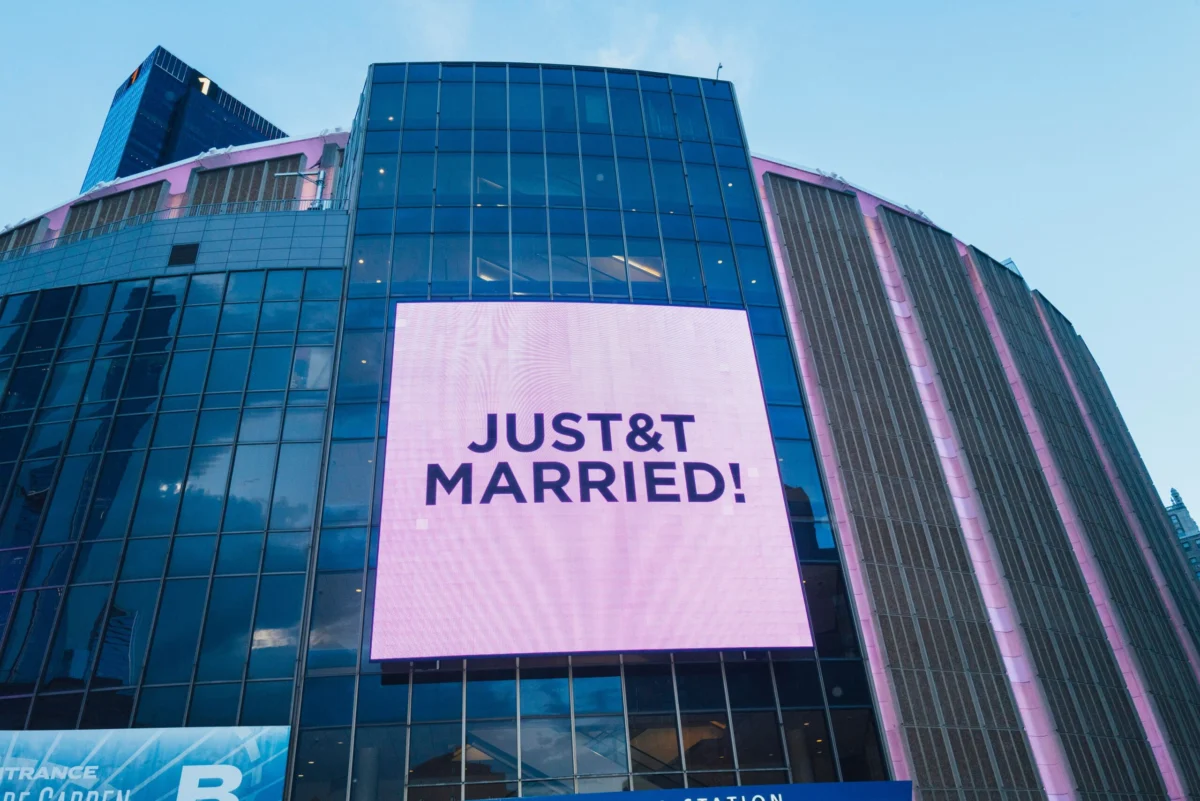
HangupsMusic.com – New York, In an unprecedented departure from standard operating procedures at one of the world’s most heavily monitored entertainment venues, Madison Square Garden (MSG) reportedly disabled its internal surveillance and facial recognition systems to accommodate the private wedding of Taylor Swift and Travis Kelce. According to a detailed investigative report from Wired, the Manhattan landmark—often referred to as "The World’s Most Famous Arena"—took the extraordinary step of locking its own security personnel out of the building’s sophisticated camera network. This blackout, which occurred over two days in early July, has sparked intense debate regarding the intersection of celebrity influence, corporate surveillance, and the ethics of biometric data collection.
The report, authored by investigative journalist Noah Shachtman, indicates that the surveillance shutdown was split into two distinct windows. On July 2, during the couple’s rehearsal dinner, the system was deactivated for seven hours. This was followed by a similar lockout on July 3, the day of the wedding ceremony itself. During these periods, the venue’s security staff were unable to access the Genetec software that powers the building’s vast array of cameras and facial recognition tools. While MSG’s external-facing cameras remained operational to monitor the perimeter and public sidewalks, the interior of the facility became a digital "dead zone" for the venue’s own monitoring team.
Internal memos obtained by Wired categorize the shutdown as a response to a "client privacy request." While high-profile clients often request enhanced security or non-disclosure agreements, the total deactivation of a major venue’s surveillance infrastructure is described by industry insiders as nearly unheard of. Anonymous sources cited in the report noted that even massive corporate entities and government agencies—including NBCUniversal, Warner Bros. Discovery, and the New York Police Department (NYPD)—have never been granted such a concession during private events held at MSG-owned properties. The decision highlights the unique leverage wielded by Taylor Swift, whose "Eras Tour" and personal life have become significant drivers of local economies and media cycles globally.
The technical backbone of Madison Square Garden’s security is the Genetec system, a high-end security platform that integrates video surveillance with biometric scanning. Under normal operations, guests entering the arena pass through scanners that can identify individuals based on facial geometry. Once inside, the software allows security operators to track a specific person from camera to camera throughout the entire complex, creating a seamless "digital breadcrumb trail." For the Swift-Kelce wedding, these capabilities were not only silenced but the staff responsible for monitoring them were physically and digitally barred from the interface. Furthermore, reporting from CNN suggests that the wedding party and their high-profile guests bypassed the standard biometric checkpoints entirely by utilizing a separate, highly restricted private entrance.
This revelation comes at a particularly sensitive time for Madison Square Garden and its CEO, James Dolan. The venue is currently embroiled in a series of legal and public relations battles over its use of facial recognition technology. Dolan has faced significant criticism for utilizing the system to identify and eject individuals on a "blacklist," which reportedly included lawyers from firms engaged in litigation against MSG. The venue’s "talent database" has also come under fire for its perceived intrusiveness. This database was thrust into the spotlight recently when the criminal hacker collective known as ShinyHunters allegedly leaked internal files containing information on nearly 40,000 celebrities.
The leaked database reportedly categorized public figures by a variety of metrics, including a "risk level," as well as sensitive personal data such as race, gender, and sexual orientation. Shachtman’s reporting revealed that several attendees of the Swift-Kelce wedding were already flagged within this database with specific "risk scores." Among those listed were pop star Selena Gomez and her husband, producer Benny Blanco, as well as rising star Benson Boone and rapper Ice Spice. The existence of such a database has led to accusations that MSG maintains a "shadow" monitoring system that goes far beyond the requirements of standard event security.

The decision to go dark for Swift and Kelce creates a striking paradox. While the venue has fought tenaciously in court to defend its right to use facial recognition as a tool for "safety and security," it proved willing to dismantle that very same safety net at the request of a sufficiently powerful client. This has led privacy advocates to question whether the surveillance systems are truly about public safety or if they are instead tools of corporate control that can be toggled on and off based on the social status of the attendees.
Representatives for Madison Square Garden have pushed back against the narrative presented in the Wired report. In statements regarding the "talent database," a spokesperson for the venue labeled the information "inaccurate and false." The company is currently engaged in legal proceedings against the publication, alleging that the reporting on their surveillance practices has been defamatory. However, the internal memo confirming the "client privacy request" for the July wedding suggests that the venue’s internal protocols are more flexible than previously admitted.
The scale of the wedding itself necessitated a massive logistical undertaking. Taylor Swift, a 14-time Grammy winner, and Travis Kelce, a three-time Super Bowl champion with the Kansas City Chiefs, have become arguably the most scrutinized couple in the world. Their union at Madison Square Garden was treated with the level of secrecy usually reserved for heads of state. By disabling the cameras, the venue ensured that no "leak" could occur from within its own security ranks—a move likely intended to prevent unauthorized photos or videos of the private ceremony from reaching the tabloid market.
However, the security blackout also raises questions about the physical safety of the event. In the absence of the Genetec tracking system, the burden of security fell entirely on human personnel and private security details brought in by the couple. While outside-facing cameras provided some level of monitoring for the building’s exterior, the interior was effectively shielded from the venue’s standard oversight. For a building that holds nearly 20,000 people and serves as a major hub in midtown Manhattan, the temporary suspension of its primary security tool is a significant deviation from post-9/11 security norms in New York City.
The fallout from this report is expected to continue as privacy watchdogs and legal experts examine the implications. If a private citizen or celebrity can "buy" a blackout of biometric surveillance, it challenges the argument that such systems are a non-negotiable necessity for public order. Conversely, it highlights the extreme measures public figures must take to secure a modicum of privacy in an age of constant digital observation.
As of this writing, representatives for Taylor Swift have not officially commented on the Wired report or the specific security arrangements made with Madison Square Garden. The venue continues to operate its facial recognition systems for standard concerts and sporting events, including New York Knicks and Rangers games. However, the precedent set during the first week of July suggests that for the right client, the "eyes" of the Garden can, indeed, be closed. The incident remains a focal point in the ongoing conversation about how much privacy we are willing to trade for security—and who, exactly, is allowed to opt out of that bargain.
