
 By admin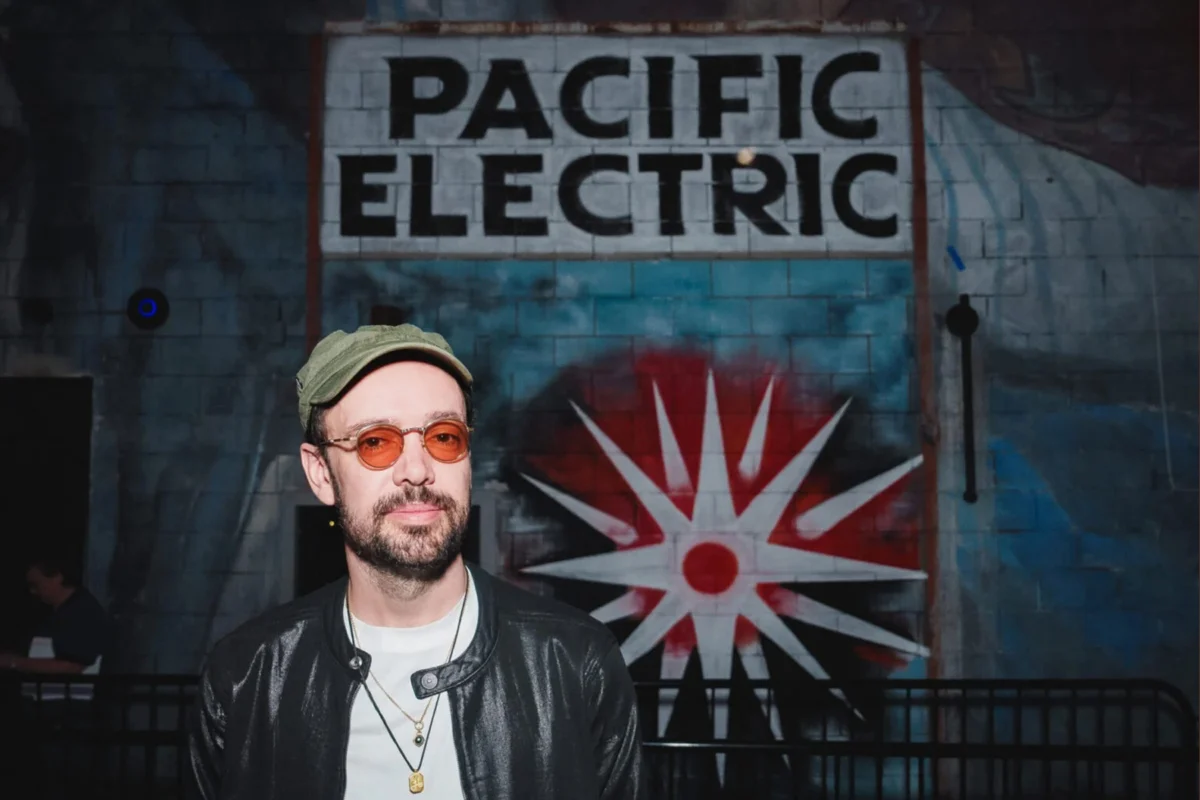
HangupsMusic.com – From the earliest days of meticulously crafted mixtape party favors, Ben Lovett, the acclaimed keyboardist and songwriter for Mumford & Sons, has possessed an innate drive to orchestrate memorable moments. "I’ve always wanted to guide people through some sort of an experience that I can make sure is optimal, fun, and meaningful," he reflects, a sentiment that now extends far beyond the confines of a birthday celebration. Lovett, 39, has spent the last decade channeling this passion into a burgeoning venture: TVG Hospitality, a company dedicated to conceiving, constructing, and revitalizing music venues across the United States. His latest endeavor, Pacific Electric, a 750-capacity club in downtown Los Angeles, stands as a testament to this philosophy, generating significant buzz for daring to plant roots in an urban landscape still navigating post-pandemic recovery.
Opened in March, Pacific Electric has become a beacon in a commercial district bordering Chinatown and the historic Los Angeles River. Lovett’s vision for the space is not merely transactional but transformative—an ambition to foster a venue that organically evolves with its surroundings, becoming an enduring cultural touchstone for both established residents and new arrivals. As he discusses these aspirations from a Zoom call en route to Atlanta, the conversation pivots to the profound impact music venues can have on urban ecosystems. Lovett posits that the number of truly defining music spaces within any given city is surprisingly small, yet their influence is disproportionately large. "Often cities are made up of a handful of these spaces that define them," he observes. "Behind each one of those there was a person or group of people with a dream and a vision. Then bars, restaurants, retail stores, record stores, and thrift stores pop up, and then people choose to live nearby."
This observation leads to a broader philosophical point: "I think we often lose track of how simple we are as human beings. Weirdly, to get to that simple truth, you need to work through a bunch of complications to then make things simple." This "simple truth" – the human desire for shared experience and community – underpins the complex undertaking of launching or restoring a live music venue. The path from a visionary concept to a thriving reality is fraught with intricate details: navigating city permits, orchestrating construction, managing the grand opening, and facing the ultimate uncertainty of whether a new space will genuinely revitalize, strengthen, or inadvertently displace a community. This challenge is particularly acute in the current economic climate, where an escalating affordability crisis, driven by rising costs for essentials like housing, healthcare, and groceries, places immense pressure on the live music industry.
Indeed, the landscape for independent and mid-sized venues is precarious. Nightclubs and smaller concert halls continue to shutter nationwide, while the lion’s share of revenue in the live events sector flows to superstar artists commanding arena and stadium tours. In this context, the decision to invest millions in renovating and reopening a mid-sized concert venue in 2026 might appear to some as an audacious, even perilous, gamble. So, what compels these individuals to embark on such endeavors?
"If you look at the business plan for someone who wants to be a concert promoter, it’s pretty insane," admits Mary Conde, Senior Vice President of Another Planet Entertainment (APE). "You have no guarantee of any income and you put up all the money. What kind of business plan is that?" Yet, APE, a prominent West Coast promoter, embraced this "insane" challenge in 2022, undertaking a monumental $41 million restoration of San Francisco’s venerable Castro Theatre. A century after its original opening, the iconic landmark had suffered decades of neglect. Architect Timothy L. Pflueger’s original design elements were in disarray: clay tiles had crumbled, water infiltration in the basement had caused significant erosion, and rebar was encrusted with rust. Conde recounts the formidable scale of the task: "Asbestos was very popular in the Twenties. So was lead paint. It was a building that really needed an intervention."

During the extensive construction phase, a segment of the local community expressed apprehension regarding APE’s involvement, fearing a dilution of the theater’s historic character. However, Conde emphasizes the critical need for modernization. Prior to the rehabilitation, the theater lacked fundamental contemporary amenities, including ADA accessibility and central air conditioning. "In 10 or 15 years, [the venue] would have started crumbling," she warns. "It needed to be rescued." The meticulous five-year renovation process culminated in the Castro Theatre’s grand reopening in February, marked by a residency from acclaimed singer Sam Smith. The venue now seamlessly operates as both a concert hall and a movie theater, steadfastly upholding its historical roots through a rich program of queer cinema and events. Pflueger’s original architectural flourishes have been painstakingly preserved, while the entire edifice, from the orchestra pit to the dressing rooms, now boasts full ADA compliance. A significant addition is the installation of the world’s largest symphonic digital organ, a nod to its cinematic past. "We’ve really made it a place where we want it to be inclusive," Conde affirms, highlighting early events such as community fundraisers and screenings organized in partnership with the Castro Community Benefit District and Oasis Arts. "People think of the Castro Theatre like a chapel. It’s a revered space in the LGBTQ+ pantheon of history," Conde states, underscoring APE’s commitment to ensuring its legacy endures.
Beyond enriching the fan experience, these venue operators are equally committed to ensuring that artists remember these spaces fondly when planning future tours. Lovett’s own extensive touring experience with Mumford & Sons provided a crucial insight. "I had a bit of a revelation when touring, when [Mumford and Sons] were coming up through the different spaces," he recalls. "You spend so much time on the road. It doesn’t cost that much more to bring some of those hotel-level amenities to the back of house, where the artists are spending the majority of their day outside of soundcheck."
This philosophy is vividly realized at Pacific Electric, where an artist stepping into the green room might feel as if they’ve entered a spread from Architectural Digest. Gone are the stereotypical dingy couches and worn coffee tables; in their place is a full-fledged suite, complete with a skylight, a piano, a dedicated coffee and bar area, and a walk-in shower. A similar, albeit smaller, luxurious space is provided for opening acts, a gesture that speaks volumes about respect for all performers. "It’s about treating artists with respect," Lovett asserts. "If the artist is happy, then they’re gonna go onstage and play harder and be more relaxed." Stacey Levine, Pacific Electric’s Senior General Manager, echoes this sentiment, praising Lovett’s "great big vision." She reflects on the venue’s genesis: "It was really amazing to watch that come to fruition because Ben definitely had a lot of hand in the design and how he wanted it to feel – a really fan-forward and artist-forward space."
A similar ethos guides Stable Hall, which debuted in San Antonio in January 2024. Nestled within the Pearl, a vibrant downtown neighborhood celebrated for its burgeoning culinary scene, Stable Hall has been booked by Dayglo Presents since 2025. The building itself boasts a rich history, originally constructed in 1894 as stables for the Pearl Brewing Company’s horses. The transformation into a state-of-the-art music venue cost $11 million, featuring brand-new sound systems, six bars, and flexible configurations that allow for multiple seating arrangements, accommodating up to 1,000 patrons. Hannah Gold, Stable Hall’s head talent buyer, prioritizes the artist’s experience. "If I book this room and I put somebody in here, are they going to want to come back?" she asks rhetorically, confident that the venue’s exceptional sound quality and luxurious green room catering will leave a lasting positive impression. "I know that I’m not going to get weird phone calls at 2 a.m. from a disgruntled tour manager."
Like the Castro Theatre, Stable Hall deeply reveres its past. "I think it’s really important to honor and restore things and keep these pieces of our history in place," Gold emphasizes. "It’s really important we don’t erase all of that stuff, because that is what makes a place unique, honors its history, and makes it enjoyable to spend time in." For Pacific Electric, Lovett’s business model embraces inclusivity, welcoming all promoters rather than maintaining exclusivity with a single company. This approach brings Lovett’s journey full circle, aligning with his description of the venue as "a contemporary indie rock & roll club."
Lovett often draws parallels between the immersive experience of stepping into a music venue and the profound effect of listening to a truly great song. "Some of the best things you don’t want to end," he muses. "You might notice a lyric or a countermelody on a guitar that you don’t hear the first time. The song reveals itself subsequently. I like that in design, as well – how you can build up layers and storytelling in that way." He adds that Pacific Electric evokes a sense of nostalgia for his own youth in the late Nineties and early 2000s. "I just loved that era of my life," Lovett reflects. "It felt non-conformist and free. I want Pacific Electric to be there for L.A., where fans and musicians feel like they can be fully expressive." These ventures, born from passion and meticulous planning, are not just about erecting buildings; they are about crafting experiences, fostering communities, and ensuring that the heartbeat of live music continues to resonate across America.
