
 By admin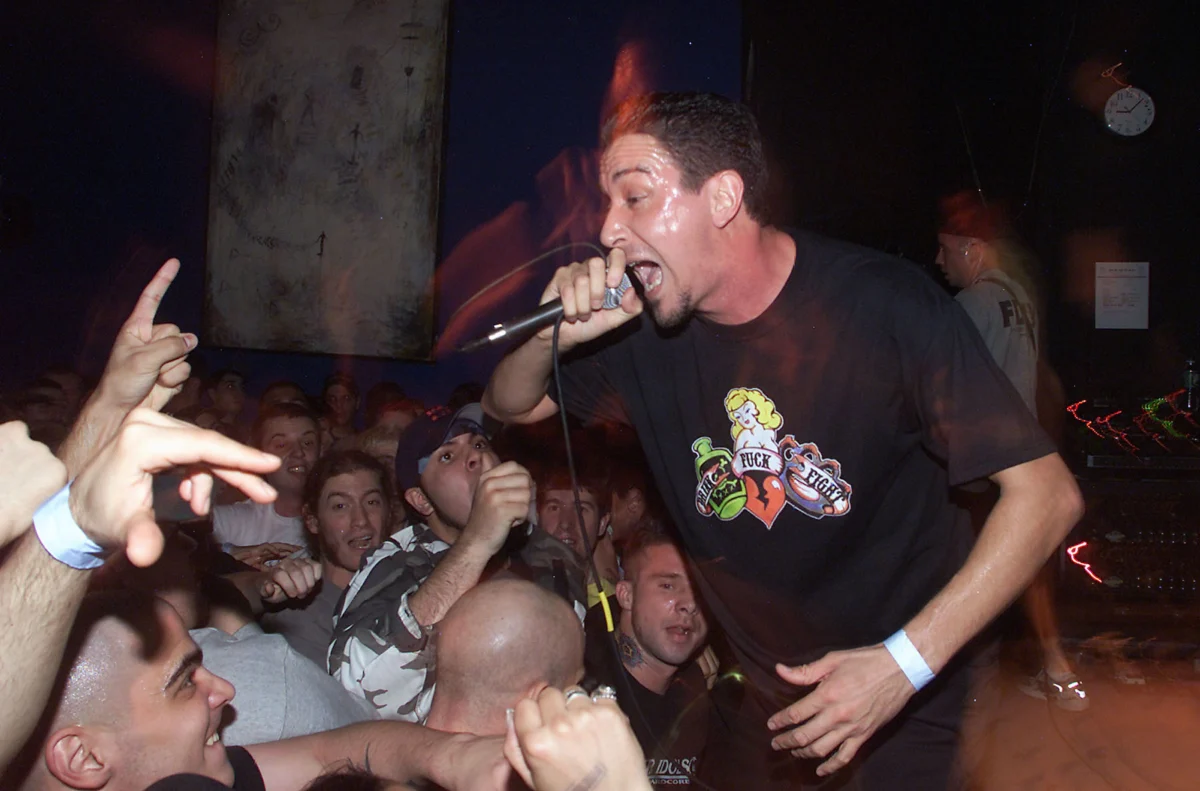
HangupsMusic.com – New York City, The passing of a music icon often leaves a profound silence, but in the case of Lou Koller, the charismatic frontman of New York hardcore legends Sick of It All, his legacy resonates with an enduring roar. Koller, whose death was announced recently, was more than just a vocalist; he was an architect of community, a tireless advocate for camaraderie, and a beacon of hope in a genre often misunderstood for its intensity. For decades, he championed inclusivity and friendship, transforming the raw energy of hardcore into a global message of solidarity that transcended stages and cultural divides.
His unique approach to live performance was a revelation for many. A vivid memory from a Denver gig in 2001, years before relocating to New York, perfectly encapsulates Koller’s philosophy. On the grand stage of the Ogden Theatre, amidst the thunderous anticipation, a microphone stood conspicuously, seemingly placed for any fan to grab, sing along, and then plunge back into the fervent mosh pit. This gesture, unheard of in the metal circles the author was accustomed to, showcased a radical accessibility. Koller didn’t just invite participation; he actively facilitated it, urging everyone in the pit to look out for one another—a foundational tenet of the NYHC scene that had been cultivated over decades.
The intimacy of these interactions was legendary. During that same Denver show, one particularly enthusiastic fan repeatedly called out for "Rat Pack," a blistering, sub-minute anthem from the band’s seminal debut, Blood, Sweat, and No Tears, celebrating the unbreakable bonds of friendship. When Koller, with characteristic generosity, handed over the crowd mic, the fan’s excitement unfortunately eclipsed his memory of the lyrics. Koller’s response, far from reproachful, was delivered with a good-natured chuckle and a gentle reminder: "Eh, eh, not so fast. You have to know the lyrics if you’re going to do that." This momentary public embarrassment was swiftly diffused by Koller’s famous impish grin, a gesture that conveyed immediate forgiveness and reaffirmed his core message: regardless of minor fumbles, everyone was welcome, everyone belonged.
Lou Koller was undeniably Sick of It All’s most welcoming ambassador. His voice, a potent blend of golden growl and articulate projection, allowed him to deliver fierce choruses like "Scratch the Surface" while ensuring its profound message—a call to live a meaningful life—remained crystal clear. Onstage, Koller defied the conventional image of a heavy music frontman. He possessed a disarming, almost dorky charm, a stark contrast to the often brooding personas of his peers. Yet, whether performing in a cramped club or a sprawling arena, he treated every show with the same democratic spirit as a legendary CBGB matinee, where the essence of the performance lay in collective experience and shared passion.
Koller often emphasized this role as a cultural bridge. In a 2018 interview with Kerrang!, he articulated Sick of It All’s mission: “We wanted to show the world what we loved.” This commitment saw them sharing stages with diverse acts, famously opening for thrash giants Exodus on an East Coast run in 1988, surprising audiences with their short-haired, energetic hardcore. While some began to dub them "The Kings of New York hardcore" as their popularity grew, Koller would humbly correct them: “No, no. We’re the ambassadors.” This distinction highlighted their dedication to representing the inclusive spirit of NYHC, rather than merely dominating it.
From their inception in Queens, New York, in 1986, when Lou and his brother, guitarist Pete Koller, formed Sick of It All, the band’s lyrical heart beat with themes of unity. Reflecting on Blood, Sweat, and No Tears for Rolling Stone’s "Greatest Punk Albums of All Time" list, it became clear that Koller’s central tenet was always "We’re in this together." Songs like "Pushed Too Far" and "Friends Like You" became anthems against bullying, while "Just Look Around" on their subsequent album was a prescient warning against societal division fueled by racism and political manipulation—a message that, disturbingly, remains as relevant nearly forty years later. Sick of It All resonated deeply with hard-working individuals navigating daily struggles, offering a powerful soundtrack of resilience and communal strength.
The popular image of New York hardcore, shaped by early trailblazers like Agnostic Front and the Cro-Mags in the early Eighties, often depicted a tough-guy aesthetic, a raw outpouring of rage. Sick of It All deliberately carved a different path. When the author first encountered the group in 1999—featuring bassist Craig "Ahead" Setari and drummer Armand Majidi—it was their boundless energy and pervasive sense of inclusivity that left an indelible mark. Sharing a bill with titans like Slayer and Meshuggah, Sick of It All, despite the author’s admiration for Slayer, stood out. They exploded onto the stage, Pete Koller flipping his guitar with wild abandon, but it was Lou’s consistent smile—a stark contrast to the often stern visages of other frontmen—that solidified their identity as an everyman’s band. "We’re all black sheep and we know it," he would declare in "Hello Pricks" (2000), a sentiment that forged an immediate connection with their devoted following.
Koller himself articulated the essence of their live experience in an interview from the Live in NYC ’91 VHS, which captured the band’s explosive performance at The Ritz alongside Agnostic Front and Gorilla Biscuits. “Our music was written [for] total crowd participation,” he stated. “’Cause that’s how we grew up. Early hardcore was total crowd participation. You know, pile on, sing along, all that stuff. That’s your outlet. It kind of dulls the energy when you have a six-foot barricade from the stage to the audience.” This philosophy was a direct challenge to the growing disconnect between performers and audience, a testament to his belief in collective experience.
The profound impact of Sick of It All extended beyond music. The author’s discovery of the band spurred a deeper dive into New York hardcore, albeit initially limited to the few bands that ventured through Colorado in the early 2000s. Fortuitously, two such groups, Indecision and Most Precious Blood, shared a common thread in guitarist Justin Brannan. Brannan would later channel these NYHC ideals into public service, becoming a council member in New York City politics. His heartfelt social media post addressed to Koller encapsulated the vocalist’s enduring legacy: “You brought hope and positivity to places other bands would never dare go. You made outcast kids all over the world feel seen, accepted, and a little less alone. Thank you for the music, the friendship, and the example you set – especially these last few years. Your impact will be felt.”
Upon relocating to New York in 2003, the author had the privilege of witnessing Sick of It All multiple times on their home turf, including a rare and unforgettable set at the legendary CBGB in 2004. It was within the famously grimy confines of that East Village institution, observing the diverse crowd packed in tight, united in shared revelry, that the true depth of the band’s community ethos became clear. With little room to spare in the mosh pit, a fall was inevitably met with a helping hand. That Sick of It All managed to transplant this deeply rooted ethos to stages in Colorado and across the globe, playing for varied audiences—even famously preceding Wu-Tang Clan at a festival—was nothing short of miraculous. Their commitment to relentless touring saw them performing over 100 gigs a year as recently as 2019, consistently spreading their message worldwide.
When news of Koller’s passing arrived, the immediate mental soundtrack was "Good Lookin’ Out," a track from their fourth album, 1997’s Built to Last. Its lyrics resonate as a timeless echo of Koller’s core message: "You’re not in this all alone/Just look around, and you’ll see/The answer’s right before your eyes: I’m here for you, and you for me." The chorus culminated with his powerful affirmation: "True friends will always be there."
The tangible manifestation of this message came to light when Koller revealed his battle with cancer in 2024 and launched a GoFundMe campaign. The outpouring of support was immediate and overwhelming. Bands like Dropkick Murphys, Rancid, AFI, and Hot Water Music were among the first to contribute, a testament to the profound respect and affection he commanded within the music community. Lou Koller was, for many, New York hardcore’s big brother—a guiding voice who, though he didn’t invent the concept of looking out for one another in the pit, amplified and globalized the spirit of unity. His influence will undoubtedly live on through the countless bands Sick of It All inspired, who will carry his spirit forward in their own performances across the world. That, truly, is a special and enduring legacy. Just look around, and you’ll see.
