
 By Azzam Bilal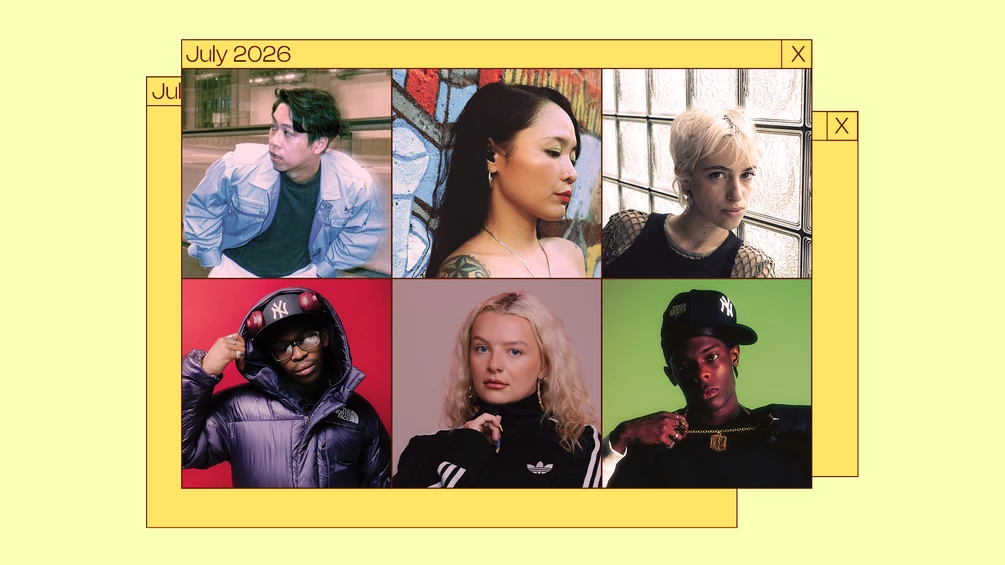
HangupsMusic.com – As the mid-summer heat of 2026 reaches its peak, the global electronic music scene is witnessing a profound shift. The boundaries between regional traditions and futuristic sound design are blurring more rapidly than ever, driven by a new generation of artists who prioritize cultural storytelling as much as dancefloor utility. From the rhythmic complexities of the Philippines to the soul-stirring vocal garage of Northern England, the artists emerging this month are not merely following trends; they are architecting new sub-genres and revitalizing established ones with unprecedented depth. This July, we look at six producers and DJs whose creative output is reshaping the sonic identity of the international club circuit.
At the forefront of the Filipino electronic renaissance is Ezzrei, a multi-faceted artist whose work serves as a bridge between ancestral rhythms and contemporary bass music. Based in the Philippines, Ezzrei’s approach is academic yet visceral, informed by her background in music journalism and a deep-seated desire to explore the cultural weight of sound. After relocating to Siargao Island in 2015, she found herself in a vacuum where the music she craved—complex, low-end-heavy compositions—was non-existent. This absence became the catalyst for her career behind the decks and in the studio. Today, as the founder of the Continuum Bass collective and Kanto Cult Radio, she is the primary architect of a movement that treats bass music not as a rigid genre, but as a fluid philosophy.
Ezzrei’s recent output, including the "Baby Vortex" EP, showcases her ability to weave "pre-colonial Filipino rhythmic traditions" into the framework of dubstep and jungle. Drawing inspiration from the improvisational spirit of Sun Ra and John Coltrane, she treats every layer of percussion as a vital conversationalist within the track. Her work, such as the Celeste Legaspi-sampling "Ang Daigdig Ko’y Ikaw," demonstrates a mastery of "psychedelic" jungle, while her track "Sinta" utilizes the kubing—a traditional bamboo jaw harp—to ground juke and footwork rhythms in Filipino soil. For Ezzrei, the goal is to build an ecosystem that sustains the local scene, ensuring that Filipino electronic music is recognized for its intricate history and forward-thinking potential.
While Ezzrei explores the depths of the Pacific, London-based Nigerian artist Joshua Gadget is capturing the kinetic energy of the dancefloor through a different lens: the body in motion. A former professional dancer who transitioned to DJing following an injury on a film set, Gadget views the DJ booth as an extension of the stage. His philosophy is simple yet profound: "Dancers are the heartbeat of the dancefloor." This lived experience allows him to read a room with surgical precision, often abandoning pre-planned sets to follow the instinctual flow of the crowd.
Gadget has become a pivotal figure in the UK’s Afro-electronic explosion, seamlessly blending amapiano, gqom, and Afro-house with elements of EDM and R&B. His rise has been meteoric, moving from TikTok virality to sharing stages with titans like Uncle Waffles and Skyla Tylaa. Whether he is performing at London’s Fabric or in the club hubs of Lagos and Nairobi, Gadget sees his role as both an entertainer and an educator. By weaving the syncopated rhythms of Southern Africa with the polished sheen of UK production, he is helping to globalize a sound that is as much about cultural pride as it is about high-energy celebration.
In Paris, the aesthetic shifts toward the atmospheric and the patient. Bambi, a resident at the renowned Macadam club, has carved out a niche for herself through "slow-motion soundscaping." In an era of instant gratification, Bambi’s sets are an exercise in restraint, often beginning with lush dub techno and sub-soaked downtempo that "cascades like fog." This "atmosphere first, bangers later" mentality ensures that by the time her sets transition into psychedelic techno or pitched-down Goa trance, the audience is fully submerged in her curated world.
Bambi’s journey from a childhood soundtracked by R&B to the forefront of the French queer party scene is a testament to the power of gradual evolution. A member of the HORS-SOL crew, her music—most recently heard on the "Lotus Glow" release—is designed for specific environments. She frequently notes that her sound resonates most deeply in outdoor settings, where the natural world can complement her organic, evolving textures. For Bambi, the process of creation is a way to manage the anxieties of modern life, turning patience into a professional superpower.
The spirit of experimentation continues in Hong Kong with FINGERGAP, the alias of producer Leo Cheng. Cheng’s work is a daring fusion of two seemingly disparate worlds: the sentimental romanticism of classic Canto-pop and the aggressive, high-speed polyrhythms of Chicago footwork. He compares this stylistic collision to a "Strawberry Matcha Latte"—a combination that could either result in a new sensation or cancel itself out. In Cheng’s case, the result is undeniably the former.
Inspired by the late DJ Rashad’s ability to preserve the emotional core of soul samples, Cheng applies the same logic to Cantonese lyrics. Because Cantonese is a tonal language, the melody of the speech must align with the musical melody to convey meaning. Cheng navigates this complexity with ease, as heard on his single "One Bit Faster," where his silken vocals glide over frantic, syncopated beats. By bridging the gap between Western club subcultures and Eastern pop sensibilities, FINGERGAP is creating a new vernacular for the global electronic community.
In London, the jungle revival is being spearheaded by SIMMS, a producer who has achieved remarkable maturity in a short span of time. While he has only been producing for three years, his work on Passionfruit Records—specifically the "Traversal Tapes" EP—has already drawn comparisons to legends like LTJ Bukem and the golden era of Good Looking Records. SIMMS focuses on the "atmospheric" side of jungle, utilizing cosmic pads and bubbling arpeggios to create a sense of weightless euphoria.
Despite his reverence for the old school, SIMMS is firmly rooted in the present. He draws inspiration from contemporary UK collectives like Distant Planet and Sexy Lady Massive, citing them as the "life force" of the scene. His ability to balance "tearout" energy with soulful R&B bootlegs, such as his "Pretty Ppl Love Jungle" series, makes him a versatile threat in the booth. For SIMMS, the goal is to recapture the "cosmic" feeling of early 90s rave while pushing the technical boundaries of modern sound design.
Finally, we look to Bolton, where Megan Wroe is injecting a dose of Northern grit and pop sensibility into the UK Garage (UKG) scene. Wroe’s sound is a vibrant homage to the club compilation CDs of her youth, filtered through the lens of New School UKG. Her "Lovestep" project—which encompasses a label, an event series, and her latest EP—is a neon-soaked reimagining of the early 2000s, blending "organ-spritzed" melodies with electro-house and trance influences.
Wroe is more than just a producer; she is a songwriter at heart. Her collaborations with Silva Bumpa, such as the track "Without U," highlight her ability to craft "bulletproof" hooks that resonate as much on the radio as they do in a sweaty basement. With plans to expand the Lovestep brand into a broader cultural platform and potentially explore band-based projects, Wroe represents the enduring appeal of the "Bolton girl through-and-through" spirit—unpretentious, melodic, and fiercely energetic.
As July 2026 unfolds, these six artists stand as a testament to the diversity of the modern electronic landscape. Whether they are researching pre-colonial rhythms, dancing through recovery, or blending Canto-pop with footwork, they share a common thread: a refusal to stay in one place. They are the emerging voices of a global scene that is becoming increasingly interconnected, proving that the future of dance music lies in the bold exploration of identity, history, and pure, unadulterated rhythm.
