
 By admin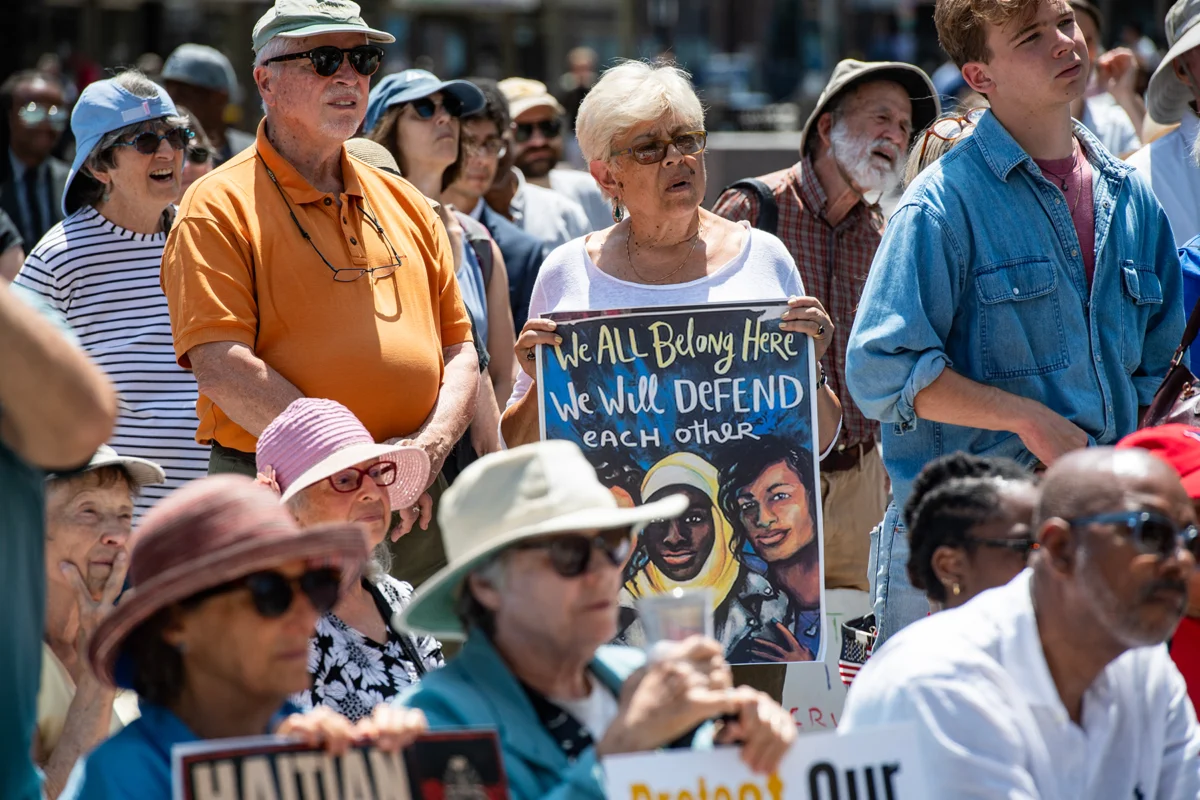
HangupsMusic.com – New York, The United States is witnessing a significant shift in its long-standing immigration policy, as hundreds of thousands of individuals who have built lives within its borders under humanitarian protection now face an uncertain future. This week marks a pivotal moment, as more than 300,000 Haitian immigrants begin to lose their Temporary Protected Status (TPS) designation, a program designed to offer refuge to those fleeing dangerous conditions in their home countries. This move, championed by the Trump administration, is set to initiate widespread upheaval, particularly within vibrant immigrant communities across the nation.
Established in 1990 by President George H.W. Bush, Temporary Protected Status codified a humanitarian principle deeply embedded in America’s ideals: to provide safe harbor for individuals from nations afflicted by armed conflict, natural disasters, or other extraordinary, temporary conditions that prevent their safe return. TPS offers beneficiaries protection from deportation and the ability to legally live and work in the U.S. While intended as a temporary measure, for many, like those from Haiti, the persistent crises in their homelands meant that "temporary" evolved into decades of settled life, fostering families, careers, and significant contributions to American society.
The current administration’s concerted efforts to dismantle this program, spearheaded by top advisor Stephen Miller, gained significant traction with a crucial Supreme Court decision in late June. This ruling, decided 6-3, did not directly affirm the termination of TPS but rather determined that federal courts lacked the jurisdiction to block the administration’s actions regarding the program’s cessation. Writing for the majority, Justice Samuel Alito contended that the original legislative framework for TPS did not include provisions for judicial review of executive decisions to initiate or conclude such designations. This legal interpretation cleared the path for the administration to begin stripping protections from various groups, including Haitians, Syrians, and Salvadorans, who have relied on TPS for years, establishing new lives and contributing significantly to the American economy and social fabric.
Haiti first became eligible for TPS following the devastating 7.0 magnitude earthquake in 2010, which claimed over 300,000 lives, displaced millions, and crippled the nation’s infrastructure. The country has since struggled with a cascade of compounding crises, including a widespread cholera outbreak, persistent political instability marked by assassinations and widespread protests, and dire economic conditions. Most critically, the proliferation and entrenchment of powerful, violent gangs now control vast swathes of the country, disrupting daily life, commerce, and security, making safe return an impossibility for many. Even under the Trump administration, the U.S. State Department consistently issued travel advisories warning of "significant threat" to anyone traveling to Haiti due to ongoing political turmoil and gang violence, highlighting a stark contradiction between the official assessment of conditions on the ground and the decision to end protections.
The immediate repercussions are profoundly felt within Haitian communities nationwide. Murad Awawdeh, President and CEO of the New York Immigration Coalition, conveyed the palpable distress: "We have been hearing from our Haitian neighbors about the devastation that the community is about to face. Unfortunately, there is no other option for these people." In metropolitan areas like New York City, home to approximately 40,000 Haitian immigrants, particularly in the vibrant Caribbean enclave of Flatbush, reports have emerged of Immigration and Customs Enforcement (ICE) agents conducting reconnaissance trips, signaling impending raids. This creates an atmosphere of pervasive fear and uncertainty, forcing families to prepare for potential separation and deportation. "Everything that makes New York, New York is being attacked in this moment," Awawdeh asserted, emphasizing the broader societal impact. "We are all going to be worse off for it."
Adding to the controversy surrounding the decision are the past statements and rhetoric from the Trump administration regarding Haitian immigrants. During the 2024 campaign, the administration repeatedly disseminated racist falsehoods, including baseless claims that Haitian immigrants in places like Springfield, Ohio, were abusing pets. Furthermore, then-President Trump himself controversially referred to Haiti and other nations as "shithole countries" and perpetuated false narratives about Haitian immigrants having AIDS. While Justice Alito, in his ruling, acknowledged the use of "heated language" by the president and his proxies, he ultimately concluded that such statements were not "overtly racial," a determination that drew widespread criticism from civil rights advocates and legal scholars who argued that such language, regardless of explicit racial slurs, implicitly targets national origin in a discriminatory manner.
The TPS program was fundamentally designed to shield specific immigrant groups from physical danger or persecution upon return to their native countries. With Haitians as the initial focus, the administration’s actions signal a broader intent, with TPS protections for Syrian refugees and then Salvadorian immigrants anticipated to end in the coming weeks and months. This systematic dismantling threatens to uproot hundreds of thousands more, many of whom are deeply integrated into American society, owning homes, running businesses, and raising American-born children.
The termination of TPS is expected to have far-reaching economic consequences. These communities represent a vital backbone for numerous industries and local economies. When individuals lose their legal status, they face immediate deportation, which could trigger significant labor shortages and economic disruption. Awawdeh painted a stark picture of the potential fallout: "This moment is where most people are going to realize the contributions of our immigrant communities. When they go to the hospital and they only have one nurse, when they can’t find a home health aide, when construction workers start disappearing en masse." The sudden removal of a stable, experienced workforce could cripple essential services and industries that have come to rely on their contributions.
The move has even prompted some Republican lawmakers to diverge from their party’s stance, particularly in regions with substantial immigrant populations, such as South Florida, which hosts a large Haitian community. Republican Congressman Carlos Giménez, representing a Florida district, openly voiced his dissent. "We don’t see any difference in the political situation in Haiti," Giménez stated recently. "Like I said, some people in the administration seem to think that somehow you say TPS is a bad word. It’s not a bad word. It’s there for a reason. And Haiti and Venezuela are the prime examples of why TPS was established in the first place." His comments underscore a pragmatic recognition of the ongoing crises that necessitate such humanitarian protections.
Despite these objections, the administration has remained unswayed. Following the Supreme Court decision, the Trump administration released a statement asserting, "The Biden Administration weaponized TPS as a backdoor amnesty to flood the country with millions of unvetted migrants – and that loophole is finally closed." This framing highlights a fundamental ideological divide regarding immigration policy, viewing humanitarian protections as loopholes rather than essential safeguards.
In the face of this looming crisis, immigrant advocacy groups are urging families to proactively prepare. Awawdeh advises contacting trusted immigration lawyers and community organizations, understanding their rights, and developing contingency plans for potential arrests or detentions. The administration’s stated long-term goal is to entirely dismantle the TPS system, a prospect Awawdeh attributes to a systemic failure of immigration policy across multiple administrations. "The reality that we find ourselves in is that there is no pro-immigrant party in this moment," he lamented. "Oftentimes you see Republicans say the horrific things but the Democrats put those things into law."
This suggests that even a change in presidential administration might not readily reverse these fundamental shifts in immigration policy. Many of Trump’s changes, like this one, could become permanent fixtures in the nation’s legal landscape. Nevertheless, Awawdeh remains confident in the enduring strength of these communities. "Yes it’s deflating, yes it’s fucked up, yes it’s incredibly gut wrenching – it’s incredibly hard to speak to people who are losing their livelihood," he acknowledged. "But our communities have been resilient forever." The bonds forged, the lives built, and the contributions made will undoubtedly continue to resonate, even as the legal ground beneath them shifts dramatically.
