
 By Azzam Bilal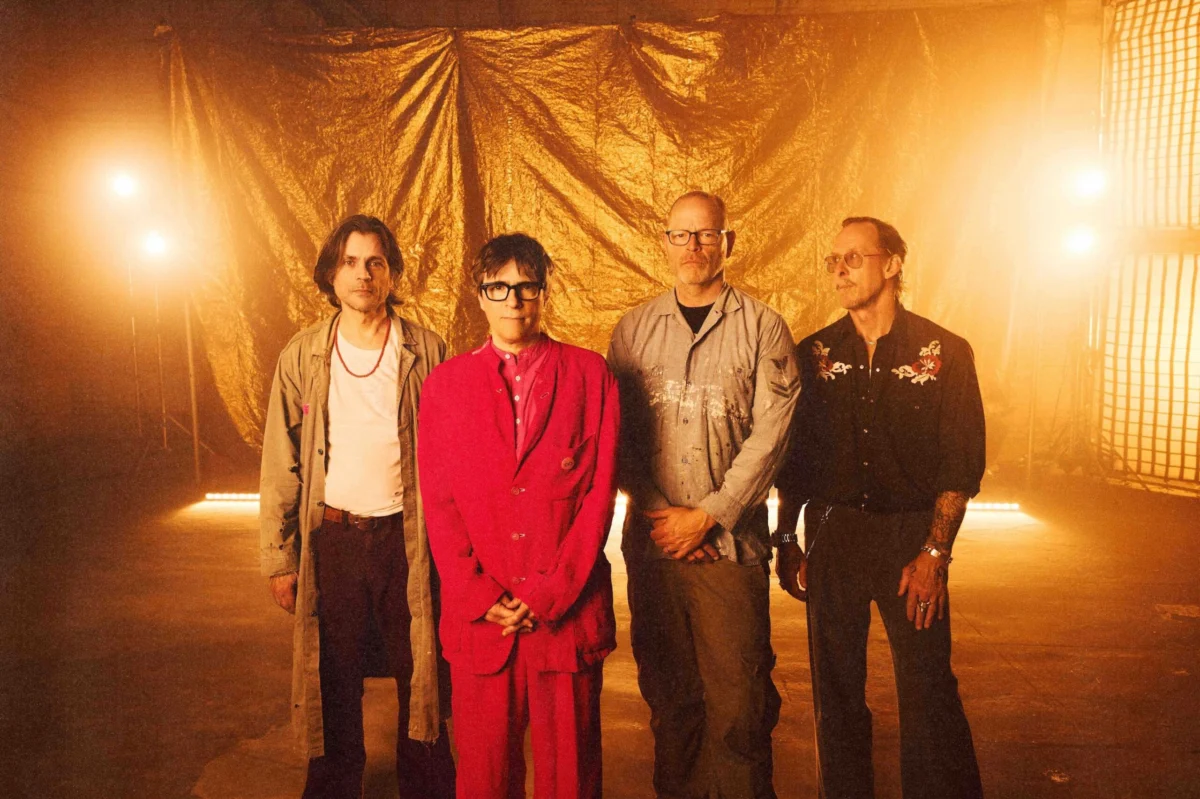
HangupsMusic.com – Los Angeles, The power-pop veterans of Weezer are once again leaning into the meta-narrative of their own storied career, releasing a brand-new single titled "C.E.O." that serves as both a catchy anthem and a biting critique of the music industry’s obsession with nostalgia. As the latest offering from their highly anticipated upcoming project, The Gold Album, the track and its accompanying music video provide a self-aware look at the band’s legacy, specifically referencing the visual language that helped define alternative rock in the mid-1990s. By blending high-concept satire with the signature melodic sensibilities of frontman Rivers Cuomo, Weezer proves they remain masters of the "geek-rock" genre they helped pioneer thirty years ago.
The music video for "C.E.O." is a meticulously crafted parody of the band’s own history. It opens with a quintessential corporate scenario featuring comedic heavyweights Rob Riggle and Rob Huebel. The duo portrays a pair of high-pressure record executives who are less interested in artistic evolution and more concerned with capitalizing on "brand recognition." In a scene that feels like a fever dream of music industry cynicism, Huebel’s character brandishes a "CEO" mug while lecturing Cuomo on the necessity of recycling the past. He insists that the modern audience is "hungry for nostalgia," demanding that the band provide "the old with a new twist." It is a sharp commentary on the current state of the entertainment industry, where reboots, sequels, and legacy acts often take precedence over original creative ventures.
Under the fictional direction of Curry Barker (known for the horror-comedy Obsession), the band is forced to recreate the iconic music video for "Undone (The Sweater Song)," the 1994 classic that launched them into the stratosphere. However, in keeping with the theme of the new album, the original’s famous cerulean backdrop has been replaced with a shimmering, gaudy gold. The "real-world" direction of the clip was handled by Brendan Walter and Jasper Graham, who successfully capture the aesthetic of a band going through the motions under the thumb of corporate overlords.
The song itself begins with a lyric that perfectly encapsulates Cuomo’s career-long struggle with his own success: "Crankin’ out another ’90s jam / wish I could do something new." This line serves as the emotional and intellectual anchor of "C.E.O." Since the release of the Blue Album, Weezer has navigated a complex relationship with their fanbase, which often clamors for a return to the sound of their youth while Cuomo frequently attempts to push the band into more experimental or pop-forward territories. By addressing this tension directly, the song becomes a piece of performance art—a 90s-style jam about the exhaustion of creating 90s-style jams.
As the video progresses, the tension between the artist and the industry reaches a breaking point. Barker, playing the role of an eccentric and bored director, decides that the performance lacks "energy." In a surreal callback to the pack of dogs that wandered through the set of the "Undone" video, Barker orders the release of a swarm of live bees into the studio. The absurdity of the moment highlights the escalating demands placed on artists to provide "spectacle" at the expense of their own comfort or safety. The band, visibly finished with the charade, eventually walks off the set, leaving the production in shambles.
However, the "executives" played by Riggle and Huebel are undeterred. In a move that mirrors the "replacement" culture of the digital age, they simply make a few phone calls to assemble a "new" Weezer. This leads to one of the most star-studded and bizarre cameos in recent music video history. The replacement lineup features a chaotic mix of celebrities and internet personalities: skateboarding legend Tony Hawk, actors Christopher Mintz-Plasse, Michael Peña, and Giovanni Ribisi, along with viral stars Dax Flame and Jay Renshaw (appearing as his character "Chit" portraying Rivers Cuomo). This "New Weezer" takes over the golden stage, providing a visual gag that suggests the "brand" of a band is more important to the industry than the actual human beings who comprise it.
The Gold Album, scheduled for release on August 21, marks the next chapter in Weezer’s long-running "color album" tradition. Following in the footsteps of the Blue, Green, Red, White, Teal, and Black albums, The Gold Album appears to be a sophisticated reflection on the band’s commercial peak and their enduring relevance. It serves as the formal follow-up to their 2021 double-header, the orchestral and melancholic OK Human and the arena-rock tribute Van Weezer. While those albums explored specific sonic niches, The Gold Album seems to be aiming for a more holistic, career-spanning sound.
"C.E.O." is the third single to be released from the upcoming record. It follows "We Might as Well Be Strangers," a collaboration with Karly Hartzman of the indie-rock outfit Wednesday, and the upbeat "Shine Again." The inclusion of Hartzman on the album suggests that Weezer is still keeping a close eye on the contemporary indie scene, bridging the gap between the legends of the 90s and the rising stars of the 2020s. The diversity of these three singles hints at an album that is musically varied but tied together by Cuomo’s sharp songwriting and the band’s tight instrumental chemistry.
In tandem with the new music, Weezer has also announced a massive expansion of their global touring schedule. "Weezer: The Gathering" is set to be one of the band’s most ambitious undertakings to date. While the North American leg of the tour is scheduled for the fall of this year—featuring high-profile support from The Shins and Silversun Pickups—the band has taken the unusual step of announcing dates as far out as 2027. This long-term planning includes an extensive run through Japan, the United Kingdom, and Europe.
The tour kicks off in early September in Sacramento, California, and will hit major arenas across the United States, including the United Center in Chicago, Madison Square Garden-adjacent venues like the Barclays Center in Brooklyn, and the Crypto.com Arena in Los Angeles. The addition of 2027 dates in cities like Tokyo, Dublin, London, and Paris suggests that Weezer is settling into a "permanent" status as a global touring entity, confident in their ability to draw crowds years into the future.
For longtime fans, the "C.E.O." video and the announcement of The Gold Album are reminders of why Weezer remains a fixture in the cultural zeitgeist. They are a band that refuses to take themselves too seriously, even as they take their craft very seriously. By mocking the very nostalgia that sustains their career, they manage to transcend it, creating something that feels modern and vital. As they prepare to release their fifteenth studio album, the question isn’t whether Weezer can still write a hit—"C.E.O." proves they can—but rather how they will continue to subvert the expectations of an industry that is always looking for the "next big thing" while simultaneously clinging to the past.
The legacy of the Blue Album continues to loom large, recently ranked at No. 91 on various lists of the best albums of the 1990s. However, with The Gold Album, Weezer isn’t just looking back; they are reclaiming their narrative. Whether they are dodging bees on a golden soundstage or being replaced by Tony Hawk, Rivers Cuomo and company are making it clear that they are the ones in charge of their own legacy. As August 21 approaches, the music world waits to see if The Gold Album will indeed be the "new twist" on the old classic that the industry—and the fans—so desperately crave.
