
 By admin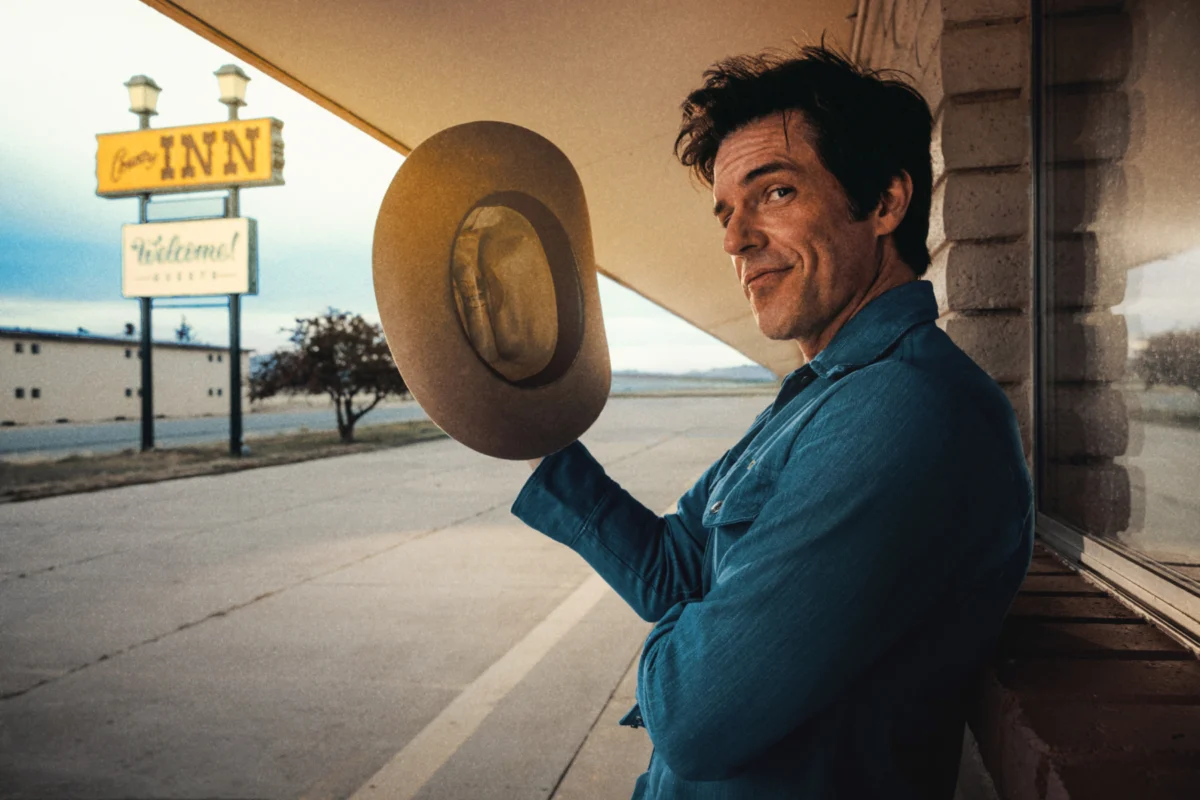
HangupsMusic.com – Nashville, The musical landscape is set to undergo a significant shift with the impending release of Thrasher, the eagerly anticipated new solo album from Brandon Flowers, the iconic frontman of The Killers. Slated for an August 21, 2026, debut under Island Records, Thrasher promises to be a profound departure and an expansive journey into the heart of Americana, spearheaded by its compelling lead single, "Tiger’s Blood." This forthcoming collection represents more than just a new chapter for Flowers; it signifies a thoughtful exploration of genre and an artist’s commitment to continuous evolution, even in the face of profound personal reflection on his career’s future. The album’s genesis in Nashville, coupled with a carefully curated ensemble of celebrated session musicians, positions Thrasher not merely as a side project, but as a deliberate and deeply felt artistic statement that broadens the scope of Flowers’ already diverse musical legacy.
The unveiling of "Tiger’s Blood" has provided the first substantive glimpse into the sonic tapestry of Thrasher, immediately drawing comparisons to the legendary Bruce Springsteen. Flowers himself debuted the track last week during a memorable set at the Newport Folk Fest, a choice of venue that speaks volumes about the album’s direction. Performing a "Springsteen-esque" anthem at a festival synonymous with folk and roots music signals a deliberate embrace of American musical traditions, moving beyond the synth-laden arenas typically associated with The Killers. The track itself is imbued with a narrative depth and a melodic sweep that evokes the storytelling prowess of classic American songwriters. Its instrumentation, while familiar in Flowers’ solo work, takes on a new resonance, foregrounding acoustic textures and a palpable sense of wide-open spaces, hinting at journeys both literal and metaphorical. The comparisons to Springsteen are not merely superficial; they suggest a shared lineage in crafting anthems that resonate with the struggles, triumphs, and everyday poetry of the American experience, delivered with a sincerity and a powerful vocal performance that has long been Flowers’ hallmark.
The lyrical excerpt from "Tiger’s Blood" offers a poignant window into the album’s thematic core: "Last thing that I heard/ You were doing okay/ I still smile when I remember us in younger days/ The things that we can’t explain/ Roll on like a runaway train/ Into the fire and out of the frame/ Wild and gone like a runaway train." These lines paint a vivid picture of nostalgia, the bittersweet embrace of past memories, and the relentless march of time. The imagery of a "runaway train" is particularly potent, symbolizing unstoppable forces, perhaps fate or the relentless passage of youth and innocence. It speaks to universal human experiences—loss, change, the enduring power of recollection—all delivered with a poetic sensibility that feels both personal and broadly relatable. This introspective lyricism, combined with the track’s expansive sound, suggests that Thrasher will delve into themes of identity, memory, and the landscapes, both internal and external, that shape our lives. It’s a reflective turn that feels earned, coming from an artist who has spent decades observing and articulating the human condition through his music.
The decision to record Thrasher in Nashville, a city steeped in musical history and synonymous with country and roots music, is a pivotal one. This choice underscores Flowers’ commitment to authenticity in his genre exploration. Rather than simply adopting stylistic elements, he immersed himself in the very epicenter of the sound he wished to cultivate. The album’s production credits further solidify this intentionality, with Flowers reuniting with longtime collaborators Shawn Everett and Jonathan Rado. This duo, celebrated for their innovative and often genre-bending work with artists ranging from Kacey Musgraves to The War on Drugs, bring a sophisticated sonic palette that can both honor traditional sounds and infuse them with contemporary flair. Their previous collaborations with Flowers, particularly on his acclaimed solo effort The Desired Effect, demonstrated a remarkable ability to craft expansive, richly textured soundscapes that complement his distinctive vocal delivery and melodic sensibilities. For Thrasher, their expertise likely served to bridge Flowers’ established pop-rock inclinations with the nuanced demands of country-western music, ensuring the album sounds both fresh and deeply rooted.
Beyond the producers, the list of musicians contributing to Thrasher reads like a who’s who of Americana and Nashville session legends, further cementing the album’s authentic country-western bona fides. The involvement of Gillian Welch collaborator David Rawlings speaks to a deep connection with the folk and acoustic traditions, promising intricate guitar work and a profound understanding of storytelling through instrumental nuance. Pedal steel guitarist Bruce Bouton brings an indispensable element of classic country, his shimmering, emotive playing often described as the very voice of the genre. Perhaps most significantly, harmonica player Charlie McCoy, whose iconic contributions graced some of Bob Dylan’s most seminal "Nashville LPs" like Blonde on Blonde and John Wesley Harding, lends an undeniable historical gravitas. McCoy’s presence not only connects Thrasher to a golden era of genre-blurring American music but also suggests a commitment to a sophisticated, nuanced approach to instrumentation, far removed from any superficial genre appropriation. These collaborations signal that Flowers is not merely dabbling in country-western but is earnestly engaging with its rich heritage, inviting masters of the craft to help him articulate his vision.
Prior to "Tiger’s Blood," Flowers had already offered tantalizing glimpses of Thrasher‘s direction with the release of "Paradise" and "Plans," including a live rendition of the latter filmed at the legendary RCA Studio A. "Paradise" likely hinted at the album’s expansive, perhaps more reflective themes, while "Plans," particularly its live recording in such an iconic Nashville studio, served as an overt declaration of his commitment to the region’s musical legacy. RCA Studio A, with its storied history of housing sessions for artists from Dolly Parton to Waylon Jennings, is more than just a recording space; it’s a living monument to American music. Performing "Plans" there was a deliberate act, signaling reverence for the past while forging a new path. These earlier tracks, taken together, have steadily built anticipation, demonstrating a thoughtful and gradual unveiling of Flowers’ new sound, preparing his audience for the full immersion into the world of Thrasher.
Flowers himself has articulated his artistic journey into country-western music with both clarity and passion. In a compelling album trailer that depicted him traversing desert landscapes clad in Western attire, he declared, "I unlocked a room that I feel that has been waiting for me all along: country western music. It has offered itself to me and the stories I have to tell at the moment with a breezy enthusiasm." This statement suggests not a forced pivot but a natural, almost fated alignment with a genre that perfectly complements his current creative impulses. It speaks to a sense of discovery, a recognition of a musical language that resonates deeply with his storytelling instincts. He was careful to contextualize this exploration, adding, "This is not me running away from rock & roll. I don’t want to replace my old songs. I simply found room for more." This reassurance is vital for his dedicated fanbase, emphasizing that Thrasher is an expansion of his artistic universe, rather than a rejection of his roots. It highlights a mature artist’s desire to grow and explore without abandoning the foundations of his success, embracing the idea that creativity is boundless and that an artist’s identity can encompass multiple sonic expressions.
The release of Thrasher will be followed by a comprehensive fall tour, kicking off on September 1 in Phoenix and concluding on October 6 in his hometown of Las Vegas. This itinerary, spanning the American West, further reinforces the album’s thematic and sonic landscape. The tour offers Flowers an opportunity to bring his new material directly to audiences who may already be attuned to the sounds and stories of country and Americana, while also introducing this new facet of his artistry to his existing followers. It will be fascinating to observe how the new songs from Thrasher integrate into his live performances, whether they stand alone as a distinct set or weave seamlessly with selections from his previous solo work and perhaps even reimagined Killers tracks. A tour is always a crucial component of an album cycle, allowing the artist to fully embody the narrative and emotional core of their work, and for Thrasher, it promises to be a particularly evocative journey across the American heartland.
Compounding the intrigue around this new musical direction is Flowers’ recent candid admission in an interview with The Times that he had, in recent years, contemplated stepping away from music altogether. "I’m really going through it right now: How much longer do I want to do this, what does it mean, why am I doing it anyway?" he revealed, openly grappling with the existential questions that often plague artists with long and demanding careers. He spoke of the physical toll of touring, noting, "Whenever I finish a tour, without fail I get sick." His contemplation then turned to legendary figures like Mick Jagger, asking himself, "What keeps him getting up on that stage?" The answer, he concluded, lay in the "powerful moments in a concert," the undeniable connection and transcendence experienced during live performances. This deeply personal revelation provides a crucial backdrop to Thrasher. It suggests that this pivot into country-western music may not just be a creative whim but a profound act of artistic renewal, a way to rediscover the "powerful moments" and reignite the passion that initially drew him to music. It hints that by exploring new sonic territories and telling different kinds of stories, Flowers is actively seeking to maintain the vitality and meaning in his musical endeavors, ensuring that his journey continues to be driven by genuine enthusiasm and purpose.
In essence, Thrasher is shaping up to be far more than just another album in Brandon Flowers’ discography. It stands as a testament to an artist’s courage to explore new frontiers, to listen to the whispers of a genre "waiting for him all along," and to confront the demanding realities of a lifelong career in music. With its authentic Nashville roots, stellar collaborations, and Flowers’ characteristic blend of introspection and anthemic songwriting, Thrasher promises to be a landmark release. It’s an album that not only showcases his versatility but also reinforces his enduring relevance as a vital voice in contemporary music, ready to lead listeners on a journey through the heart of Americana, one powerful, nostalgic note at a time. The anticipation for August 21, 2026, is palpable, as fans and critics alike prepare to witness Brandon Flowers’ latest, and perhaps most personal, artistic transformation.
