
 By admin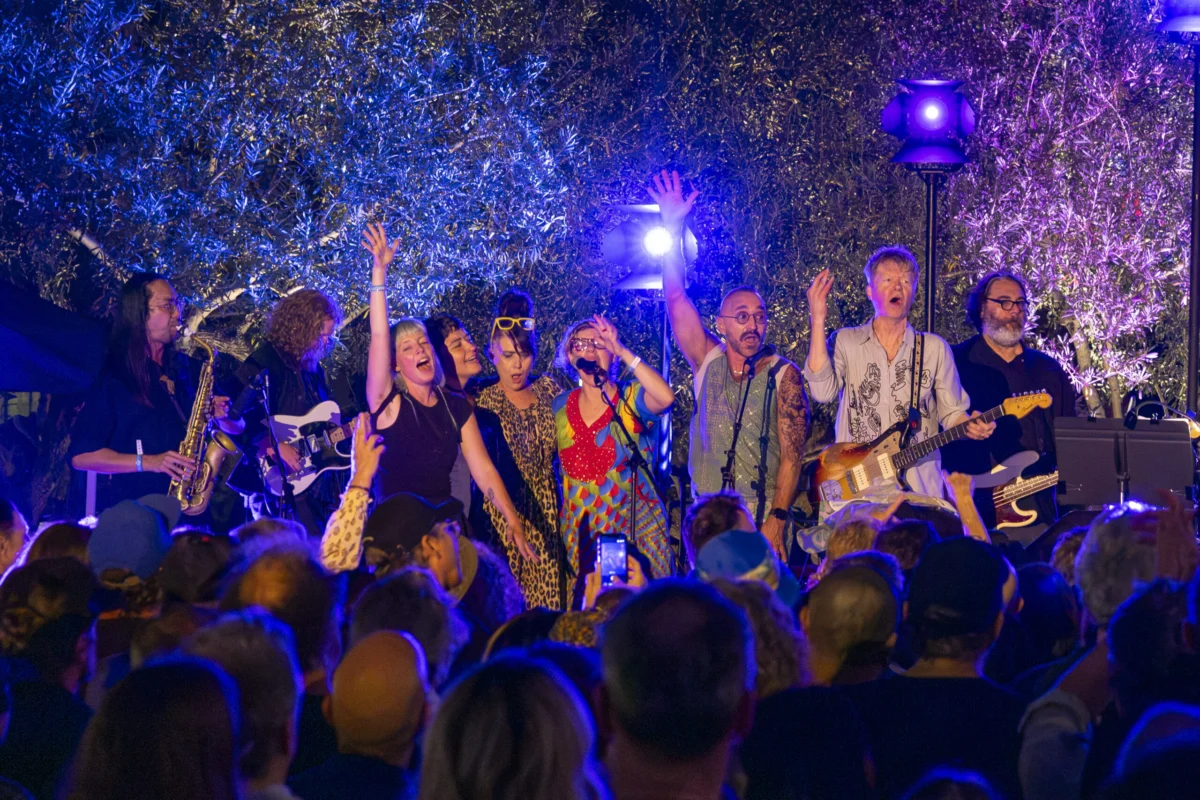
HangupsMusic.com – Los Angeles, The balmy Southern California evening outside The Broad museum was charged with an electric anticipation, as a diverse congregation of music aficionados, from seasoned "geezers" to fresh-faced "hipsters," gathered to pay homage to an icon. Titled "Yoko Only: A Night Celebrating the Music of Yoko Ono," the event was a powerful testament to the often-misunderstood yet undeniably profound impact of Yoko Ono’s artistic journey. Kicking off the sonic proceedings, Ira Kaplan, guitarist and vocalist for the revered indie-rock outfit Yo La Tengo, addressed the enthusiastic crowd. With a twinkle in his eye, he declared, "I’d like to dedicate this to the Beatles," before launching into Ono’s 1973 track, "What Did I Do!" Kaplan then playfully clarified, "It’s been long enough that we no longer bear a grudge for them trying to break up the Plastic Ono Band." The quip landed perfectly, eliciting knowing chuckles and setting a tone of irreverent celebration for a night dedicated to an artist who has consistently defied easy categorization.
At 93 years young, Yoko Ono herself was not in attendance, but her spirit permeated every note and every sentiment shared on the stage. This star-studded tribute, anchored by the impeccable musicianship of Yo La Tengo serving as the evening’s house band, unfolded across a meticulously curated 19-song set. The selection brilliantly showcased the vast and often startling breadth of Ono’s catalog, seamlessly transitioning from the experimental fringes of avant-garde soundscapes to commercially successful pop anthems, and delving into the raw, heart-wrenching depths of personal tragedy.
The core trio of Yo La Tengo – Ira Kaplan, Georgia Hubley, and James McNew – expanded into a formidable five-piece for the occasion, welcoming the prodigious talents of Wilco’s Nels Cline on guitar and Cibo Matto’s Yuka Honda on keyboards. Honda was the visionary behind the event’s curation, personally selecting many of the artists and songs, and her steady presence at the keyboards throughout the night underscored her profound connection to Ono’s work. The concert itself was presented in conjunction with The Broad’s ongoing special exhibition, Yoko Ono: Music of the Mind, offering a multifaceted exploration of Ono’s seven-decade career.
The evening commenced with Merrill Garbus of Tuneyard delivering a vibrant rendition of "We Are All Water." Garbus infused Ono’s original lyrics, which notably referenced historical figures like Chairman Mao and Richard Nixon, with contemporary relevance, cleverly weaving in timely allusions to present-day political figures whose names rhymed with "Rump" and "Titler." This playful yet pointed update perfectly captured Ono’s enduring message of interconnectedness while subtly critiquing pervasive societal ills. Following this, Deerhoof singer Satomi Matsuzaki brought an infectious, staccato energy to "Tabeti," the Japanese phrase for "I want to eat." Her performance was a masterclass in percussive vocal delivery, embodying the whimsical yet deeply human desire for sustenance and joy that often underlies Ono’s more accessible compositions. Both performances highlighted a core tenet of Ono’s artistic philosophy: the encouragement of community, shared humanity, and boundless creativity, often in direct opposition to entrenched malevolence.

The sheer diversity of Ono’s compositions was matched only by the eclectic array of artists who lent their unique voices to the tribute. A particularly poignant moment arrived with the pairing of Bikini Kill’s Kathleen Hanna and Sleater-Kinney’s Corin Tucker for a searing, impassioned performance of "No, No, No." This track, a guttural cry of anguish following the murder of John Lennon, resonated with a raw intensity that gripped the audience. Backstage before the show, Tucker articulated a sentiment undoubtedly shared by many of the female artists involved: "Yoko Ono was just so ahead of her time and so influential to my generation, the riot grrrl generation," she reflected. "She was a direct influence for us of someone who was, like, no filter. Music is about expressing yourself and about being who you truly are and putting out these ideas into the world. That was a huge impact on us." This statement perfectly encapsulated the enduring feminist and expressive power that Ono wielded, long before such concepts became mainstream.
Indeed, Yoko Ono remains a household name, though her musical output has often been relegated to the periphery, sometimes overshadowed by her collaborations with John Lennon or her groundbreaking performance art pieces like the 1964 "Cut Piece." Her approach to music, much like her art, has always been singular, eschewing conventional melodic structures for a more visceral, unmediated form of expression. Yet, as the evening progressed, it became abundantly clear that whether attendees could name one or twenty of her songs, Ono’s influence is undeniably vast and deeply woven into the fabric of contemporary alternative culture.
Among the evening’s most captivating interpretations were Sylvan Esso’s Amelia Meath’s contributions. Her take on "Sisters O Sisters," Ono’s whimsical yet empowering 1972 anthem, saw Meath fully embody the song’s spirit with a radiant stage presence. She returned later to deliver a vibrant and potent, yet never performative, rendition of "Walking on Thin Ice." This 1981 disco-infused track, arguably the most widely recognized song of the night, was transformed by Meath into a mesmerizing experience, showcasing its undeniable pop sensibility without sacrificing its underlying emotional depth.
The avant-garde facets of Ono’s work were brilliantly explored by composer and jazz singer Theo Bleckmann, who tackled the unhinged "AOS." Accompanied by the haunting cello of Maggie Perkins and the evocative saxophone of Shiroishi, Bleckmann’s performance was a fearless dive into Ono’s 1970 original collaboration with the Ornette Coleman Quartet. His idiosyncratic vocal style proved an ideal conduit for capturing the essence of Ono’s pioneering musical conversations. At one point, Bleckmann wryly invited the audience to "Sing along if you like," as his performance escalated into a cacophony as visually striking as his own vibrant green patterned suit. The crowd responded with a mixture of laughter and genuine astonishment, some even holding their ears, a testament to the powerful, challenging nature of Ono’s experimental vision.
Chicago’s Finom, comprising Macie Stewart and Sima Cunningham, paid exceptional tribute to Ono’s dramatic flair. Their rendition of the plaintive, lyrically sparse yet emotionally charged "Why" (from 2018) was a tour de force of operatic drama and feral vocalizing, delving deep into the track’s primal anguish. The duo continued to mesmerize with their equally compelling and boldly orgasmic performance of "Kiss, Kiss, Kiss," a standout from the Lennon-Ono Double Fantasy album, demonstrating Ono’s comfort with expressing raw sensuality.

In stark contrast to the evening’s more intense offerings, Ono’s gentler compositions found equally compelling interpretations. New York multimedia artist Emi Helfrich, who shares a unique familial bond with Yoko Ono as her granddaughter (daughter of Kyoko Ono Cox), brought a compelling stillness to "Remember Love." Her performance, augmented by delicate acoustic guitars, beautifully evoked the intimate tenderness of the 1969 gem, originally the B-side to "Give Peace a Chance" by the John Lennon/Plastic Ono Band. Helfrich also performed "Higa Noboru," a song Yuka Honda described as possessing "a quiet yet immense gravity," a mood Helfrich achieved with serene precision.
Rufus Wainwright, donning dark glasses in a knowing homage to Ono’s signature face-shielding specs, offered a pair of deeply contrasting pieces: a "sad" song and a "pissed off" tune. The bittersweet, timeless "I’m Going Away Smiling" was delivered with a beautiful intimacy, further enhanced by Perkins’ evocative cello work. Wainwright confessed the 2009 track, originally featuring Honda on Ono’s Between My Head and the Sky, always moved him to tears, and his performance was cinematic without ever veering into maudlin sentimentality. Equally potent was "What a Bastard the World Is," a track that transitions from sadness to righteous fury. Its 1973 lyrics — "And all of us live under the mercy of male society / Thinking that their want is our need" — regrettably still resonate with stark relevance today, underscoring Ono’s prescient feminist critique.
The evening culminated in a powerful statement, with Bikini Kill’s Kathleen Hanna returning to the stage, hair piled high and fist raised in the air. She aptly described the evening’s selections as a "roller coaster of emotions" before introducing the final number from Ono’s vast and disparate catalog: "Woman Power." A predominantly female all-star ensemble gathered onstage, creating a joyous and defiant tableau to perform the 1973 anthem. While Yoko Ono’s vocal approach may not adhere to traditionally crowd-pleasing aesthetics, her aspirations for humanity and societal change have consistently resonated across the decades. As Hanna, Tucker, and their fellow performers sang Ono’s resonant lyrics — "You may be the president now/You may still be a man /But you must also be a human /So open up and join us in living" — the sold-out crowd responded with enthusiasm. While the unity didn’t quite reach a fever pitch of fist-thrusting fervor, the message was undeniably received, a testament to the clear intent and unwavering follow-through of Ono’s life and art.
As the audience dispersed from the concert courtyard, earlier words from Finom lingered in the cool night air. The duo, among the most articulate in their stage banter throughout the evening – a quality Ono herself would undoubtedly champion – had urged the throng to "celebrate the creative courage" of the night’s honoree and to "Channel your inner Yoko!" As the performers embraced on stage, a palpable sense of positivity and connectivity permeated the atmosphere. Miles away in New York, Yoko Ono, likely asleep, would surely have been proud of the vibrant, vital celebration of her singular, indelible legacy.
