
 By Rose Miami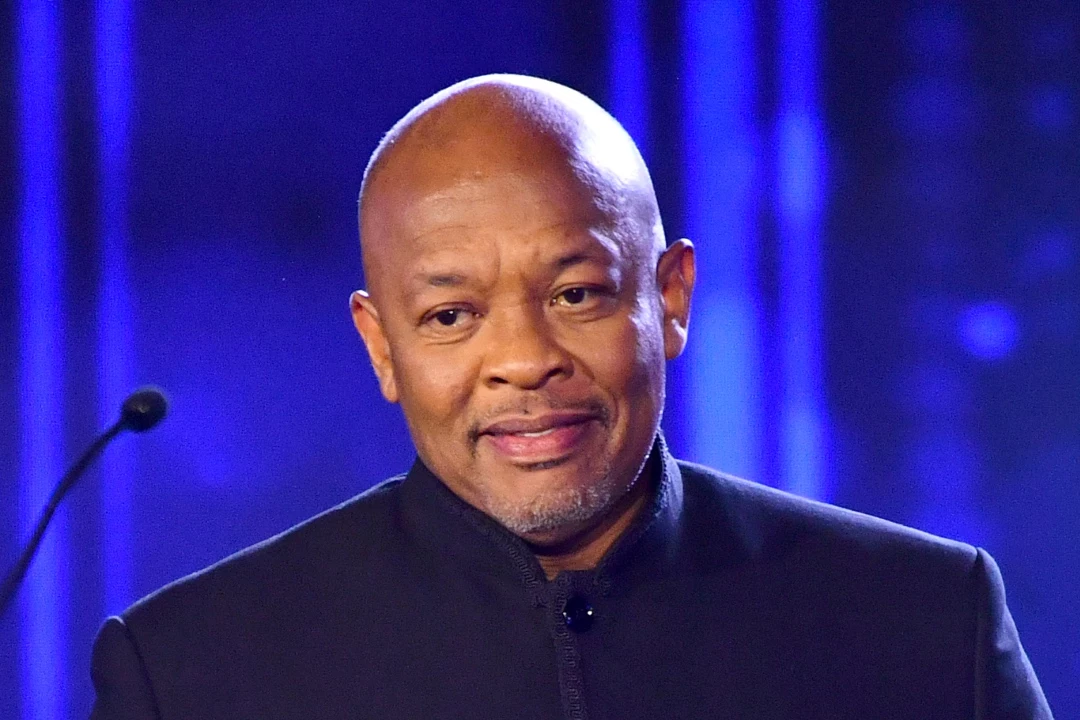
HangupsMusic.com – In a candid conversation with The New York Times, legendary producer and artist Dr. Dre has weighed in on the burgeoning integration of Artificial Intelligence (AI) within the music industry, asserting that the technology poses no inherent threat to genuine creative talent. Instead, he posits that apprehension surrounding AI is primarily confined to those who struggle with the creative process itself.
"I don’t view it as a threat," Dr. Dre stated emphatically during the interview, which also featured longtime collaborator Jimmy Iovine. His perspective challenges the prevailing anxieties that have emerged as AI tools become more sophisticated and accessible. Dr. Dre likens the resistance to AI to historical skepticism faced by pioneering musical technologies. "I think the only people that see it as a threat are the people who have trouble creating," he elaborated. "I had a discussion with a few people a few days ago. They were against A.I., and I’m like, ‘OK, you sound like the person that would have been against the drum machine when it came out.’ Or synthesizers, right? It’s a new tool for creativity. Some people are afraid of learning new things."
This viewpoint suggests that AI, rather than being a replacement for human ingenuity, should be seen as an evolutionary step in the toolkit available to musicians and producers. Just as the drum machine revolutionized rhythmic composition and synthesizers expanded sonic palettes, AI offers new avenues for exploration and execution. The fear, according to Dr. Dre, stems not from the technology itself, but from a potential lack of adaptability or original ideas among some creators.
Jimmy Iovine, a figure deeply embedded in the music business for decades, echoed Dr. Dre’s optimistic outlook. "I’m very pro-A.I. in music creation," Iovine declared. "I don’t see the downside at all. There will be some crappy music. There’s crappy music now. In the studio, when gifted people have AI, they’re going to make better records." This sentiment underscores the idea that AI’s impact is contingent on the user. For skilled artists and producers, AI is likely to be a force multiplier, enabling them to achieve new levels of sonic innovation and efficiency. The inherent quality of music, as Iovine points out, has always been a mix of inspired creation and less successful attempts, regardless of the tools employed. AI, in this context, will simply join the ranks of existing technologies that can be wielded for both brilliance and mediocrity.
The discourse surrounding AI in music has recently been amplified by several high-profile cases. Fenix Flexin’s track "Rubberz" has been at the center of renewed debate. Initially presented as a standard creation with added effects and vocal stylings, it was later revealed to have been produced using an AI software called Treblo. This instance highlights the increasing subtlety with which AI can be integrated into music production, blurring the lines between traditional methods and algorithmic assistance.
Furthermore, Tyga recently found himself defending his artistic choices after facing criticism for utilizing AI in the creation of his concept album, $tarface. While the specifics of his implementation are subject to ongoing discussion, the backlash illustrates the sensitivity and often polarized reactions that accompany the adoption of AI in artistic endeavors. These events serve as case studies, prompting broader conversations about authenticity, authorship, and the future of creative expression in an increasingly automated world.
Dr. Dre’s comments offer a guiding principle for navigating these evolving landscapes. By framing AI as a tool rather than a usurper, he encourages a proactive and experimental approach. The history of music is replete with examples of technologies initially met with resistance that ultimately became indispensable to artistic progress. From the advent of sampling to the widespread adoption of digital audio workstations, innovation has often been accompanied by apprehension. The challenge, as Dr. Dre suggests, lies not in rejecting new technologies but in understanding their potential and integrating them into the creative workflow in ways that enhance, rather than diminish, artistic vision.
The notion that AI is only a threat to those who struggle to create implies a fundamental belief in the enduring power of human creativity. For individuals with a strong artistic identity and a clear vision, AI can be a powerful ally, helping to overcome technical hurdles, explore novel sonic territories, and accelerate the realization of their ideas. The debate, therefore, is not about whether AI will be part of music production, but rather how artists will choose to harness its capabilities to shape the future soundscape. The onus, it seems, remains on the creator to imbue technology with meaning and originality.
