
 By admin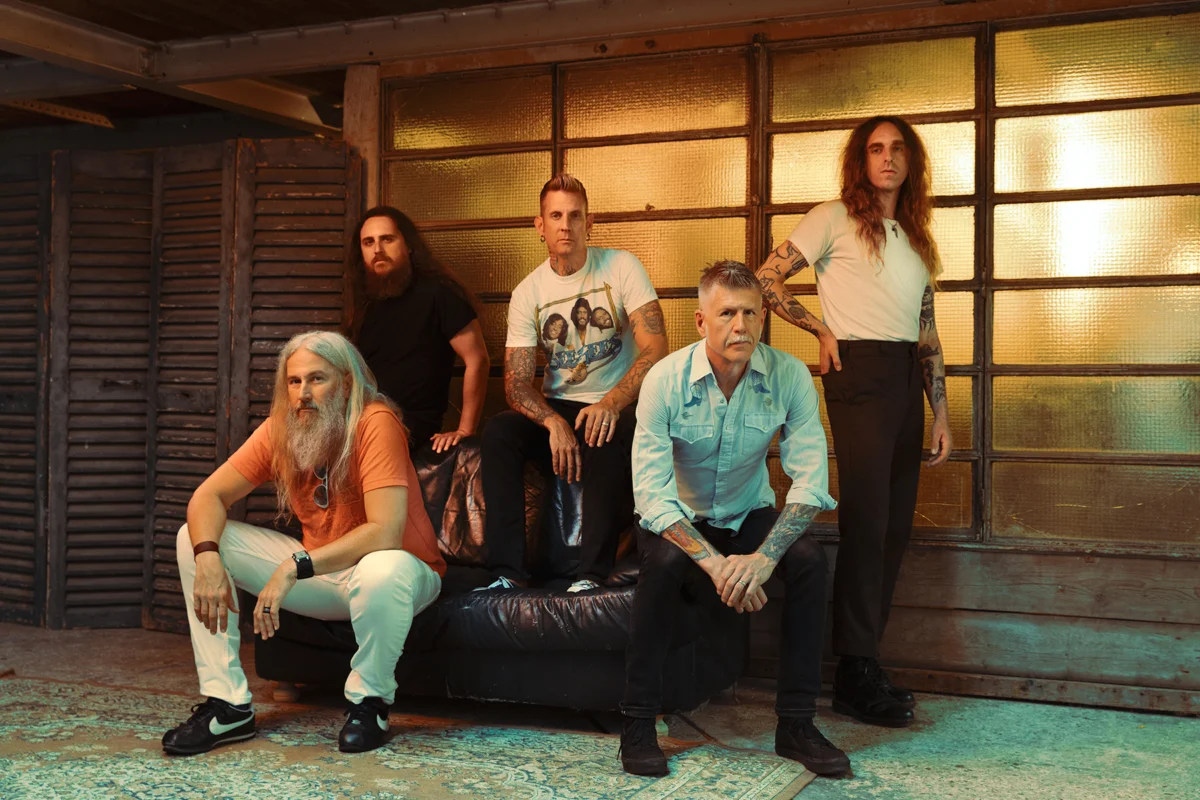
HangupsMusic.com – Atlanta, Georgia – In the tumultuous landscape of heavy music, few bands have channeled personal tragedy into their art with the unflinching intensity of Mastodon. Their ninth studio album, Marrow Deep, released just a week after the sudden passing of founding guitarist-vocalist Brent Hinds, arrives as a visceral testament to a band grappling with the rawest forms of sorrow and regret. It is an album that doesn’t merely acknowledge grief; it excavates it, laying bare the jagged edges of a wound that refuses to heal. From the opening notes, it’s clear that the seasoned Atlanta metal quartet is navigating an emotional maelstrom, their sonic landscape reflecting a profound uncertainty about how to process such crushing blows.
The circumstances surrounding Marrow Deep‘s genesis are nothing short of harrowing. Hinds, a pivotal figure in Mastodon’s distinctive sound and identity, died in a motorcycle accident shortly before the band was slated to enter the studio. This tragic event followed a period of estrangement, as Hinds had been acrimoniously dismissed from the band months prior, a decision the remaining members — Troy Sanders, Brann Dailor, and Bill Kelliher — have spoken about with complex emotions. Adding to this already heavy burden, drummer-vocalist Brann Dailor was simultaneously mourning the loss of his mother in February 2025. These dual heartbreaks, deeply personal yet intrinsically linked to the band’s collective experience, imbue Marrow Deep with an inescapable, almost suffocating, emotional weight.
For Mastodon, grief is not an unfamiliar muse; it has been a recurring, often central, theme throughout their illustrious discography. Their previous album, 2021’s Hushed and Grim, was a sprawling elegy for their longtime manager, Nick John, whose passing left a significant void. Before that, Once More ‘Round the Sun (2014) grappled with guitarist Bill Kelliher’s mother’s death, while The Hunter (2011) was largely a tribute to Hinds’ brother, who tragically died in a hunting accident. Perhaps most famously, the intricate narratives of Crack the Skye (2009) and the primal ferocity of Remission (2002) were profoundly shaped by Dailor’s enduring pain over the suicide of his teenage sister. This long lineage of turning personal agony into musical triumph has forged Mastodon into masters of emotional alchemy, yet Marrow Deep feels different—a new, deeper cut.
When vocalist-guitarist Troy Sanders unleashes the raw, guttural cry, "We don’t get over this," on the track "In the Ruins," the authenticity of his anguish is palpable. It’s not a statement of despair, but one of resolute, unyielding pain, a recognition that some losses simply cannot be surmounted. In many respects, Marrow Deep functions as Mastodon’s "Shine On You Crazy Diamond"—a monumental tribute to a bandmate who was instrumental in their formative years but whose path tragically diverged. The album serves as both a eulogy for Hinds and a stark, sobering meditation on life’s inherent fragility. Dailor’s haunting vocals on "Ghost Again," where he sings, "I saw your ghost again, followed by crushing feelings of regret," are delivered with a rawness that is both unsettling and deeply moving. After a fleeting moment of musical reprieve, the track descends into a cascade of the band’s signature crunching, gnashing, and chomping riffs, concluding with a sonic intensity that is heavy, yet undeniably steeped in a complex emotional landscape rarely explored with such depth in heavy metal.
Despite the profound emotional undercurrents, Marrow Deep retains all the distinctive sonic hallmarks that have defined Mastodon’s career. The album is a powerful display of their signature sound: raspy, often bellowed vocals that oscillate between primal screams and melodic lamentations; a kaleidoscopic array of riffage that shifts seamlessly from bone-crushing chunky grooves to viscous, slithering passages and intricately nubbly textures; off-kilter, polyrhythmic drumming that makes traditional headbanging a delightfully dangerous proposition; and, of course, a dazzling abundance of guitar solos. What distinguishes Marrow Deep is the heightened sense of turmoil woven into the very fabric of these compositions. The instruments themselves—guitars, bass, drums, and now, prominently, keyboards—seem to weep, howl, and ululate with as much emotional resonance as the vocals.

A significant factor contributing to this enriched sonic tapestry is the addition of two new members this year: keyboardist João Nogueira and lead guitarist Nick Johnston. Their presence invigorates the band, pushing the "original trio" (Sanders, Dailor, Kelliher) to explore new territories while seamlessly integrating into the established Mastodon sound. Nogueira’s keyboard contributions, in particular, mark a notable expansion of the band’s progressive leanings, injecting layers of texture and atmosphere that were previously less pronounced.
The album opens with "Barbarian’s Blood," a track whose initial riff conjures an immediate sensation of drowning, its undulating motion mimicking the relentless surge of crashing waves. Sanders’ urgent cries, "We’re in danger, losing everything," amplify the sense of impending doom, setting a tone of visceral vulnerability. "Golden Spires," one of the album’s undeniable highlights, trembles with a gut-shaking rhythm guitar that evokes the dramatic collapse of a theatrical backdrop, revealing a stark, bare stage. Here, Sanders’ screams morph into an anthem of liberation: "Free yourself to live, all I know, free yourself to live." Contrast this with "They’re Coming for You," where the music itself feels like the world closing in, guitar riffs crawling with a predatory menace before parachuting down onto the listener. And on "Out Like a Lamb," Nogueira’s organ swirls into a haunting, inescapable death spiral, showcasing his versatile command of the instrument.
While the vernacular of prog rock has always been an integral component of Mastodon’s sound over the past two decades, Marrow Deep sees their adventurous soloing come even further to the fore. Nogueira is given ample space to shine, taking as many lead passages as Kelliher and Johnston. The album reverberates with echoes of synth- and keyboard-driven progressive titans like Pink Floyd, Deep Purple, and even the intricate arrangements of Yes, far more prominently than ever before. Nogueira masterfully conjures a range of sounds, from eerie, John Carpenter-esque analog synths on tracks like "Barbarian’s Blood" and the melancholic ballad "Moth and Bone," to the intricate, almost wheedling textures reminiscent of Dream Theater on "Snakes for Dinner." His contributions are often perfectly integrated, adding bell-like chiming sounds to "In the Ruins," though occasionally, as in the sprawling closer "The Three Fates," which leans heavily into an expansive prog jam, his explorations feel almost unbridled.
The guitarists, Kelliher and Johnston, process their complex emotions through a rich tapestry of bluesy motifs, pyrotechnic eruptions, and, aligning with the "Shine On" allusion, long, breathy, almost David Gilmour-esque phrasing that speaks volumes without words. But they are not alone in this profound musical journey. As is often the case with Mastodon, the album boasts a deep roster of guest collaborators. The production team itself is a fascinating blend of sensibilities, with Converge’s Kurt Ballou co-producing alongside Patrik Berger, known for his work with artists like Lana Del Rey and Charli XCX. This unlikely pairing results in a sound that is both ferociously aggressive and subtly nuanced. Unsurprisingly, Ballou’s influence draws in fellow Converge members Ben Koller, who contributes additional percussion, and Nate Newton, lending his signature growls. The album also features powerful cameos from heavyweights representing Gojira, Lamb of God, Queens of the Stone Age, and Clutch, each adding their distinct sonic texture to the tapestry of grief.
However, it is the intro to "The Vanishing," performed by none other than Black Sabbath’s legendary Geezer Butler, that perhaps most eloquently encapsulates the album’s overarching atmosphere. Butler’s bass work here is a masterclass in mood-setting; he riffs and jams on ideas as if warming up, slowly building a baleful, resonant motif that morphs into one of the album’s most compelling tracks. "The Vanishing" settles into an easy, hypnotic groove, with Dailor channeling a vocal effect reminiscent of Ozzy Osbourne’s ethereal delivery on Sabbath’s "Planet Caravan" as he sings, "Watch the universe expand romantically / I see my mother join beloved sister." Sanders then delivers lines that seem to distill the crushing remorse felt by the band: "The more we love we suffer in it / Stays with us ‘til the end." He poses the poignant, almost rhetorical question, "Can we bear the wound that never mends?" The song concludes not with a resolution, but with Sanders’ raw, cathartic scream… just screaming.
Marrow Deep is an album that is, at turns, turbulent and ornate, meticulously measured and gloriously chaotic, ultimately culminating in a deeply cathartic experience. Above all, it resounds with a profound sense of maturity. Gone is the youthful, perhaps even callow, rage and the aspirations of mythological badassery that fueled early works like Leviathan, with its grand narrative inspired by Moby-Dick. While the band may still employ references to Greek tragedies to cloak some of their deeper feelings, the fates and furies explored on Marrow Deep are distinctly Mastodon’s own—uncontrollable, deeply personal, and utterly unique. As the final notes fade, one is left with a profound sense of wonder, listening to a band that has faced unimaginable loss and transformed it into a masterpiece of raw emotion. It begs the question, "How much can one band take?" as listeners find themselves howling along, sharing in their grief and their enduring power.
