
 By Azzam Bilal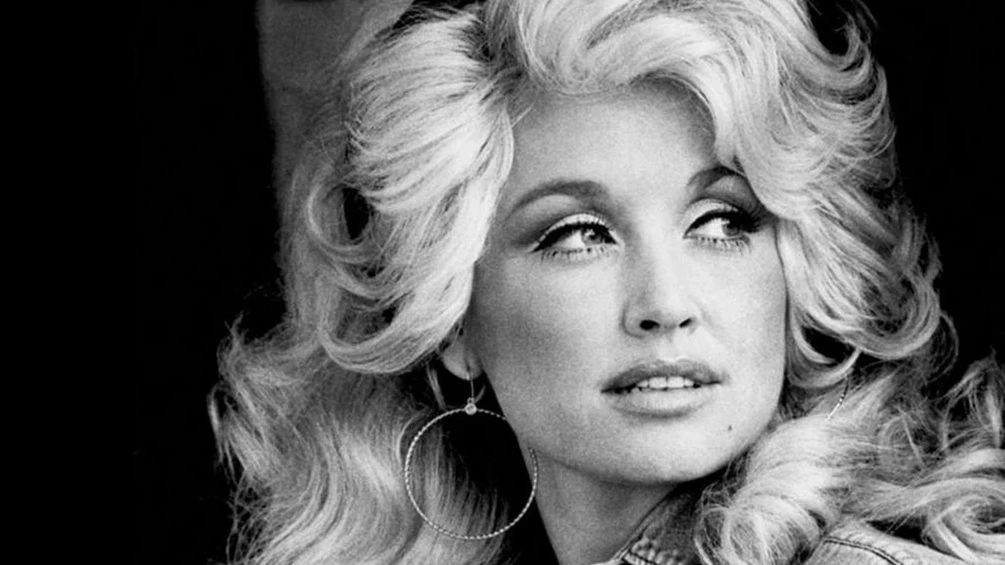
HangupsMusic.com – Nashville, The world of music is in mourning following the announcement that Dolly Parton, the "Queen of Country" whose influence stretched far beyond the borders of Tennessee, has passed away at the age of 80. While her name is synonymous with the Appalachian strings and storytelling of country music, the news of her death has sent shockwaves through the global electronic and dance music communities—a testament to a career that defied genre boundaries and embraced the transformative power of the dancefloor.
The news was first broken via a somber video statement by Bryan Seaver, Parton’s nephew and long-time head of security, on August 25th. Shortly thereafter, a formal statement released by Parton’s representative to CBS confirmed the details that many had feared: the legendary singer-songwriter passed away following what was described as a "brief but courageous battle with cancer." The announcement marked the end of an era for an artist who had remained a vibrant, active force in the industry well into her eighth decade.
Born in 1946 in a one-room cabin in Pittman Center, Tennessee, Dolly Rebecca Parton’s journey from "dirt poor" beginnings to global icon status is the stuff of American legend. Over a career spanning more than sixty years, she became one of the most decorated artists in history, amassing 11 Grammy Awards, three Emmy Awards, and six Golden Globes. Her catalog is staggering in its breadth, comprising 49 studio albums and an estimated 3,000 original songs. While tracks like "Coat of Many Colors" and "I Will Always Love You" cemented her as a master of the human experience, it was her willingness to experiment that eventually endeared her to the world of electronic music.
Parton’s intersection with club culture was not a modern affectation but a long-standing relationship. In 1979, at the height of the disco era, she released "Baby I’m Burnin’." The track was a bold departure from her country-folk roots, featuring a driving four-on-the-floor beat and shimmering synthesizers. It reached Number 15 on the Billboard Dance Club Songs chart, proving that Parton’s voice was as at home in a strobe-lit discotheque as it was on the stage of the Grand Ole Opry. Decades later, she returned to the summit of the dance charts in 2019 with "Faith," a high-energy collaboration with Swedish EDM heavyweights Galantis and Mr. Probz. The track topped the Billboard Hot Dance/Electronic Songs chart, introducing her unmistakable vibrato to a new generation of festival-goers.
The electronic music community’s reverence for Parton is perhaps best seen in the sheer volume of remixes that have kept her voice alive in clubs for decades. Her 1973 masterpiece "Jolene" has become a staple for electronic producers looking to blend emotional weight with rhythmic drive. Norwegian disco king Todd Terje famously crafted a sprawling, psychedelic club rework of the track, while house producers like Destructo and Kygo have provided their own interpretations, ranging from deep, bass-heavy grooves to sun-drenched tropical house.
Beyond the technicality of remixes, Parton’s music was a cornerstone of the "mashup" movement of the early 2000s. In 2003, the Belgian duo 2 Many DJs (Soulwax) included a brilliant juxtaposition of "9 To 5" with Destiny’s Child’s "Independent Women" and Röyksopp’s "Eple" on their seminal mix album, As Heard on Radio Soulwax Pt. 2. This creative blending highlighted the rhythmic versatility of Parton’s songwriting, showing that her "working girl" anthem possessed a timeless funk that could sit seamlessly alongside modern R&B and Norwegian electronica.
However, the tributes pouring in from the dance world focus on more than just her music; they celebrate Parton as a paragon of humanity and a fierce advocate for the marginalized. Parton was a lifelong ally to the LGBTQAI+ community, a stance that was not always easy within the conservative leaning of the country music industry. She famously championed same-sex marriage and was a vocal opponent of legislation aimed at restricting the rights of transgender individuals. Her deep affinity for drag culture was a point of pride; she once remarked in a conversation with RuPaul for Dazed magazine that dressing up had "saved her life," famously stating, "I always said if I hadn’t been a woman I would have been a drag queen."
Her philanthropy was equally legendary. From her Imagination Library, which has gifted over 200 million books to children worldwide, to her $1 million donation that helped fund the development of the Moderna COVID-19 vaccine, Parton’s generosity was practical and profound. In the wake of her passing, artists have been quick to highlight this "spirit of grace" that defined her public and private life.
Electronic artist Kelly Lee Owens took to X (formerly Twitter) to pay her respects, calling Parton a "class act" who "paved the way for female songwriters everywhere." The sentiment was echoed by Suzi Analogue, who reflected the collective grief of the community by writing, "I would like to cancel the rest of today on behalf of Dolly."
From the world of classic dance and disco, the tributes were deeply personal. Nile Rodgers, the architect of Chic and a frequent collaborator with the world’s biggest stars, described her as "one of the kindest, most talented, loving, warmhearted and genuine persons" he had ever known. Chaka Khan, the "Queen of Funk," described her as a "once-in-a-lifetime artist" whose music was filled with "heart, humor, and grace."
Perhaps the most touching tribute came from Dave Stewart of Eurythmics, who shared a photo of a handwritten letter he received from Parton after they performed together. "This is the kind of woman Dolly was," Stewart noted, "making sure she wrote everyone a letter after her performance. She was the most humble, kind-hearted and extraordinarily talented human being. The world simply felt like a better place with her in it."
The Swedish duo Galantis, who shared Parton’s final major dance-chart success, expressed their heartbreak on Instagram: "No one inspired me more than you, not only in music but in life. I am endlessly grateful for the moments we shared and for the song we left behind. Thank you for wrapping this world in your light and grace."
Even the underground stalwarts of the scene felt the loss. The Glasgow-based duo Optimo simply hailed her as the "Undisputed Queen of Country," acknowledging that her appeal transcended the barriers between the "high art" of the underground and the "pop" of the mainstream. Ultra Naté, a titan of house music, shared a montage of Parton’s most empowering quotes, labeling her "Always ICONIC."
As the music world processes the loss of Dolly Parton, it is clear that her legacy is not confined to a single genre or a specific era. She was a bridge-builder who saw no contradiction in loving bluegrass and disco simultaneously. She understood that a great song is a great song, whether it is played on an acoustic guitar in a cabin or blasted through a custom sound system in a warehouse in East London.
Parton’s death at 80 marks the departure of a figure who represented the best of the artistic spirit: resilience, curiosity, and an unwavering commitment to kindness. While the stages in Nashville may be dim tonight, the neon lights of the world’s dancefloors will continue to flicker in her honor. As long as a DJ drops a needle on a remix of "Jolene" or "9 To 5," Dolly Parton’s voice will continue to command the room, reminding everyone that love, hard work, and a bit of glitter are the universal languages of the human soul. Her light, as Chaka Khan so aptly put it, will indeed keep shining.
