
 By Rose Miami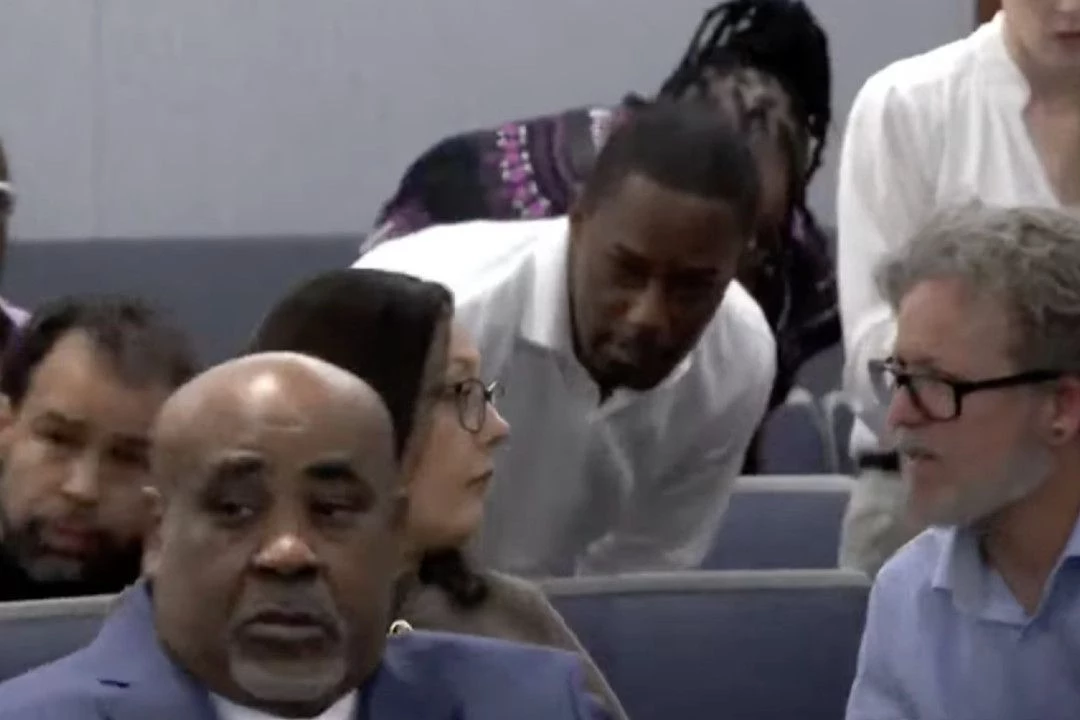
HangupsMusic.com – Las Vegas, NV – In a development that has captured the attention of hip-hop aficionados and legal observers alike, renowned rapper and entrepreneur Cam’ron, a prominent figure in East Coast hip-hop, made an unexpected appearance at the ongoing murder trial of Duane "Keffe D" Davis. Davis stands accused of orchestrating the 1996 assassination of West Coast rap legend Tupac Shakur, a case that has remained a somber and unresolved chapter in music history for nearly three decades.
The Harlem native, known for his distinctive style and business acumen, was spotted on the eighth day of the trial, Wednesday, August 26th. Cam’ron, dressed in a crisp white button-up shirt, was observed seated just a few rows behind Davis, projecting an air of focused attention. His presence in the Las Vegas courtroom, where the trial is currently being held, was permissible under Nevada’s open court statutes, which grant the public the right to attend proceedings. This policy ensures transparency and public access to the judicial process, a principle particularly relevant in high-profile cases that generate significant public interest.
Given the intense scrutiny surrounding the Tupac Shakur murder trial, the Las Vegas courtroom has implemented a stringent daily lottery system to manage seating arrangements. This system is designed to accommodate the substantial public demand for attendance while respecting the limited physical capacity of the courtroom. According to reports from local media outlet Fox 5 Las Vegas, individuals seeking to enter the courtroom must report to an overflow room at least one hour prior to the day’s session. From this group, winners are selected through a lottery and then escorted by marshals to their designated seats within the main courtroom. Cam’ron’s ability to secure a seat suggests he navigated this process, underscoring the widespread fascination with the trial’s proceedings.
Cam’ron’s emergence as a spectator at this landmark trial has sparked considerable speculation regarding his motivations. As a media personality who has successfully branched out into various entertainment ventures, including television shows, it is plausible that he sought a firsthand account of the legal proceedings. Such direct observation could potentially inform future content or simply satisfy a personal curiosity about a case that has profoundly impacted the music industry. While he did not provide live commentary on social media during his attendance, his presence itself became a noteworthy event, drawing attention from those following the trial’s developments.

The trial, which is projected to continue for approximately six weeks, centers on allegations that Keffe D masterminded the fatal shooting of Tupac Shakur in September 1996. The rapper, who was in his prime and at the forefront of the burgeoning hip-hop scene, was gunned down in a drive-by shooting in Las Vegas. His death sent shockwaves through the music world and beyond, leaving a void that has never truly been filled. If convicted of the charges he faces, Duane "Keffe" D Davis could be sentenced to life in prison, a severe consequence that underscores the gravity of the accusations.
The legal battle aims to bring a measure of closure to a case that has long been shrouded in mystery and conjecture. The prosecution is expected to present evidence and testimony in an effort to prove Davis’s involvement in the planning and execution of the murder. The defense, conversely, will likely challenge the prosecution’s narrative and present arguments to exonerate Davis. The courtroom proceedings are being closely monitored by legal analysts, journalists, and fans of both Tupac Shakur and the broader hip-hop culture, all eager to witness the unfolding of this historic trial.
Cam’ron’s attendance, while not directly related to the legal arguments, highlights the enduring cultural significance of Tupac Shakur and the deep impact his life and untimely death continue to have. Shakur’s legacy extends far beyond his musical achievements; he was a poet, an actor, and a voice for a generation, whose influence is still felt today. The trial represents a critical juncture in understanding the events that led to his demise and in potentially holding those responsible accountable. The presence of a figure like Cam’ron, who has carved out his own significant place in hip-hop history, serves as a poignant reminder of the interconnectedness of artists and the shared cultural landscape they inhabit.
The broader context of unsolved or long-standing cases involving hip-hop artists adds another layer of significance to this trial. The music industry has, unfortunately, seen its share of tragic incidents, and the pursuit of justice in these matters remains a crucial aspect of acknowledging the lives lost and the impact on the community. This trial, in its pursuit of answers and accountability, stands as a testament to the ongoing efforts to address these unresolved chapters in music history. The nation, and particularly the hip-hop community, will be closely watching as the trial progresses, hoping for clarity and resolution in the case of Tupac Shakur’s murder.
