
 By Azzam Bilal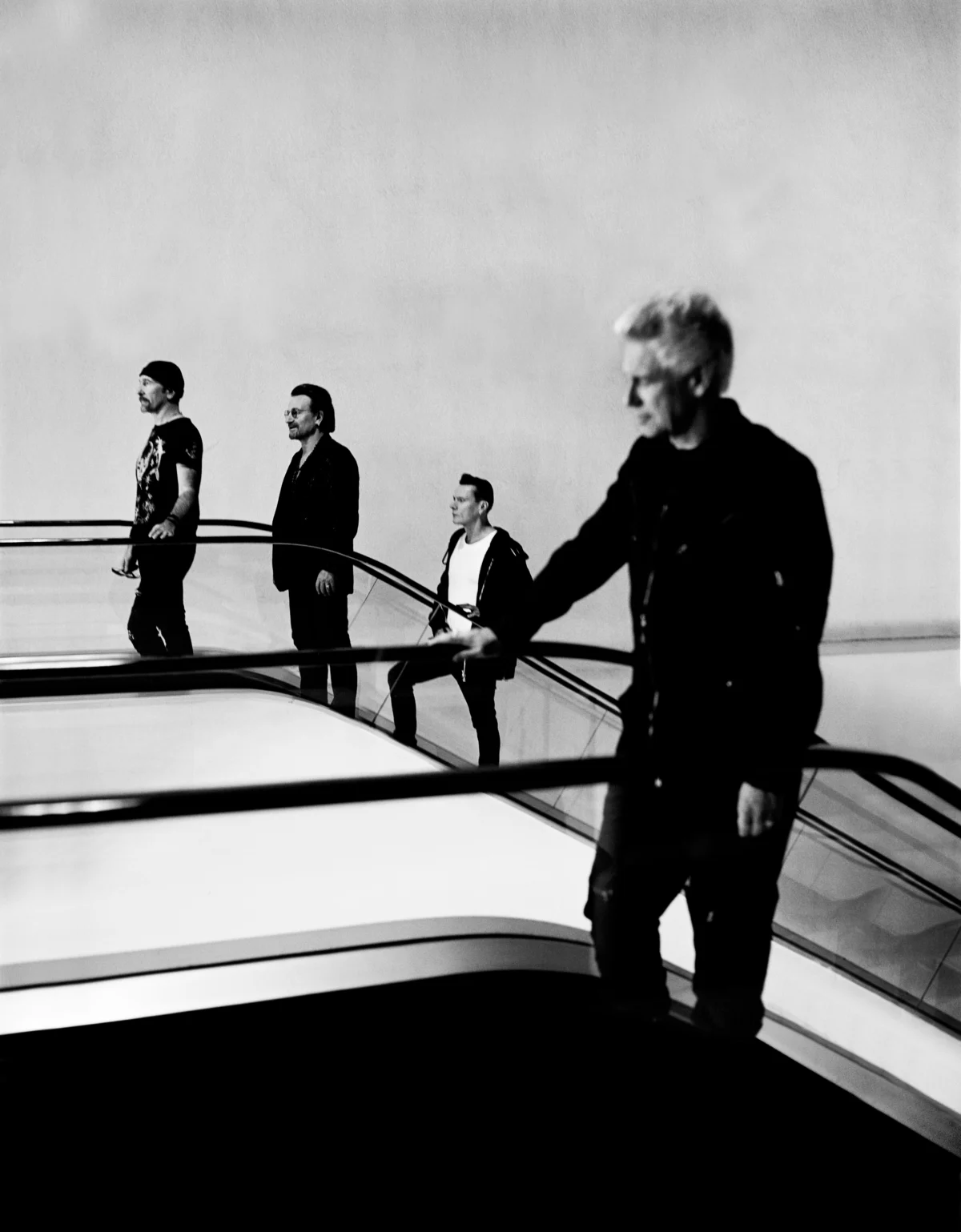
HangupsMusic.com – Dublin, The landscape of Irish music has always been defined by its ability to marry the melancholic with the defiant, a tradition that found its most potent modern vessel in the form of Shane MacGowan. Following the passing of the legendary Pogues frontman in late 2023, the music world has remained in a state of reflection, honoring a man who was as much a literary figure as he was a punk icon. Today, that reflection takes a tangible and sonic form as U2 releases their rendition of the 1988 Pogues classic "Yeah Yeah Yeah Yeah Yeah." The track serves as a high-energy lead offering from the highly anticipated tribute compilation, 20th Century Paddy: The Songs of Shane MacGowan, a project designed to encapsulate the sprawling, chaotic, and brilliant legacy of Ireland’s most storied songwriter.
The release of the track was accompanied by a poignant and deeply philosophical statement from U2’s guitarist, the Edge. In his commentary, the Edge delves into the enigmatic nature of MacGowan, a man who famously balanced on the razor’s edge of self-destruction and divine inspiration. According to the Edge, MacGowan was a figure "full of contradictions," and it was precisely within those clashing elements that his "truth" resided. This sentiment captures the essence of why MacGowan remains such a polarizing yet beloved figure; he was a man who could be simultaneously fragile and indestructible, a scholar of traditional music who sought to tear it down and rebuild it in his own image.
The Edge further elaborated on MacGowan’s persona, noting that the singer possessed a unique ability to be "precise about what mattered and gloriously careless about everything else." This duality was not merely a personality trait but a form of artistic expression. Drawing a parallel to the legendary Irish playwright Oscar Wilde, the Edge suggested that MacGowan’s public image—the missing teeth, the slurred speech, the wild, cackling laughter—was a carefully constructed "mask" that revealed more about his soul than a conventional appearance ever could. "The crooked grin, the wildness, the old-Ireland inflections—they weren’t disguises so much as signals," the Edge remarked. He viewed MacGowan as a bridge, a vital link in a cultural chain that stretched from the ancient art of the pub storyteller to the high-octane energy of the punk rock stage.
The song chosen by Bono, the Edge, Adam Clayton, and Larry Mullen Jr. is an interesting one. "Yeah Yeah Yeah Yeah Yeah" originally appeared on The Pogues’ 1988 EP of the same name and was later included on the expanded versions of their album Peace and Love. Unlike the somber, orchestral weight of "Fairytale of New York" or the poetic yearning of "A Pair of Brown Eyes," this track is a frantic, blues-infused explosion of energy. It showcases the side of MacGowan that loved the raw power of early rock and roll and 1960s garage rock. U2’s interpretation brings their signature stadium-filling sound to the piece while maintaining the gritty, unpolished heart of the original. It is a tribute that feels both respectful of the source material and distinctly U2 in its execution.
20th Century Paddy: The Songs of Shane MacGowan is scheduled for release on November 13 via Rubyworks, an independent Irish label known for its deep ties to the country’s most influential artists. The album promises to be a comprehensive exploration of MacGowan’s catalog, featuring a roster of contributors that reads like a "who’s who" of rock and roll history. Joining U2 on the tracklist are Bruce Springsteen, Tom Waits, Primal Scream, Steve Earle, and the Dropkick Murphys. Each of these artists shares a specific kinship with MacGowan’s aesthetic. Springsteen has long been a vocal admirer of the way MacGowan chronicled the lives of the working class and the displaced, while Tom Waits shares MacGowan’s penchant for the cinematic, the gritty, and the avant-garde.
The inclusion of Steve Earle and the Dropkick Murphys highlights MacGowan’s influence on the transatlantic folk-punk movement. For the Dropkick Murphys, MacGowan was a foundational influence, providing a blueprint for how to fuse Celtic instrumentation with the aggression of street punk. Steve Earle, meanwhile, represents the songwriting tradition that values the story above all else—a value that MacGowan held sacred. The diverse array of artists on the LP underscores the fact that MacGowan’s influence was not limited by geography or genre; he was a global figure whose words resonated with anyone who felt like an outsider.
To understand the weight of this tribute, one must look back at the historical impact of MacGowan’s work, particularly during the mid-1980s. In 1985, The Pogues released Rum Sodomy & the Lash, an album produced by Elvis Costello that effectively changed the course of Irish music. It was a record that took the traditional instruments of the Irish folk scene—the tin whistle, the accordion, the banjo—and played them with a ferocity that bordered on violent. MacGowan’s lyrics on that album were a revelation; he wrote about the London-Irish experience, the loneliness of the immigrant, and the dark underbelly of urban life with a poeticism that invited comparisons to James Joyce and Brendan Behan.
The Edge’s reference to MacGowan’s "old-Ireland inflections" is particularly significant. MacGowan was born in Kent, England, to Irish parents, and he spent much of his life navigating the complexities of the Irish diaspora. His voice, which carried the weight of a thousand years of history, became a symbol of pride for a generation of Irish people living abroad. He took the "Paddy" stereotype—often used as a slur—and reclaimed it, turning it into a badge of honor and a source of artistic strength. This is likely where the title of the tribute album, 20th Century Paddy, finds its roots. It is an acknowledgment of MacGowan’s role in modernizing Irish identity for the 20th and 21st centuries.
U2’s relationship with MacGowan was one of long-standing mutual respect, though they occupied very different spaces in the musical ecosystem. While U2 became the biggest band in the world, playing to sold-out stadiums and advocating for global political change, MacGowan remained a creature of the underground, a cult hero whose life was often lived in the shadows. Yet, Bono and MacGowan shared a deep bond over their shared heritage and their belief in the power of the song. Over the years, they shared the stage on several occasions, most notably during televised specials where they performed together, showcasing a chemistry that bridged the gap between U2’s polished anthems and MacGowan’s raw delivery.
The upcoming album is more than just a collection of covers; it is a document of a legacy that refuses to fade. For Rubyworks, the label behind the release, the project is a labor of love. The label has worked closely with MacGowan’s estate and his widow, Victoria Mary Clarke, to ensure that the album reflects the man’s true spirit. The November 13 release date is expected to be a major event in the music calendar, serving as a focal point for fans to celebrate MacGowan’s life one year after his passing.
As the world prepares to hear these new interpretations, the Edge’s words serve as a reminder of why we keep coming back to Shane MacGowan. He was a man who refused to be simplified. He was a punk who loved folk, a scholar who loved the gutter, and a visionary who could see the beauty in the most broken places. Through U2’s "Yeah Yeah Yeah Yeah Yeah" and the tracks that will follow on 20th Century Paddy, the "signals" that MacGowan sent out during his lifetime will continue to be received by a new generation of listeners, ensuring that his crooked grin and wild spirit remain a permanent part of the musical firmament. The mask may have been a performance, as the Edge suggests, but the music it produced was the purest truth Shane MacGowan had to offer.
