
 By Azzam Bilal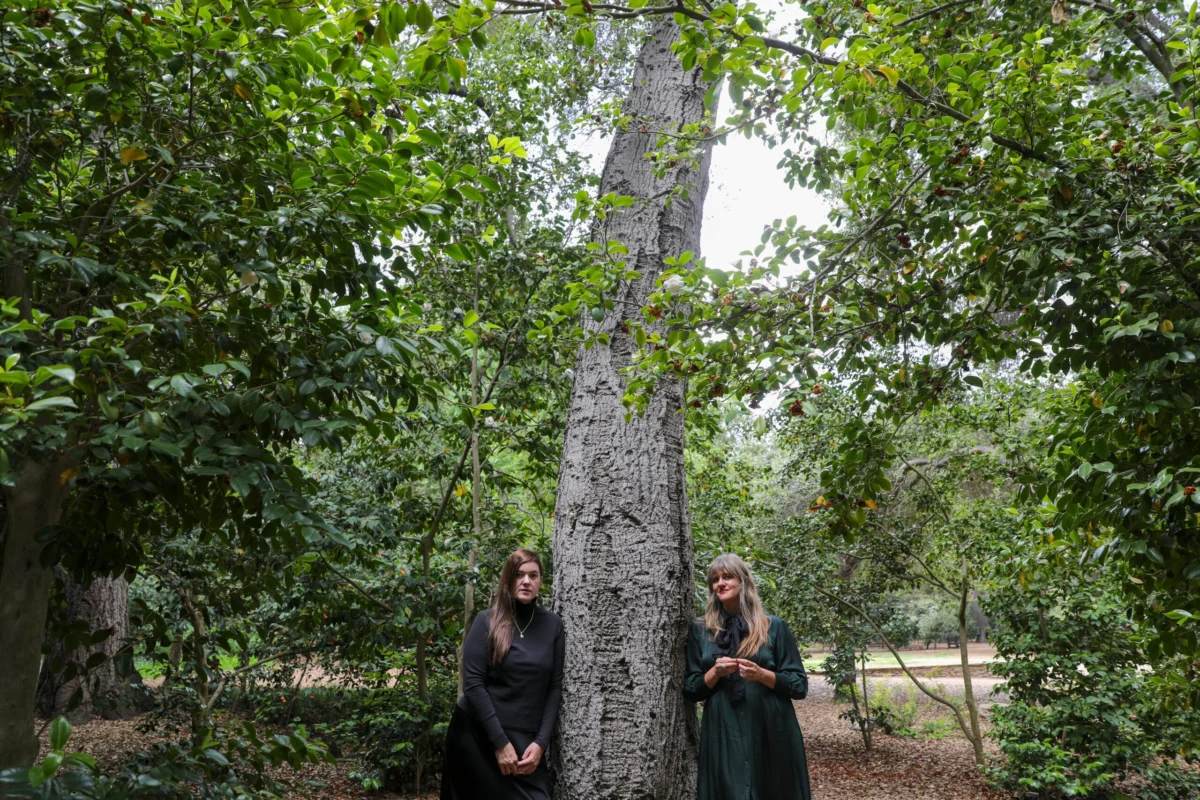
HangupsMusic.com – LOS ANGELES, In a year that has already proven to be exceptionally prolific for the vanguard of contemporary ambient music, Julianna Barwick and Mary Lattimore have revealed their second major collaborative undertaking of the season. The duo, whose individual careers have redefined the boundaries of vocal looping and experimental harp, are set to release the original motion picture soundtrack for Threshold. This new body of work serves as the sonic backdrop for a documentary centered on the life and career of Olympic gold medalist cross-country skier Jessie Diggins, directed by the filmmaking duo Lars and Torsten Brinkema. Scheduled for a full release on November 20, the project marks a significant evolution in the creative partnership between Barwick and Lattimore, moving from the experimental abstraction of their debut to the structured, narrative-driven world of cinematic scoring.
The announcement comes on the heels of three preview tracks: “Cold Open,” “Sick and Tired,” and “Gallivare 10km.” These initial offerings provide a window into the atmospheric depth the duo has cultivated for the film. While their previous work often existed in a space of pure improvisation and tonal exploration, the music for Threshold appears more tethered to the physical and emotional realities of its subject. Jessie Diggins is a figure defined by extreme endurance, the biting cold of the winter circuit, and the psychological weight of elite competition. The preview tracks suggest a score that mirrors these elements, blending Barwick’s signature ethereal vocal layers with Lattimore’s cascading, often melancholic harp melodies to evoke the vast, snowy landscapes and the internal drive of a world-class athlete.
This project follows the duo’s debut album, Tragic Magic, which arrived in January to widespread critical acclaim. That record was born out of a residency at the Musical Instrument Museum in Phoenix, Arizona, where the pair were granted access to a rare collection of historical instruments. The result was a haunting, intimate collection of songs that felt like a private conversation between two masters of their craft. However, as Mary Lattimore noted in a recent statement, the transition from Tragic Magic to Threshold required a fundamental shift in their creative philosophy.
According to Lattimore, Tragic Magic was defined by its physical limitations. The duo worked within the narrow confines of the specific instruments available to them—many of which were delicate, ancient, or mysterious in their tonal qualities. While these constraints provided a unique sonic fingerprint, the artists enjoyed total freedom in terms of composition and structure. There was no story to tell other than the one the instruments dictated. In contrast, Threshold offered the opposite dynamic. Lattimore explained that the "sky was the limit" regarding their choice of instrumentation, allowing them to draw from an expansive palette of sounds. Yet, this freedom was tempered by the necessity of serving a pre-existing narrative. The music had to inhabit the framework of Jessie Diggins’ life and align with the visual and emotional pacing established by the Brinkema brothers.
This duality—the shift from internal experimentation to external storytelling—is what makes Threshold a compelling addition to both artists’ discographies. Julianna Barwick has long been celebrated for her ability to build cathedral-like structures of sound using nothing but her voice and a series of loop pedals. Her music often feels timeless and unmoored from specific geography. Mary Lattimore, similarly, has taken the harp—an instrument often relegated to classical or celestial tropes—and transformed it into a tool for modern, gritty, and deeply human expression. Together, they create a sound that is both grounded and transcendent, making them an ideal choice for a documentary that explores the intersection of human frailty and superhuman athletic achievement.
The choice of Jessie Diggins as a subject provides a rich thematic well for the duo to draw from. Diggins is best known for her historic performance at the 2018 Winter Olympics, where she secured the first-ever gold medal for the United States in cross-country skiing. Her career, however, is not merely a highlight reel of victories; it is a testament to the grueling nature of the sport and the personal battles fought away from the cameras. The track titles released so far hint at this complexity. “Cold Open” likely sets the stage for the unforgiving environments of the Nordic skiing world, while “Sick and Tired” suggests an exploration of the exhaustion and burnout that often accompany the pursuit of greatness. “Gallivare 10km” points to a specific location in Sweden, a staple of the World Cup circuit, grounding the music in the reality of the professional skiing tour.
The collaboration between Barwick and Lattimore represents a meeting of two of the most distinct "voices" in modern instrumental music. Barwick’s work, particularly on albums like The Magic Place and Will, has influenced a generation of ambient producers by demonstrating how the human voice can be treated as a malleable, textural instrument. Lattimore, through her solo records like Silver Ladders and Goodbye, Hotel Arkada, has shown a similar penchant for using effects and loops to expand the traditional resonance of the harp. When these two approaches merge, the result is a dense, multi-layered environment where it is often difficult to tell where the voice ends and the strings begin.
In the context of a film score, this blurring of lines serves a vital purpose. Documentaries like Threshold rely on music to bridge the gap between the audience and the internal world of the protagonist. For a sport as physically demanding and often solitary as cross-country skiing, the music must do more than just provide a beat; it must convey the rhythm of breathing, the glide of skis on ice, and the mental fortitude required to push through the "pain cave." The Brinkema directors seem to have recognized that Barwick and Lattimore’s ability to create "mind-expanding" soundscapes would provide the necessary weight to Diggins’ story.
The release of Threshold on November 20 will cap off what has been a transformative year for both artists. Their joint tour in support of Tragic Magic earlier this year demonstrated a profound onstage chemistry, with the two musicians often finishing each other’s musical thoughts in real-time. This level of intuition is likely what allowed them to tackle a project as demanding as a film score so quickly after their first album. Lattimore described the experience of holding both projects in their hands as "challenging" yet "satisfying," viewing them as two sides of the same coin. One project was about the instruments themselves, while the other was about the human spirit those instruments were tasked with representing.
As the music industry continues to see a rise in the popularity of ambient and neoclassical sounds within mainstream cinema, the work of Barwick and Lattimore stands out for its lack of artifice. There is a raw, emotional honesty in their collaborations that avoids the clichés of "inspirational" sports scores. Instead of triumphant brass or driving percussion, they offer a more nuanced perspective on success—one that acknowledges the silence, the cold, and the solitary nature of the athlete’s journey.
Listeners and fans of the duo can expect Threshold to be a more expansive, perhaps even more cinematic, iteration of the sound they established on Tragic Magic. With the full project arriving just as the winter season begins, the timing could not be more appropriate. The three singles currently available offer a tantalizing glimpse into a world of frost-covered trails and quiet determination, promising a soundtrack that is as much an exploration of the human condition as it is a tribute to a sporting icon. As November 20 approaches, Threshold stands as a testament to the power of collaboration and the ability of music to translate the unspoken challenges of a life lived on the edge of physical possibility.
