
 By Azzam Bilal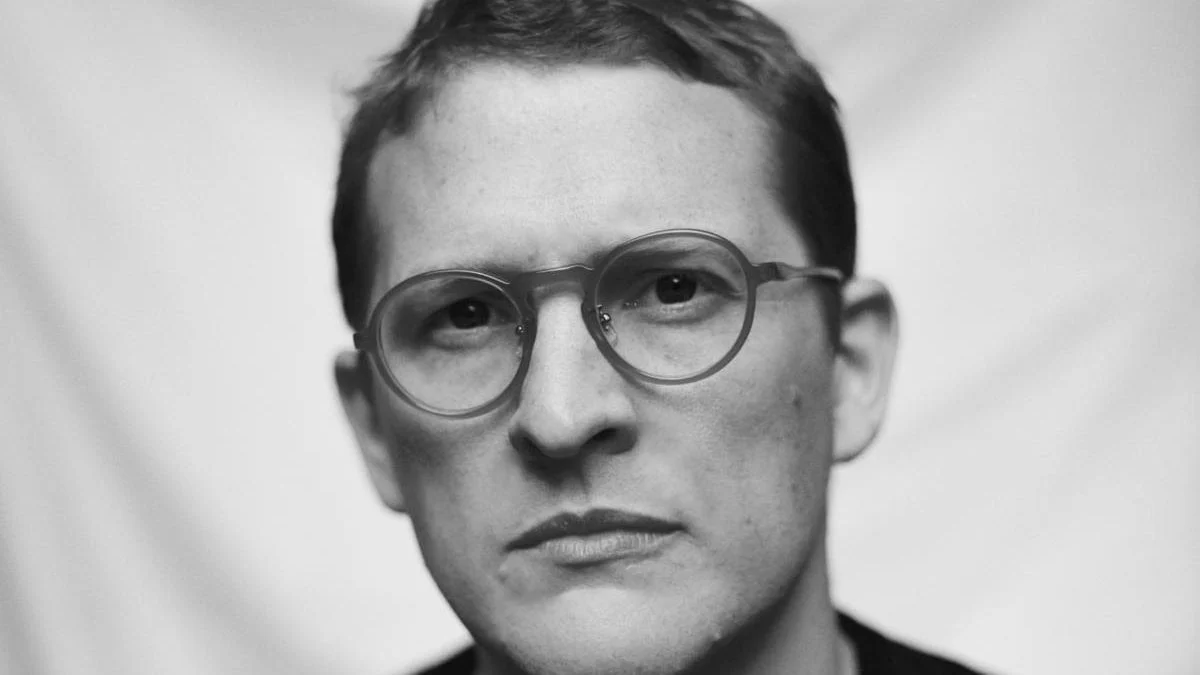
HangupsMusic.com – Edinburgh, The intersection of classical tradition and avant-garde electronic exploration has found a new, definitive landmark as Sam Shepherd, the visionary artist known as Floating Points, unveils his latest masterwork, Mere Mortals. The release of the score coincides with a significant milestone in the project’s journey: its European premiere at the prestigious Edinburgh International Festival on August 28. This transition from the recording studio to the grand stages of Scotland marks a pivotal moment for Shepherd, whose career has increasingly blurred the lines between the dance floor and the concert hall. Originally commissioned for the San Francisco Ballet, Mere Mortals is not merely a collection of music for dance; it is a profound philosophical inquiry into human nature, technological advancement, and the enduring power of ancient mythology, all filtered through the lens of one of contemporary music’s most restless minds.
The genesis of Mere Mortals lies in the ambitious vision of Tamara Rojo, the Artistic Director of the San Francisco Ballet. Upon taking the helm of the storied company, Rojo sought to revitalize its repertoire with works that speak to the complexities of the modern era while remaining rooted in the physical language of ballet. To achieve this, she turned to Shepherd, a composer whose academic background in neuroscience and technical mastery of modular synthesis provide him with a unique perspective on the relationship between sound and the human experience. Paired with the innovative choreography of Aszure Barton, the production debuted in San Francisco in early 2024 to critical acclaim, hailed as a bold step forward for a medium often accused of being tethered too tightly to the past.
At the heart of the production is a radical reimagining of the myth of Pandora. In the traditional Hellenic telling, Pandora is often depicted as a cautionary figure—the woman whose curiosity led her to open a forbidden jar, releasing a swarm of evils upon a previously innocent world. However, Shepherd and his collaborators have approached the narrative with a more nuanced, perhaps more forgiving, sensibility. Shepherd has been vocal about his desire to reclaim Pandora’s agency, arguing that history and translation have unfairly stripped her of her complexity. In this version, Pandora is not a vessel for destruction but a symbol of the inherent human drive toward discovery and change. She represents the "curiosity" that defines our species, for better or worse. By shifting the focus from the "evils" she unleashed to the transformative power of her actions, Mere Mortals invites the audience to consider whether progress and chaos are inextricably linked.
The score itself, now available globally via the venerable Deutsche Grammophon label, is a sprawling, immersive experience that showcases Shepherd’s ability to weave disparate sonic threads into a cohesive tapestry. Those familiar with his previous work, such as the Mercury Prize-shortened Promises—a collaboration with the late jazz legend Pharoah Sanders and the London Symphony Orchestra—will recognize his penchant for slow-burning atmospheres and rich, organic textures. However, Mere Mortals pushes these elements further. The music oscillates between the cold, precise oscillations of analog synthesizers and the warm, sweeping resonance of a full orchestra. This duality is central to the work’s theme, mirroring the tension between the artificial and the natural, the divine and the mortal.
The recording process involved a deep collaboration with the San Francisco Ballet Orchestra, under the baton of conductor Martin West. One of the standout contributors to the project is concertmaster Cordula Merks, whose violin performances provide the score with its emotional backbone. Shepherd has expressed immense gratitude for Merks’ contribution, noting that hearing his written compositions transformed by her "exquisite" playing was a revelatory experience that has inspired him to pursue further orchestral ventures. The interplay between Merks’ soaring strings and Shepherd’s meticulously programmed electronic pulses creates a sense of "techno-classical" friction that is both unsettling and beautiful.
As the ballet progresses, the music moves through various phases of the Pandora myth. Early movements capture a sense of wonder and the burgeoning light of creation, characterized by shimmering arpeggios and light, percussive elements. However, as the narrative shifts toward the opening of the jar—or box, in later iterations—the score takes on a darker, more industrial tone. The synthesis becomes more aggressive, utilizing sub-bass frequencies that rattle the listener’s chest, simulating the overwhelming force of the elements Pandora has set free. This is not just a soundtrack for movement; it is a psychological landscape that maps the descent from order into a chaotic new reality.
The climax of the work is particularly poignant. The story concludes on a mournful, reflective note. In the final scenes, hope is the only thing remaining within Pandora’s jar. As it finally takes flight, it finds itself circling a world that has been fundamentally altered—a planet reduced to ash and silence. This grim finale is soundtracked by the album’s closing piece, "Nowhere to Land." The track is a masterclass in restraint, featuring sparse instrumentation and a lingering sense of melancholy. It serves as a haunting reminder of the consequences of unchecked ambition, yet the presence of "hope," however fragile, suggests that the cycle of change is never truly finished.
The choice of the Edinburgh International Festival for the European premiere is a fitting one. Since its inception in the wake of the Second World War, the festival has served as a platform for cultural exchange and the promotion of the "human spirit." Mere Mortals fits perfectly within this tradition, offering a contemporary reflection on what it means to be human in an age where our "boxes" often take the form of artificial intelligence and digital surveillance. The performance at the festival allows European audiences to witness the synergy between Barton’s athletic, fluid choreography and Shepherd’s evocative soundscapes in a setting that celebrates the cutting edge of the performing arts.
Shepherd’s partnership with Deutsche Grammophon for the album release also speaks to the shifting landscape of the music industry. The label, traditionally the home of the world’s most esteemed classical performers, has in recent years embraced "post-classical" and electronic artists who are redefining the genre. By placing Mere Mortals alongside the works of Beethoven and Brahms, the label acknowledges Shepherd as a serious composer whose work demands a high level of critical engagement. The album’s production quality is, as expected, pristine, allowing listeners to hear the intricate details of the Buchla synthesizers and the nuanced phrasing of the woodwind section.
Beyond the music and the dance, Mere Mortals serves as a testament to the power of cross-disciplinary collaboration. It is a work that could only have been created through the meeting of minds from the worlds of electronic music, classical dance, and visual art. It challenges the audience to look beyond the surface of ancient myths and find the parallels in our modern lives. Sam Shepherd’s journey from a neuroscientist to a globally recognized composer has always been defined by a search for connections, and with Mere Mortals, he has found perhaps his most profound connection yet: the link between the ancient past and an uncertain future.
As the final notes of "Nowhere to Land" fade into silence, the listener is left with a sense of both loss and possibility. Floating Points has once again proven that electronic music is not confined to the club; it is a language capable of expressing the deepest anxieties and aspirations of the human soul. Whether experienced as a live ballet performance or as a standalone album, Mere Mortals is a significant achievement that will likely resonate for years to come, reminding us that even in a world of ash, there is always something—be it curiosity, change, or hope—waiting to be released.
