
 By admin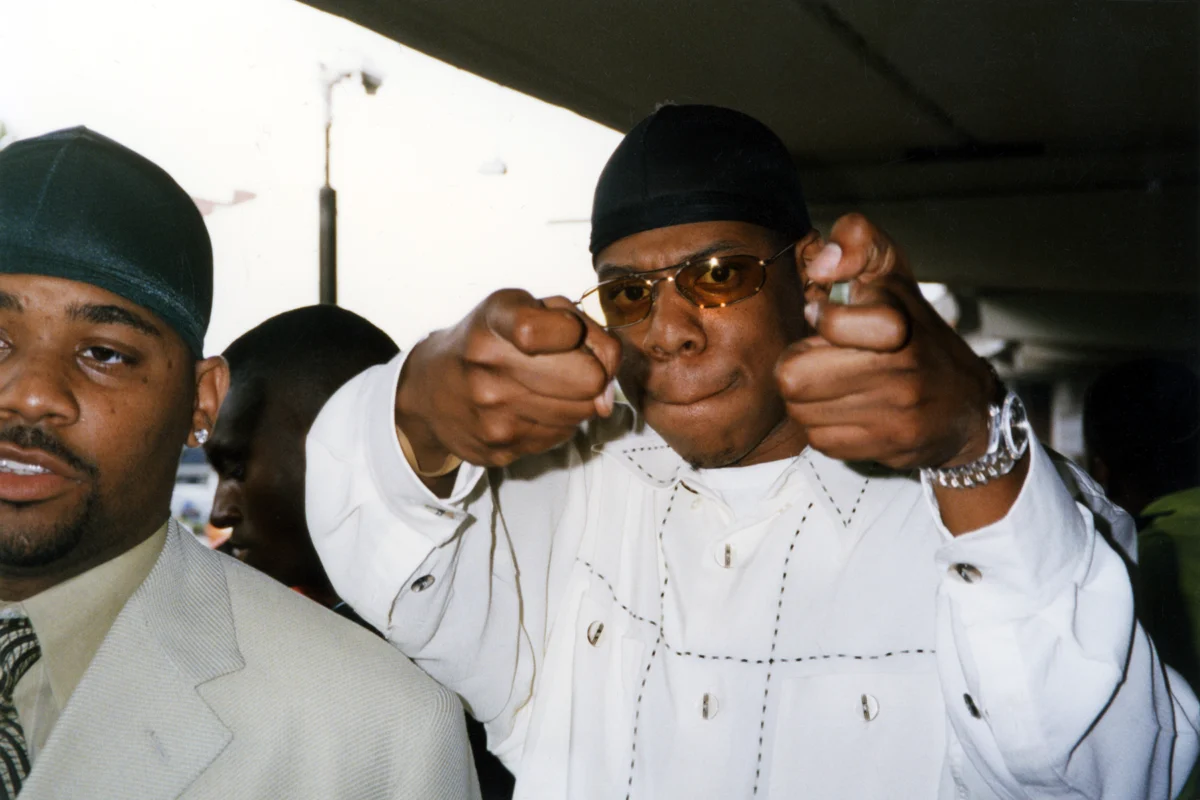
HangupsMusic.com – London, On a vibrant Carnival Monday in August 1997, the pulsating streets of Notting Hill bore witness to a seismic shift in British music culture, an afternoon that would forever be etched in the annals of hip-hop history. Amidst the jubilant throng and rhythmic cacophony, a young Shawn Carter, better known as Jay-Z, ascended a makeshift stage under the iconic Westway, delivering a performance that, in hindsight, offered a crystal-clear glimpse into the genre’s burgeoning global future. This pivotal moment, captured in a serendipitous photograph by A&R executive Dillon Moulder, serves as a powerful reminder of a time when the British public was hungry for American hip-hop, and a future legend was ready to claim his throne.
The last Monday of August 1997, specifically around 5:19 p.m., holds a special place in Moulder’s memory. He recalls standing in a social area near Thorpe Close in Ladbroke Grove, camera in hand, moments before Jay-Z was due to electrify the Notting Hill Carnival crowd. Moulder wasn’t there in an official photographic capacity; his primary role was as an A&R for an independent record label based locally. His artist, British rapper Mr45, had been extended an invitation to perform on the renowned Radio 1 stage, curated by DJ Tim Westwood. Moulder had spent the day immersed in the vibrant atmosphere, engaging with fellow artists and industry figures, and had even exchanged pleasantries with Damon Dash and Jay-Z himself. It was a purely coincidental alignment of time, place, and equipment that led to the capture of an image that has only grown in historical resonance with each passing year. "I was there at exactly the right time," Moulder recounts, emphasizing the precise minute the snapshot was taken, just sixty seconds before Jay-Z’s set began.
The sheer magnitude of the lineup that day remains staggering. Imagine a single stage in West London hosting an unprecedented convergence of hip-hop and reggae royalty: Jay-Z, Busta Rhymes, Common, Lil’ Kim, The LOX, Beenie Man, EPMD, and Rampage, alongside a vibrant array of British and Jamaican talents. In an era when international hip-hop tours were still a relative rarity in the UK, such an assembly was nothing short of miraculous. "You’d be lucky to get one hip-hop artist, maybe, if you were lucky, every quarter to every six months," Moulder explains, reflecting on the limited exposure British fans typically had to American acts. "To have that many U.S. artists on the same stage on the same day was unprecedented." It wasn’t just a concert; it was a cultural phenomenon, a concentrated blast of the genre’s most dynamic forces, hinting at the global dominance that hip-hop would soon achieve.
At 27 years old, Jay-Z found himself at a pivotal juncture in his career. His critically acclaimed debut, Reasonable Doubt, had been released just a year prior, solidifying his reputation among listeners who cherished what Moulder describes as "real hip-hop." Yet, he was still months away from unleashing In My Lifetime, Vol. 1, an album that would signal a deliberate shift towards a more polished, commercially oriented sound, often compared to the burgeoning Bad Boy aesthetic then captivating New York. In Britain, his star was undeniably on the ascent. Reasonable Doubt had secured a UK licensing deal, and Moulder vividly recalls Jay-Z commanding the stage as an opening act for The Fugees at Wembley Arena that preceding May. By July, his face graced the cover of the influential British rap magazine, Hip Hop Connection. "People knew the music, they knew the videos, but they hadn’t seen him perform," Moulder notes, capturing the palpable anticipation. By Carnival, "the hype was growing," fueled by curiosity about his evolving artistic direction. While some purists harbored "some suspicion" regarding his anticipated move towards a "shinier" sound, Moulder insists it wasn’t enough to diminish interest. Instead, it merely "piqued people’s curiosity about what direction he was heading in."
The Carnival set itself served as a powerful declaration of his versatility and future intentions. Moulder distinctly remembers Jay-Z kicking off his performance with "Ain’t No…," immediately drawing the crowd into his lyrical world. He then launched into "Who You Wit," a track that had already permeated UK clubs and airwaves, cementing its status as a local favorite. The audience was treated to tantalizing previews from the forthcoming In My Lifetime, Vol. 1, with renditions of "Sunshine" and "Streets Is Watching." Perhaps the most talked-about moment, however, was Jay-Z’s decision to rap the intricate lyrics of "Imaginary Player" over the infectious beat of Missy Elliott’s then-ubiquitous track, "The Rain." "That was probably, maybe, globally the first time that that verse had been heard," Moulder suggests, underscoring the potential historical significance of the moment. The stage had been meticulously set; just two nights prior, Jay-Z had made a high-profile appearance on Westwood’s national Radio 1 show, igniting a fervent buzz. "People were ready for that Monday, without a shadow of a doubt," Moulder affirms, describing a crowd primed for an unforgettable experience.
Tim Westwood, the enigmatic and influential Radio 1 DJ, remains an unavoidable figure in the narrative of that day. In 1997, his hip-hop stage at Notting Hill Carnival was not merely a performance venue; it was a major pilgrimage site for rap aficionados. His power to draw such an unprecedented roster of talent was undeniable. Moulder’s own artist, Mr45, was there because Westwood had personally extended the invitation. The year before, Westwood had famously brought Foxy Brown to the Carnival, further solidifying his stage’s reputation. By 1997, Moulder reflects, "His Carnival was basically notorious for how big it was and how popular it was." However, any contemporary reflection on Westwood’s role is now inextricably linked with the grave allegations that have surfaced against him. He has since been charged with 15 sexual offenses involving seven women, including four counts of rape, to which he has pleaded not guilty. His trial is slated to commence next year, a stark and somber counterpoint to his historical musical influence.
As Notting Hill Carnival approached its 60th anniversary (as of the original article’s publication), marking six decades since Rhaune Laslett’s inaugural 1966 street party, Moulder observes profound changes since the Nineties. He notes a significant increase in commercial presence and a decidedly more controlled environment. Yet, he passionately challenges the often-negative association between Carnival and crime. "Carnival is not synonymous with crime," he asserts, arguing instead that "crime is synonymous with, you know, wherever there’s a huge gathering of people, there’s always going to be an element of crime." For Moulder, the enduring narrative is one of preservation and cultural vitality. "Musically, Carnival is vital," he emphasizes. "It’s one of the biggest Black community events in Europe, possibly the world. I don’t think it should be just looked at as a U.K. thing." At its very heart, sound-system culture perseveres, with many of the same systems Moulder remembers from Jay-Z’s performance year still thumping through the streets today. "Those same sound systems back when Jay-Z was there in ’97 will be there this year," he predicts, highlighting an unbroken lineage.
What has fundamentally transformed, however, is the very concept of a day like August 25, 1997. "Back then, Carnival was one of the only outlets for hip-hop," Moulder explains. "It was on the verge of going more mainstream in ’97, but it wasn’t quite there yet." The atmosphere on that Monday was, in Moulder’s affectionate recollection, "chaos." But it was a cherished chaos, providing "people in their late teens, early 20s, basically getting the opportunity to see artists they would never get to see" otherwise. It was a rare, raw, and unfiltered experience, a crucial bridge for a genre on the cusp of global domination.
The narrative of Jay-Z’s journey comes full circle with a remarkable geographical coincidence. Nearly three decades after his electrifying Carnival debut, Jay-Z is scheduled to return to London for two colossal shows at Tottenham Hotspur Stadium on September 4 and 5. Moulder unearthed a fascinating detail: after his 1997 Carnival performance, Jay-Z reportedly attended a £5 afterparty at a club known as The Temple, located at 415 to 429 High Road in Tottenham. Tottenham Hotspur Stadium, his upcoming venue, stands just farther up the very same street, at 782 High Road. "It’s less than one mile," Moulder marvels. The original club is long gone, replaced by modern flats and shops, but the symbolic resonance is profound. Jay-Z, returning with a discography spanning three decades, will command a stadium stage just a stone’s throw from where he once celebrated a nascent victory in a modest club. "That’s just crazy that Jay-Z is in North London pretty much 29 years to the day," Moulder reflects, deeply impressed. "The fact that someone is there three decades later and has the same or similar degree of anticipation, it’s just, you can’t name any artists, especially in hip-hop, that have achieved that." It is a testament to an unparalleled career, a journey from a pivotal Carnival moment to an enduring legend, still captivating audiences nearly 30 years later.
