
 By Rose Miami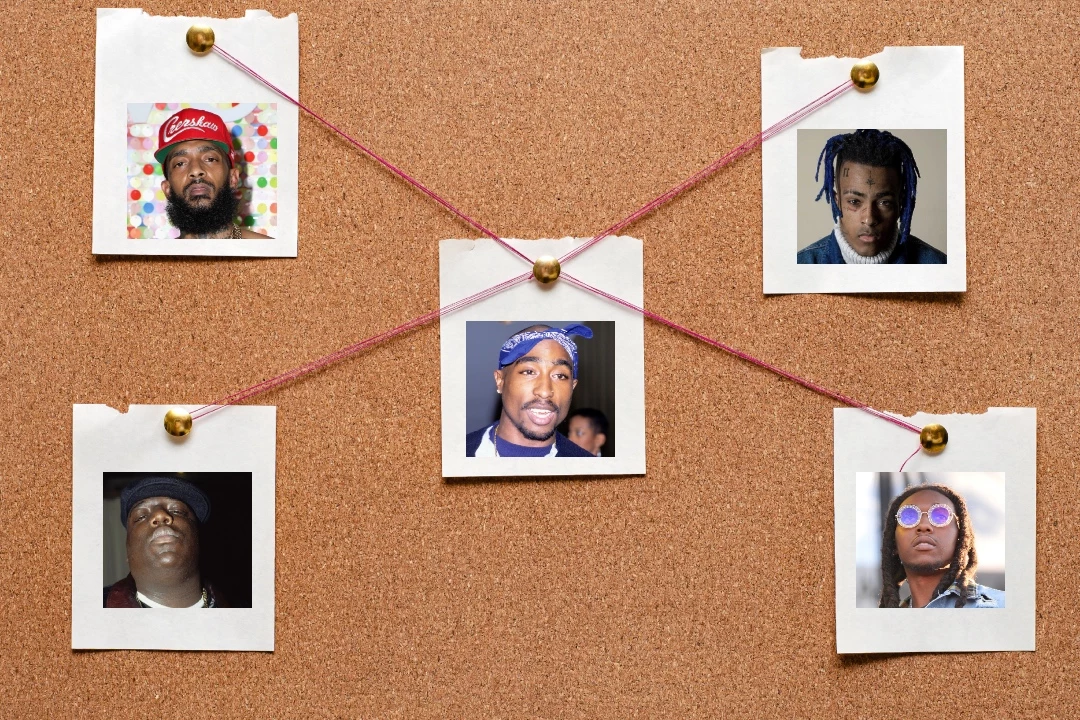
HangupsMusic.com – New York City, 1987. A late August night in the Bronx marked a somber turning point, a moment that many believe signaled a fracturing of hip-hop’s nascent innocence. Just shy of 14 years after DJ Kool Herc ignited the genre with his groundbreaking block party in the same borough, the vibrant energy of Boogie Down Productions was tragically dimmed. Scott La Rock, a foundational architect of hip-hop’s sound, was shot, succumbing to his injuries at Misericordia Hospital at the tender age of 25. This devastating loss was not an isolated incident; it was, sadly, the harbinger of a grim reality that has continued to haunt the hip-hop community.
The specter of unsolved homicides looms large over hip-hop’s rich history. While some high-profile cases, such as the tragic murders of XXXTentacion and Jam Master Jay, have seen justice served with perpetrators convicted, others remain open wounds. The recent 2022 killing of Takeoff, a celebrated member of Migos, saw suspects apprehended and awaiting trial, a flicker of hope in a landscape often overshadowed by unanswered questions. For a genre that has consistently and unflinchingly documented the harsh realities of inner-city life, the disproportionate number of artists falling victim to violence is a profound and persistent tragedy. Despite the efforts of law enforcement, the effectiveness in bringing perpetrators to justice has been alarmingly inconsistent. La Rock’s murder may have been the first notable hip-hop slaying, but it was tragically far from the last to remain an open case.
The statistics paint a stark picture. In the nearly four decades since Scott La Rock’s untimely death, XXL magazine has meticulously documented the fates of 93 additional rappers who have met violent ends. This averages out to roughly two artists lost each year, a devastating and continuous drain on the culture’s creative force. Of these tragic cases, only a small fraction have been definitively solved. Many others are still languishing in the investigative ether, meaning that well over 60 lives, brimming with artistic potential, were cut short without their killers ever being brought to account.
To contextualize this alarming trend, consider the broader landscape of homicide investigations in the United States. According to the Murder Accountability Project, a non-profit dedicated to shedding light on the critical issue of unsolved homicides, the national murder clearance rate saw an uptick to 61.4% in 2024, a notable increase from 52.3% in 2022. While these figures represent an improvement in overall case resolution, they starkly contrast with the significantly lower percentage of hip-hop artist homicides that reach a conclusive end. Legendary figures like The Notorious B.I.G., Big L, and Mac Dre, whose influential careers were tragically cut short, remain victims of unsolved mysteries, their cases persisting as painful reminders of this persistent challenge, despite occurring decades ago.
This enduring cycle of violence and unresolved cases has inevitably led to harmful generalizations and unwarranted criticism directed at a genre that continues to grow in global influence. As Scott La Rock’s former manager, Scotty Morris, poignantly stated in an interview with The New York Times shortly after his client’s murder, "In some respects, rap music and violence seem to go hand in hand. But it’s not the music itself, it’s the environment. Violence was here long before hip-hop." This perspective highlights a crucial distinction: the music often reflects the environment, rather than causing the violence itself. Hip-hop artists, many of whom emerge from communities grappling with systemic issues and socioeconomic challenges, frequently channel their experiences and observations into their lyrics. However, this artistic expression should not be conflated with an endorsement or instigation of violence.
The persistent lack of closure in so many hip-hop related homicides not only leaves families and communities without answers but also fuels a narrative that can unfairly tarnish the reputation of an entire art form. The ongoing investigations, or lack thereof, into the deaths of these influential artists leave a void in the cultural landscape and a lingering sense of injustice. The very artists who have given voice to the voiceless, who have chronicled the struggles and triumphs of urban life, are themselves becoming casualties of the very realities they so vividly portray. This paradox continues to be a deeply troubling aspect of hip-hop’s journey, a testament to the ongoing need for thorough and effective investigations into every life lost. The quest for justice for these fallen artists remains a critical imperative for the hip-hop community and for society at large.
XXL has undertaken the significant task of examining the current status of each of the 93 hip-hop murders documented over the past 38 years. This comprehensive review aims to provide clarity on the ongoing investigations, the resolutions achieved, and the cases that continue to remain open, shedding further light on this critical issue.
The intricate web of unsolved cases within the hip-hop community represents a profound cultural and societal challenge. While progress has been made in some instances, the sheer volume of unresolved homicides underscores a persistent systemic failure. The voices of these lost artists, silenced too soon, continue to resonate through their music, serving as a powerful reminder of the lives cut short and the urgent need for continued vigilance and unwavering commitment to justice. The legacy of hip-hop is intrinsically linked to the stories of its pioneers and innovators, and the unresolved chapters of their lives cast a long shadow, demanding our attention and our action.
