
 By Azzam Bilal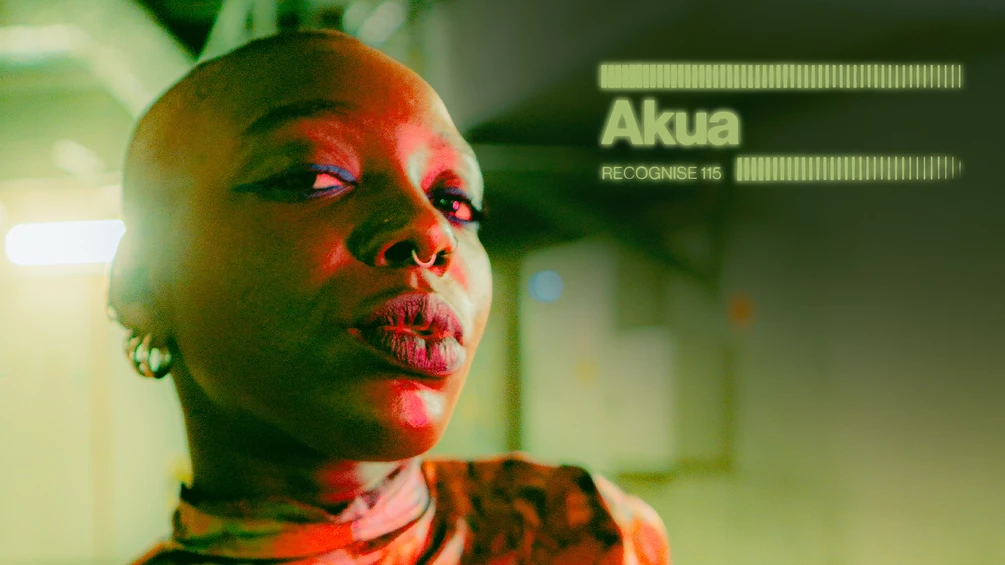
HangupsMusic.com – Berlin, Following a summer season that saw her command the booths of Europe’s most prestigious electronic music gatherings, the Ghanaian-American DJ Akua is reflecting on a period of profound professional and personal growth. From the high-intensity stages of Awakenings and Sónar to the more intimate, focused environments of Stone Techno and Veta, Akua has spent the warmer months of 2026 solidifying her reputation as one of the most vital conduits between the foundational sounds of the 1990s and the cutting-edge demands of the modern dance floor. Speaking from her home in Berlin, a city that has served as her creative anchor for the past three years, she describes a summer defined not just by the scale of the events, but by the quality of human connection she found within them.
For Akua, the role of the disc jockey has always extended beyond the mere curation of rhythm. She views her performances as a series of "micro-interactions," a term she uses to describe the fleeting but deeply meaningful moments of shared energy between the booth and the crowd. This pursuit of connection is the driving force behind her latest project: a double-sided, vinyl-only mix recorded for the prestigious Recognise series. The mix serves as both a retrospective of her formative influences and a forward-looking statement of intent, meticulously crafted to mirror the structure of the mid-90s mixtapes that first ignited her passion for the genre.
The conceptual framework of the mix is a direct homage to the "old-school" mixtape culture, specifically citing DJ Hyperactive’s seminal mid-90s release, Relevance. Like that classic cassette, Akua’s contribution is split into two distinct sonic identities. The A-side explores the "jacking" house and funk-infused rhythms that provided the DNA for the early rave scene, while the B-side descends into the more muscular, roiling techno that has become her signature. This duality is intentional; after a summer spent delivering high-octane, peak-time sets across the continent, Akua felt the need for a "palate cleanser." She notes that a true understanding of techno is impossible without an appreciation for house music, asserting that the two genres are inextricably linked through their shared history and mechanical soul.
Akua’s trajectory to the upper echelons of the Berlin scene is a story of geographical and cultural shifts. Raised in California, she moved to the American Midwest for her university years—a move that proved pivotal, as it placed her in the proximity of the very regions where house and techno were born. It was here that she first felt the expansive, exploratory nature of the music, finding in its abstract textures a sense of being "understood" that had eluded her in other facets of life. As a middle child in a family of three sisters, Akua admits to always feeling like a bit of an outlier, a trait that she believes perfectly aligns with the "punk attitude" and fierce individuality inherent in techno culture.
Her professional life began to take shape in New York City, where she spent eight years immersing herself in the Brooklyn underground. Cutting her teeth at legendary spots like Bossa Nova Civic Club, she developed a style characterized by a relentless, high-velocity approach to mixing, often leaning into the acidic, fast-paced sounds popularized by icons like Miss Djax and Paula Temple. Her 2018 set for the Discwoman collective served as a breakout moment, showcasing a DJ who wasn’t afraid to push the tempo or the limits of the equipment. Since then, her sound has matured, incorporating more nuanced "hardgroove" elements and unreleased tracks from her inner circle, yet it remains anchored by a dedicated digging process that focuses heavily on the "gold rush" era of 1994 to 1999.
This obsession with the late-90s aesthetic is part of what Akua identifies as a broader renaissance within the North American dance music community. She observes a new generation of artists who are bypassing digital conveniences in favor of vinyl mastery and a deep study of the genre’s pioneers. This commitment to preservation, she argues, provides a necessary counterweight to the more commercialized, trend-driven landscapes sometimes found in Europe’s larger club infrastructures.
Moving to Berlin provided Akua with the platform to reach a global audience, but it also exposed her to the stark differences between the American and European techno scenes. While Europe offers a robust infrastructure for electronic music, Akua notes that it can also foster a more rigid, critical environment. She speaks candidly about the "Reddit culture" and the phenomenon of receiving unsolicited social media critiques from audience members—a level of scrutiny that was less prevalent in the more community-focused New York underground. Furthermore, she addresses the ongoing challenges of diversity within the European scene. Despite the roots of techno being firmly planted in Black culture, Black artists—and particularly Black women—remain underrepresented on major festival lineups.
Akua’s response to these systemic issues is to lead by example, honoring the lineage of the women who paved the way before her. She holds a special reverence for the late Kelli Hand, known professionally as K-Hand. As the "First Lady of Detroit Techno," Hand’s ability to navigate and dominate a male-centric industry while experimenting across house, techno, and jungle serves as a constant North Star for Akua. In a touching tribute, Akua recalls her first-ever professional set in May 2017, which she opened with K-Hand’s track "Dance." To her, Hand’s legacy is a reminder that techno is a space for unapologetic self-expression and for "eating the dudes up" through sheer talent and innovation.
The "Recognise" mix tracklist further illustrates this commitment to the craft. The A-side features gems from Sean Deason, Spank Spank, and K-Hand herself, weaving together a tapestry of soulful, rhythmic complexity. The B-side shifts the gear into a higher intensity, featuring Dave Angel’s reworks of The Hacker and Ken Ishii, alongside the precision-engineered sounds of Adam Beyer, Technasia, and Rino Cerrone. It is a masterclass in tension and release, proving that even as Akua evolves, her ability to curate a journey remains unparalleled.
As the 2026 season transitions into autumn, Akua’s schedule shows no signs of slowing down. Her upcoming dates include a return to New York for a set at Refuge, a performance at Tresor.West in Dortmund, and a series of appearances during the Amsterdam Dance Event. However, she is also looking inward, preparing to expand her creative output beyond the DJ booth. She is currently diving into music production, seeking to translate her kinetic energy behind the decks into her own original compositions. Additionally, she is returning to her roots as a writer, a practice she put on hold to focus on her DJ career but now feels compelled to resume as a means of further exploring her identity.
Ultimately, Akua views techno as more than just a career; it is a vehicle for autonomy. In a world that often demands conformity, the "punk attitude" of the genre allows her to stand out and speak her truth. Whether she is digging through crates for a forgotten 1996 white label or closing out a festival stage at sunrise, Akua remains a vital guardian of techno’s past and a bold architect of its future. Her journey from the Midwest to Berlin is a testament to the power of the beat to transcend borders, and her continued rise suggests that the best is yet to come for an artist who refuses to be boxed in.
Tracklist Analysis:
Side A: The Foundation
The first half of the mix is a celebration of the "jack." Tracks like "You Don’t Know" by Que Sera Sera and "The Shit" by Sean Deason highlight the heavy influence of Chicago and Detroit on Akua’s sensibilities. The inclusion of the K-Hand mix of Da Junkies’ "Keep Movin" is a nod to her primary inspiration, while the closing track of the side, Misstress Barbara’s "My Passion For You," bridges the gap between house-centric grooves and the driving energy of the B-side.
Side B: The Descent
The B-side represents the "roiling" techno Akua is celebrated for. It is a high-precision affair, leaning on the peak-era "Tribal" and "Loop" techno sounds of the late 90s. The Dave Angel remix of Ken Ishii’s "Extra" provides a moment of cinematic intensity, while the Adam Beyer and Henrik B remix of DJ Shufflemaster’s "City Lights" showcases the relentless, percussive drive that defines the "Hardgroove" subgenre. The mix concludes with Foreign Textures’ "High Maintenance," leaving the listener in a state of high-velocity suspension—a fitting end for a DJ who lives for the "banger" but respects the history.
