
 By Azzam Bilal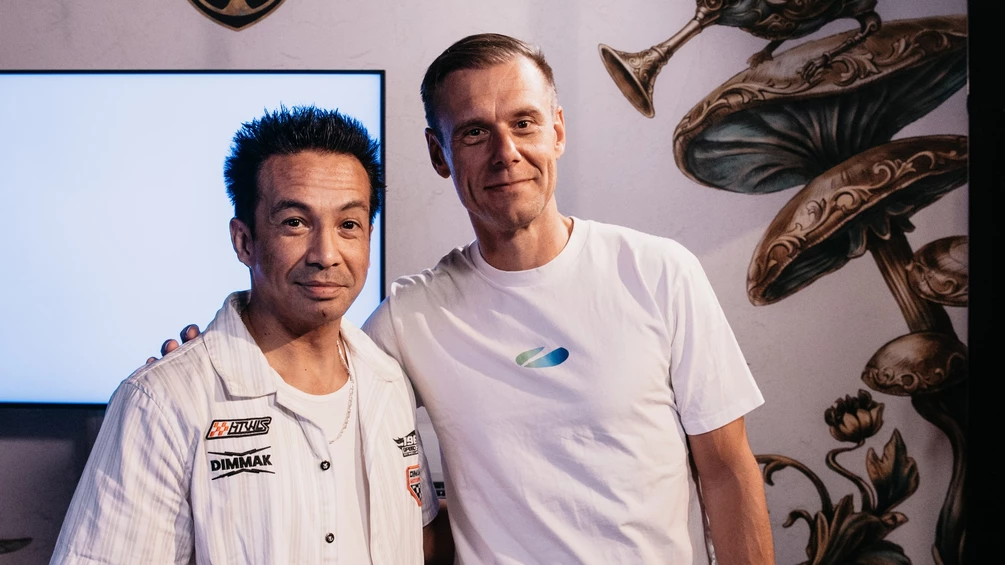
HangupsMusic.com – Amsterdam, The landscape of electronic dance music has always been defined by its relationship with technology, from the early adoption of the Roland TR-808 to the digital revolution of the modern DAW. In the latest chapter of this technological evolution, trance icon Armin van Buuren and house music veteran Laidback Luke have officially joined forces with Moises, a leading music technology company, as the inaugural members of its newly minted Artist Partnerships program. This collaboration marks a significant pivot in the ongoing debate surrounding artificial intelligence in the creative arts, positioning Moises as a "responsible" alternative to more controversial generative AI platforms.
As the music industry grapples with the ethical implications of machine learning, Moises has carved out a niche by prioritizing transparency and legal integrity. Unlike several competitors that have come under fire for scraping copyrighted material without consent, Moises maintains that its models are trained exclusively on licensed and authorized data. This commitment to "ethical AI" has allowed the company to secure an impressive roster of high-profile partners, including hardware giants like Ableton and Fender, the estate of Whitney Houston, and virtuosic musicians such as Jordan Rudess and Cory Henry. The addition of van Buuren and Laidback Luke—two of the most respected figures in global dance music—further solidifies the company’s standing as a bridge between traditional craftsmanship and futuristic automation.
The involvement of these two EDM heavyweights is not merely ceremonial. According to the company, both artists will play an active role in refining Moises’ suite of production and performance tools. Their contributions will focus on providing real-world feedback on features such as stem separation, vocal isolation, chord identification, and AI-assisted mastering. By integrating the insights of professional touring DJs and seasoned producers, Moises aims to ensure that its software functions as a sophisticated assistant rather than a replacement for human creativity.
Geraldo Ramos, the founder and CEO of Moises, emphasized that the future of music technology must be collaborative. He noted that electronic music has historically thrived because artists were brave enough to experiment with new tools. However, he argued that the next era of innovation must be built alongside musicians, rather than in a vacuum that ignores their needs or rights. Ramos praised van Buuren and Laidback Luke for their deep understanding of the electronic music community and their commitment to the responsibilities that come with developing tools for the next generation of creators.
For Laidback Luke, the partnership represents an opportunity to shape how young producers interact with technology. Known for his technical prowess and his "Creative EDM" philosophy, Luke has long been a mentor to aspiring artists. He suggested that while every generation receives new tools, the most effective ones are those that enhance the user’s ability to learn and make better creative choices. His vision for AI is one where the technology helps producers "hear more" and "learn faster," rather than simply doing the heavy lifting for them. This distinction is crucial in a market where some AI platforms promise to generate entire songs from a single text prompt.
Armin van Buuren echoed these sentiments, highlighting the importance of artist autonomy. As a pioneer who has seen the transition from vinyl and hardware to fully digital setups, van Buuren is no stranger to the skepticism that greets new tech. He maintained that the core of electronic music evolution lies in the artist’s ability to stay in control. He expressed excitement about building tools that increase the speed and expressiveness of the production process without stripping away the "soul" or the human decision-making that defines a great track.
The rise of Moises comes at a volatile time for the industry. Recent data from SubmitHub revealed a startling trend: nearly 40% of music released in July 2024 involved some level of AI assistance. Perhaps more tellingly, the study found that a third of artists who utilized these tools chose to deny their use when questioned. This suggests a lingering stigma surrounding AI, fueled by concerns that technology might devalue the effort and skill required to make music.
This stigma is not unfounded, as the industry has seen a massive influx of "deep fake" content and fully automated tracks. In early 2024, Sony Music took the drastic step of removing 135,000 AI-generated songs that utilized unauthorized vocal likenesses. Following suit, major distribution and retail platforms like Beatport, Traxsource, and Bandcamp have implemented strict bans or labeling requirements for fully AI-generated content. Beatport, in particular, has taken a hard line against tracks that lack human input, mirroring the sentiments of platforms like Deezer, which has launched AI detection tools to protect the integrity of its playlists.
The philosophical divide in the industry was further highlighted by recent comments from Skrillex. The multi-Grammy winner joined a growing chorus of artists warning against the emotional vacuum of generative music. He pointed out that while an AI-generated song might go viral due to its novelty or catchy algorithm-friendly structure, it lacks the essential human connection. According to Skrillex, the "feeling of being seen" by another human being is a fundamental part of the musical experience that a machine cannot replicate.
The legal landscape is equally fraught. A recent investigative report by The Atlantic exposed that over 21 million copyrighted songs were used to train various AI models without the knowledge or compensation of the copyright holders. This revelation has led to landmark legal battles, including a high-profile case in Germany where Suno AI lost a copyright dispute over its training practices. The controversy surrounding Suno was exacerbated by its CEO’s claim that people "don’t enjoy" the process of making music—a statement that alienated much of the professional music community and stands in stark contrast to the philosophy championed by Moises.
Moises, by comparison, is positioning itself as the "pro-musician" choice. With a user base already exceeding 80 million people across 190 countries, the platform is rapidly becoming a standard tool for both amateurs and professionals. While its origins are rooted in dance music, the company has announced plans to expand its Artist Partnerships program into other genres, including rock, pop, and jazz. Its primary markets—the United States, Brazil, India, Japan, and France—show a global appetite for tools that simplify the technical barriers of music production while leaving the creative direction in human hands.
The features offered by Moises, such as stem separation, have become indispensable in the modern remix and mashup culture. By using AI to isolate drums, vocals, or basslines from a finished track with high fidelity, DJs can create unique edits for their sets that were previously impossible without access to original studio files. Similarly, AI-driven mastering allows independent artists to achieve a professional sound on a budget, though Moises argues this should be a starting point for further human refinement rather than the final word.
As Armin van Buuren and Laidback Luke begin their tenure with the company, the focus will remain on the delicate balance between automation and inspiration. Their partnership signals a move toward a more transparent, ethical framework for AI in music—one where the machine is treated as an instrument rather than a composer. In an era where the definition of "artist" is being constantly challenged by algorithms, the endorsement of two industry legends suggests that the future of music may not be a choice between human and machine, but rather a sophisticated symphony of both.
