
 By admin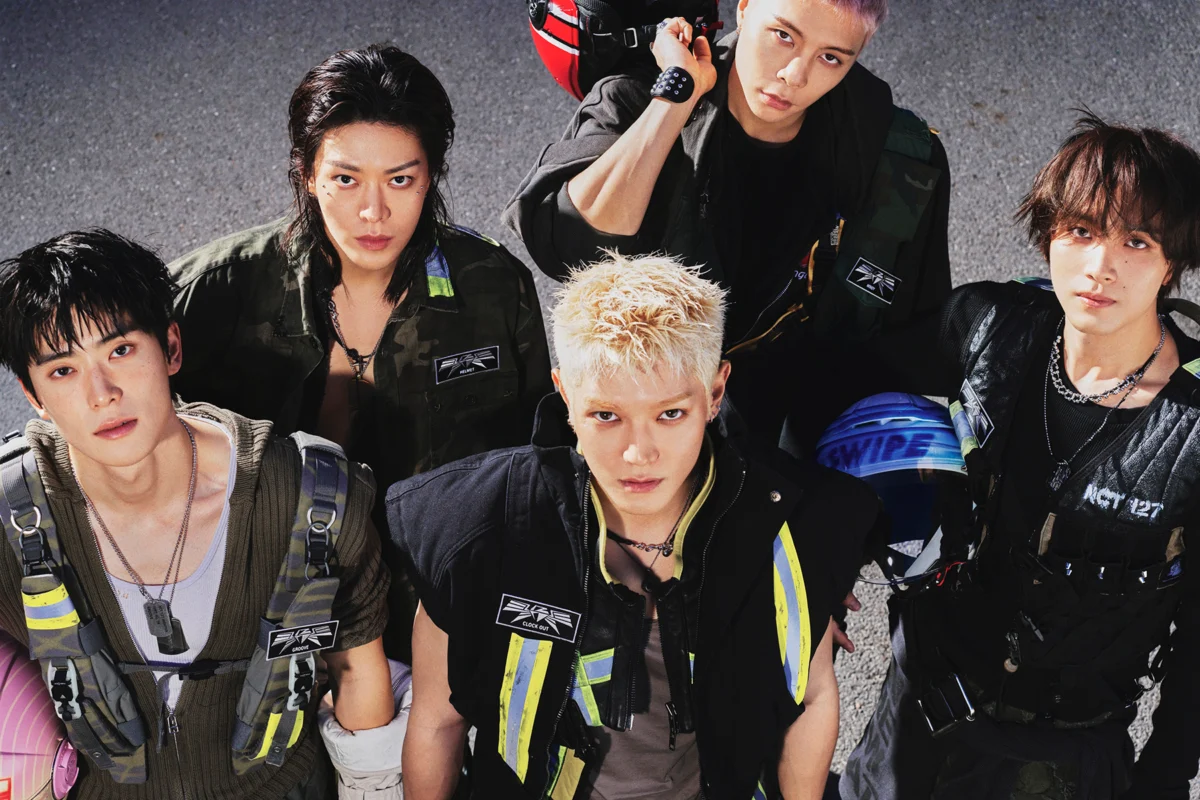
HangupsMusic.com – Los Angeles, The air in the spacious conference room hung with a curious blend of anticipation and boyish mischief. Five members of NCT 127, the pioneering fixed subgroup of the expansive NCT universe, sat poised along a polished table, each armed with hotel stationery and a pen. What initially seemed like a setup for profound reflection quickly dissolved into an impromptu art session. Instead of dissecting their decade-long journey since debut or engaging in the familiar banter of dorm-mates, the quintet hunched over their notepads, lost in the whimsical world of doodles. It was a charming, unexpected glimpse into the enduring youthful spirit that belies their status as K-pop titans.
Just over a decade ago, the music world was introduced to NCT 127, a septet then composed of teenagers embodying an aggressive, rebellious energy, notably seen in their "aggro" science class concept. While that raw, defiant spirit has matured into a more nuanced, yet equally compelling, stage presence, their seventh studio album, Blingy, proves that their sonic signature remains as bold and impactful as ever. Chicago-born member Johnny articulated the album’s intent with characteristic directness: "I wanted to make a statement. NCT 127 is back."
The past few years had seen K-pop’s self-proclaimed "noisiest mavericks" experience a period of relative quiet, a necessary pause dictated by South Korea’s compulsory military service. In 2024, the group’s charismatic leader, Taeyong, began his enlistment, followed by the deep-voiced, dimpled Jaehyun. As 2025 drew to a close, their return was imminent, but the cycle continued with Doyoung and Jungwoo commencing their service. This staggered enlistment meant that the Blingy comeback was shouldered by a formidable five-member lineup: Johnny, Yuta, Haechan, alongside the newly returned Taeyong and Jaehyun. This transitional phase presented both challenges and opportunities, forcing the group to re-evaluate and adapt.
During their interview with Billboard, the album rollout was still in full swing, fresh off a monumental performance. Across the table, Taeyong’s notepad became a canvas for a mind teeming with creative energy, reminiscent of a rebellious cartoon character. His sketches included a disembodied robot head, chaotic stars, a stick-figure animal being abducted by a UFO, and a surprisingly muscular bird-man. In a playful nod to Blingy‘s boisterous lead single, "Piñata," which had been electrifyingly live-debuted at KCON LA just days prior (August 14th), a stubby-legged donkey also found its place on the page.
The memory of their KCON LA headlining set still resonated deeply with the members. Johnny reflected on its intensity, calling it "one of the hardest performances we’d ever had to get ready for." The shifting lineup necessitated a complete overhaul of their existing repertoire, requiring the redistribution of vocal lines and choreographic formations for nearly every song on the setlist. This arduous task highlighted the group’s resilience and their unwavering commitment to delivering an exceptional show, regardless of internal changes.
Beyond the live stage, the creation of Blingy‘s title track choreography proved equally demanding. Taeyong, who co-created the intricate routine, vividly recounted the first "full power" run-through. "I wasn’t even dripping sweat. I was just soaked," he exclaimed, likening the experience to an extreme workout. Johnny interjected, "CrossFit," then spelled out, "H-I-I-T." Taeyong chuckled, agreeing, "A bit like CrossFit, maybe even harder." Despite the physical toll, Taeyong’s initial suggestions to simplify certain sections were met with firm resistance from his bandmates. "I felt it then," he mused, "The members really don’t change when it comes to ambition about performance and being uncompromising with what we show. We all have this desire." He playfully added, "I have it a bit less. But with everyone’s help, I was able to do it, too." This interaction underscored the collective drive that defines NCT 127, where individual aspirations coalesce into a shared pursuit of perfection.
Now in his early thirties, Taeyong’s self-deprecating remarks about his stamina seem at odds with his recent output. Within six months of his military discharge, he had already released his debut solo studio album, WYLD, a testament to his relentless creative spirit. He admitted that "it was easier to make music in the military," where dedicated time allowed him to contribute to every track on his solo project. However, upon rejoining the demanding schedule of NCT 127, he confessed to barely having time to listen to music, let alone produce it. Jaehyun, in contrast, opted for a brief vacation before plunging back into album preparations. His reintegration appeared seamless, punctuated by his trademark dry wit: "Music is my life," he deadpanned. "Always music. Today music, tomorrow music."

The stakes were high for Blingy, making the selection of its centerpiece track a crucial decision. The process revealed a fascinating three-way split in artistic vision. Management, captivated by "Piñata," actively attempted to sway the decision in its favor. The A&R team, meanwhile, championed the chest-thumping anthem "Legacy." Yet, the members themselves threw their collective weight behind the undeniably impactful "Blingy." Johnny articulated their reasoning: "It’s a song that gets your attention. I wanted people to stop and listen if they were walking by." This choice underscored their commitment to a distinct, attention-grabbing sound, a philosophy that has long defined their artistic direction.
Indeed, turning heads is a familiar ambition for NCT 127. Their best-selling album Sticker (2021) and its famously cacophonous flute-driven title track continue to ignite fervent debate among fans and critics alike. "It’s one of those songs where either you hate it, or you love it," Johnny observed. "We try to make people who hate it love it, but sometimes you don’t. We kinda just started to understand that." This unapologetic embrace of their "Neo" style – a brash, experimental, and often polarizing sound – has become their calling card. Jaehyun added, "From the start, we had to be experimental," highlighting how this initial venture into the unconventional solidified into their core identity.
However, reducing NCT 127’s music to mere "noise" would be a misinterpretation of their complex sonic tapestry. Despite Blingy‘s overtly flashy title, the album itself contains a multitude of sounds and moods. The pinballing hip-hop banger "IKR" surprisingly employs minimalism to conduct its chaos, with members intentionally recording early in the day to capture a morning rasp in their vocals. Conversely, the seemingly lightweight "Day After Day" features unexpected, magical drum-n-bass swerves, demonstrating their versatility and willingness to fuse disparate genres.
This eclectic mix prompted Johnny to ponder, holding Blingy against the singular focus of "Sticker," "What is Neo?" For the exceptionally capable vocalist Haechan, the deep cut "Mad Dog" from a previous album perfectly encapsulates that elusive sound. Its acidic and abrasive nature is masterfully offset by a melodic bridge that acts as a soothing chaser to its squeaky dubstep drop, creating a delicious contrast that is quintessentially "Neo." Despite the endless discussions surrounding their sonic identity – with Yuta humorously sighing, "I don’t really know what Neo is anymore" – Taeyong offered a refreshingly simple, yet profound, summation: "There is no Neo song. The members’ voices are Neo." It’s a statement that redefines the genre not as a fixed style, but as the unique collective vocal identity of the group itself.
With Doyoung and Jungwoo temporarily absent, Blingy naturally treads a lighter path on the wilder vocal experimentations, though "Piñata" still offers a chance for Yuta to flex his rock-infused vocal chops. Yet, in a heartwarming surprise for fans and their fellow members, the enlisted duo makes a poignant appearance on "127 Million Miles," a heartfelt dedication to their global fanbase. Taeyong explained the song’s core message: "Even if we’re that far apart, we’re still able to be together." It’s a testament to the enduring bond that transcends physical distance and military service.
Rumors of North American dates for NCT 127’s upcoming REDLINE tour had swirled wildly after "Did you miss us?" billboards appeared in major U.S. cities in July. However, Johnny personally took to social media to quell the speculation, a move he explained with a slight grimace: "I didn’t want to get anyone’s hopes up. I felt like that would make it worse." He hinted at a "big picture" plan but opted not to elaborate, stating, "Let’s not get into it." For now, the group promises to "reach out as much as possible," with Johnny confirming that another tour is "definitely planned" for the following year. Looking further ahead, he envisioned an album with all members reunited in 2027, adding, "What lies beyond is up in the air. 2028… we’ll try, but we don’t know. Let’s just get through 2027."
This year, however, finds the group in a significant period of transition. As the sprawling NCT clan marked its tenth anniversary, most members faced contract renewals. April saw a pivotal moment as Mark Lee, a prominent figure within SM Entertainment and the NCT universe, became the first to not renew his exclusive contract with the company or the band. Johnny emphasized the deliberative nature of these decisions, stressing that "Nothing was done in haste. The decisions that everybody made weren’t made in a few months. It really did take a lot of time and effort and conversation with each other to come upon the conclusion we came upon."

Discussions had begun over two years prior, even before the military enlistments commenced. Taeyong recounted, "At the beginning, before I went to the military, we all got together and talked about it. I guess each of us had a direction we were thinking about and we each wanted different things, so I think it was unavoidable that we took a longer time to think about it." While acknowledging that "Ultimately, I can’t say that everyone is completely satisfied," Taeyong offered a pragmatic conclusion, suggesting, "But I think we are able to work in a better environment than before."
This new phase of seniority has ushered in a greater degree of creative control for the members. Taeyong, emboldened by this newfound autonomy, even fiddled with his phone, eager to play an unchosen demo version of an album track. His bandmates, however, reacted with mock horror. "Don’t play it," Johnny cringed, while Yuta echoed, "Ugh! What if she likes it too much?" The alternative melody, by the members’ collective estimation, simply wasn’t up to par and was ultimately shelved. "Hated [this] other version," Johnny declared, "Just gonna say that." When asked if they frequently found themselves at odds with their A&R team, Yuta promptly nodded, "Always." Taeyong concurred, "I think we have more complaints after renegotiating." The ensuing laughter was cut short by Yuta’s amendment, poking a thumb at Taeyong: "Only him." Taeyong, with a smirk, clarified, "Oh, I complained a lot before. And now I’m just complaining even more."
Despite Taeyong’s admitted persistence, the members recognize the value of their collaborative relationship with the company. Haechan explained, "We tell the company our opinion, [and] resolve it by talking it through. When it comes to songs, the A&R team comes to us with a certain vision, so we keep that in mind as we’re thinking about the album." Taeyong, though hard to budge, remains open to external perspectives, a mindset he attributes to SM Entertainment’s acquisition of music publisher KRM. "I came to learn some things," he reflected. "At first, I had a lot of complaints about there being so many foreign producers in the credits [of our albums]."
Time, however, has reshaped his perspective. "Just because they’re foreign producers doesn’t mean they’re making songs from a place of ignorance," he asserted. "These individuals have come over to Korea and are doing song camps. They’re learning about Korean culture and K-pop’s origins, and they know more than I expected. It’s within these song camps where their culture and our culture come together." His initial concerns about the K-pop industry potentially diluting the "K" were not unfounded. Yet, unlike some K-pop acts who appear to chase U.S. pop trends, NCT 127 has consistently leveraged creative partnerships with Western producers – including notable Black American talents like Dem Jointz, Patrick "J.Que" Smith, and Harvey Mason Jr. – alongside SM’s adept in-house team, not to strip their sound of complexity, but to enrich and expand it.
Johnny offered a compelling metaphor to encapsulate their identity: "Do you know what an MBTI is? It’s an easy way to explain who you are. But does that define you? I would say no." The eldest member concluded, unfazed by labels: "You can label us however you want. But, in the end, we kind of made a genre." And that, he proudly declared, is something they can truly call their own.
