
 By Azzam Bilal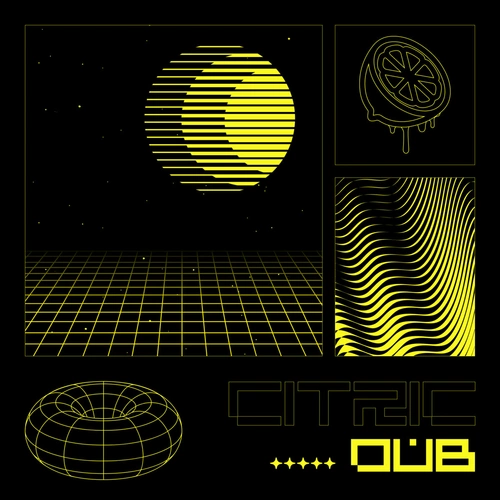
HangupsMusic.com – London, The landscape of contemporary jungle and drum & bass is currently undergoing a sophisticated transformation, one that looks backward at the foundational rhythms of the 1990s while simultaneously gazing forward toward experimental sound design. At the heart of this movement is Repertoire, a label that has consistently acted as a vanguard for the breakbeat renaissance. With a prestigious catalog featuring heavyweights like Tim Reaper, L Major, and Eusebeia, Repertoire has established itself as a curator of high-grade, rhythmically complex electronic music. Its sub-label, R-WHITES, was conceived with a more specific mission: to provide a dedicated space for the exploration of jungle’s purest forms and its most daring offshoots. The latest offering from this imprint, the Citric Dub EP, represents a significant milestone in the label’s trajectory. A collaborative effort between label head Law and the prolific contributor RUNDR, this four-track collection is a masterclass in atmospheric tension and rhythmic precision.
To understand the weight of the Citric Dub EP, one must first acknowledge the role of Law within the electronic music community. As the visionary behind Repertoire, Law has spent years cultivating a sound that bridges the gap between the raw energy of early rave and the clinical precision of modern production. His partnership with RUNDR—a producer known for his ability to weave intricate melodic tapestries into heavy-duty percussion—has proven to be one of the most fruitful alliances in the current scene. Together, they have moved beyond the standard tropes of jungle, opting instead to incorporate the spacious, echoing aesthetics of dub techno into the frantic framework of breakbeat. This synthesis is not merely a stylistic choice; it is a profound exploration of how space and time can be manipulated within a high-tempo environment.
The EP opens with "Citric Acid," a track that immediately signals the record’s dualistic nature. The title itself suggests a collision between the squelching, psychedelic textures of acid house and the deep, resonant echoes of the dub tradition. However, the track avoids the obvious cliches of 303-driven music. Instead, it begins with a series of deep, cavernous dub techno chords that feel as though they are being broadcast from the bottom of a limestone cave. The use of reverb and delay here is expert, creating a sense of immense physical space. When the drop finally arrives, it is anchored by a monumental sub-bass that demands a high-end sound system to be fully appreciated. Over this low-end foundation, the classic Amen break is deployed with surgical precision. Rather than letting the breakbeat run wild, Law and RUNDR chop and rearrange the percussion to maintain a constant sense of forward momentum while allowing the atmospheric elements to breathe. It is a track that feels both claustrophobic and infinite, a hallmark of the best dub-inflected jungle.
Following this powerful introduction is "Citric Solution," a composition that shifts the focus toward the "atmospheric roller" sub-genre that dominated the mid-90s but has since been refined for the modern ear. This track is characterized by what can only be described as aqueous synths—melodic lines that seem to shimmer and flow like water. The production here is remarkably fluid; the transitions between sections are seamless, creating a hypnotic effect that draws the listener into a trance-like state. While the percussion remains crisp and driving, it takes a backseat to the lush, emotive textures that define the track’s identity. "Citric Solution" serves as a reminder that jungle does not always have to be aggressive; it can be a medium for deep introspection and beauty. The "solution" in the title perhaps refers to the chemical-like blending of these disparate elements into a singular, potent liquid sound.
The third track, "Citric Complex," turns its attention to one of the most iconic samples in the history of breakbeat: the Apache break. Originally derived from the Incredible Bongo Band, the Apache break is famous for its syncopated bongo hits and driving energy. In the hands of Law and RUNDR, this legendary loop is revitalized. They foreground the break, allowing its natural swing to dictate the groove of the track. However, they continue the overarching theme of the EP by layering the percussion with spacious dub techno textures. The result is a track that feels grounded in the heritage of the London sound system culture while reaching toward the minimalist aesthetics of Berlin’s electronic underground. The "complex" nature of the track lies in its layering; there is a constant interplay between the dry, organic sound of the bongos and the wet, processed echoes of the synthesizers. It is a sophisticated piece of work that rewards multiple listens, as new rhythmic micro-details reveal themselves with each pass.
The EP concludes with a surprising stylistic pivot in the form of the title track, "Citric Dub." While the previous three entries explored the various intersections of jungle and dub, the closing number ventures into the realm of house music. Described as an "oceanic" house cut, it maintains the melodic DNA of the rest of the EP but transplants it into a 4/4 rhythmic structure. The transition from the high-velocity breaks of the earlier tracks to the steady, pulsing heartbeat of house could have felt jarring in lesser hands. However, Law and RUNDR manage this shift with grace. The same aqueous synths and dub-heavy chords that defined the jungle tracks are present here, providing a sense of thematic continuity. The track evokes the feeling of a sun-drenched coastline or the deep blue of the open sea, offering a moment of melodic catharsis after the rhythmic intensity of the preceding tracks. It is a testament to the versatility of the producers and a bold statement on the fluidity of genre boundaries in the contemporary era.
From a technical perspective, the Citric Dub EP is a triumph of sound design. The balance between the high-frequency percussion and the low-frequency sub-bass is handled with extreme care, ensuring that neither overwhelms the other. The use of space is perhaps the record’s most defining characteristic. In an era where many electronic music productions are "brickwalled"—pushed to the absolute limit of loudness at the expense of dynamic range—Law and RUNDR allow their music to breathe. There is a sense of "air" around the drums, and the reverb tails are allowed to fade naturally into the silence. This attention to detail creates a sense of immersion that is often lacking in modern dance music. The "Citric" motif that ties the EP together is not just a naming convention; it represents a sharp, tangy, and refreshing approach to production that cuts through the noise of the saturated jungle market.
The cultural significance of this release cannot be overstated. We are currently witnessing a massive resurgence of interest in jungle, driven by a new generation of producers who were too young to experience the original 90s movement. However, this "revival" risks becoming a mere exercise in nostalgia if it does not evolve. Labels like Repertoire and R-WHITES are crucial because they are not simply replicating the past; they are expanding the vocabulary of the genre. By incorporating elements of dub techno and house, Law and RUNDR are pushing jungle into more experimental territory, ensuring its relevance for years to come. They are proving that the breakbeat is a versatile tool that can be used to construct a wide variety of emotional and physical experiences.
In summary, the Citric Dub EP is a landmark release for R-WHITES and a career highlight for both Law and RUNDR. It is a record that demands attention, not through sheer volume or aggressive posturing, but through its intricate craftsmanship and melodic depth. Whether it is the cavernous depths of "Citric Acid," the fluid beauty of "Citric Solution," the rhythmic heritage of "Citric Complex," or the oceanic warmth of "Citric Dub," every moment of this EP feels intentional and inspired. It is a gem of a record that serves as a beacon for the future of the UK underground, proving that when tradition meets innovation, the results can be truly captivating. As the needle hits the final groove, the listener is left with a sense of completion, having traveled through a complete sonic ecosystem that is as intellectually stimulating as it is physically resonant.
