
 By admin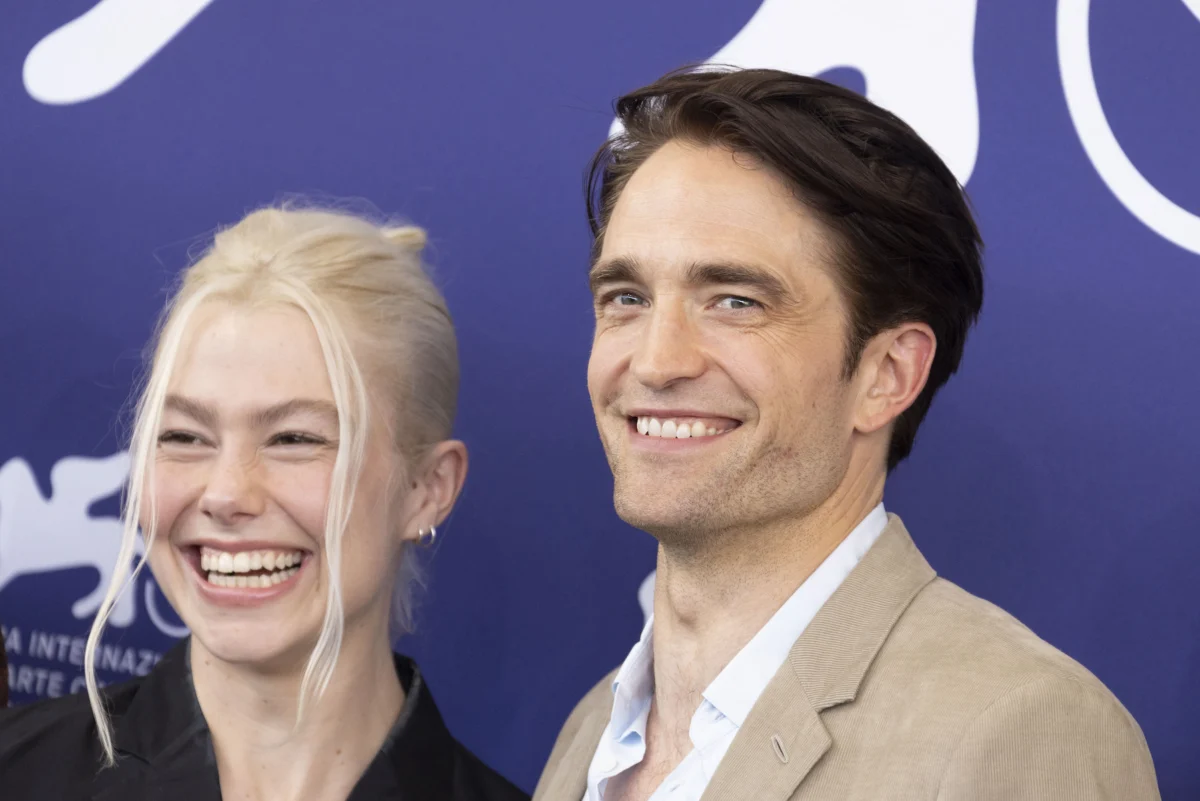
HangupsMusic.com – Venice, Italy – The glittering canals and historic grandeur of the Venice International Film Festival recently played host to a captivating moment in contemporary culture: the cinematic debut of indie music icon Phoebe Bridgers. The acclaimed singer-songwriter, known for her evocative lyrics and melancholic melodies, stepped into an entirely new spotlight with her role in Lance Oppenheim’s highly anticipated film, Primetime, which premiered to significant buzz. Her transition from stadium stages to the silver screen has not only surprised fans but has also garnered enthusiastic accolades from none other than her esteemed co-star, Robert Pattinson, who lauded her "unbelievable" natural talent and poise, declaring her remarkably relaxed even on her very first day of filming.
The premiere of Primetime on Saturday marked a pivotal moment for Bridgers, whose artistic journey has, until now, been predominantly defined by her profound musical contributions. The film itself delves into complex and ethically charged territory, drawing inspiration from the controversial television series To Catch a Predator and its infamous host, Chris Hansen. Directed by Lance Oppenheim, known for his unique blend of documentary and narrative storytelling, Primetime explores the psychological intricacies and societal implications surrounding the show’s vigilantism.
During the film’s press conference, a fascinating layer of pre-existing artistic connection was revealed: Oppenheim and Bridgers shared a friendship long before Primetime entered development. This established rapport was not merely coincidental; Oppenheim had recently lent his directorial vision to Bridgers’ music video for her track “Lost Boys,” forging a creative synergy that would soon extend to the cinematic realm. This prior collaboration undoubtedly fostered a level of trust and understanding that proved invaluable as Bridgers navigated the unfamiliar waters of acting.
The genesis of Bridgers’ casting was, by all accounts, an unexpected proposition. Oppenheim, recognizing a unique quality in his musician friend, broached the idea of her taking on a role in Primetime to Pattinson. The renowned actor’s initial reaction was one of humorous disbelief. "I didn’t even know Lance and Phoebe were friends," Pattinson recounted at the press conference, as reported by Variety. "When [Oppenheim] suggested her, I was like, ‘Phoebe Bridgers? Why don’t we just get the queen?’" This lighthearted skepticism underscored the surprise factor of Bridgers’ involvement, given her established reputation solely as a musical force.
Bridgers herself confessed to the initial trepidation she felt when the offer came. "It was certainly super intimidating, and when Lance asked me, I was like, ‘No way,’" she admitted. However, the experience quickly transformed from daunting to deeply enjoyable. She attributed this positive shift to the caliber of her collaborators, stating, "But it turns out, working with incredible people actually makes it way easier. I thought I was going to wither with all of these guys. Instead, it was just like so fun and free." Her candid reflection highlights the supportive environment cultivated on set, which evidently allowed her to shed her inhibitions and embrace the creative process.
Delving deeper into her approach to acting, Bridgers shared a fascinating insight into her methodology, particularly as a newcomer to the craft. "I just trusted Lance. He made it feel like a documentary in a really fun way," she explained, touching upon Oppenheim’s distinctive directorial style that often blurs the lines between reality and fiction. This approach likely eased her transition, allowing for a more organic and less performative process. She also articulated a common challenge for many actors, especially those unaccustomed to the demands of scripted performance: "I just couldn’t get over, how do you read something on a script and then act like you’re thinking of it in that moment?" This question reveals her commitment to authenticity and her struggle with the artifice inherent in conventional acting, perhaps pushing her towards a more naturalistic portrayal.
Pattinson, a seasoned actor with a filmography that spans critically acclaimed independent dramas and blockbuster franchises, offered effusive praise for Bridgers’ performance as one of the To Catch a Predator decoys. "She’s unbelievable," he reiterated. "Even on the first day, she was so relaxed. She didn’t seem nervous at all. She completely got the tone, and it’s a relatively difficult movie." His observations are particularly telling. To be "relaxed" and "not nervous" on one’s acting debut, especially alongside an established star and under the direction of a respected filmmaker, speaks volumes about her innate composure and intuitive understanding of the material. Furthermore, Pattinson’s emphasis on her grasping the film’s "difficult tone" suggests that Bridgers’ role required a nuanced and sensitive portrayal, navigating the morally ambiguous and emotionally fraught themes central to Primetime.
Bridgers’ involvement in Primetime extended beyond her on-screen presence. Demonstrating her multifaceted artistic talents, she also co-composed the film’s score, a significant contribution that integrates her musical prowess directly into the narrative fabric of the movie. Additionally, she lent her voice and songwriting skills to the end credits song, ensuring that her signature artistic touch would bookend the cinematic experience. This comprehensive creative input positions her not merely as an actor for hire but as a vital artistic collaborator, deepening her connection to the project. Her characteristic blend of vulnerability, introspection, and melancholic beauty in her music could undoubtedly imbue the film’s score with a unique emotional resonance, enhancing its thematic depth.
Oppenheim had previously elaborated on his decision to cast Bridgers in an interview with The Hollywood Reporter, shedding further light on his unconventional choice. "I’ve always known her to have an incredibly deep, almost baritone speaking voice, and I was then amazed that someone who had such a deep speaking voice could produce this beautiful, angelic singing voice," Oppenheim explained. This striking vocal duality was a key factor in his vision for the character. "With how she’s able to use her voice in different environments, I kept thinking, ‘That’s exactly what a decoy would do.’" He recalled the casual, yet pivotal, text he sent: "This is so random, but I think you are perfect for this part," to which Bridgers’ initial, self-deprecating reply was, "I don’t really act, I’ve never done it, I don’t know how." This exchange beautifully illustrates the serendipitous nature of the casting, rooted in a director’s keen observation of an artist’s latent potential beyond their primary medium.
Phoebe Bridgers’ acting debut in Primetime at the Venice International Film Festival represents a remarkable expansion of her artistic career. It underscores her willingness to venture into uncharted creative territory and highlights the collaborative spirit that can emerge when diverse talents converge. With accolades from a respected co-star and a significant musical contribution to the film, Bridgers has not only defied expectations but has also firmly established herself as an artist capable of captivating audiences across different mediums. This venture into cinema might just be the first chapter in a promising new facet of her already illustrious career, hinting at a future where her unique artistic voice resonates not only through headphones but also across the silver screen.
