
 By Azzam Bilal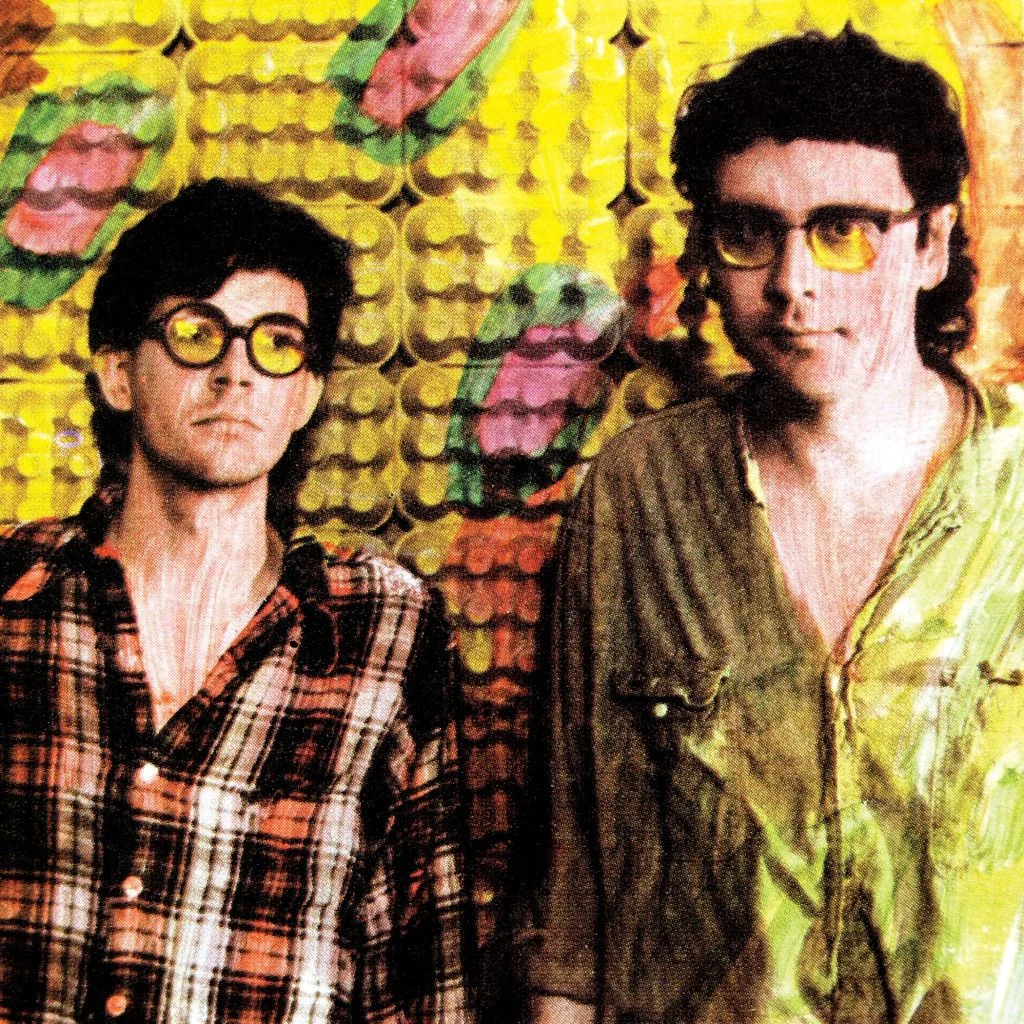
HangupsMusic.com – The landscape of independent music has lost one of its most unapologetic visionaries. David Fair, the co-founder of the seminal lo-fi punk outfit Half Japanese, has passed away at the age of 74. His brother and lifelong collaborator, Jad Fair, shared the news of David’s passing following a battle with cancer, marking the conclusion of a creative journey that fundamentally altered the definition of "amateurism" in modern art. Through a career spanning five decades, David Fair did more than just play music; he dismantled the barriers of entry for generations of artists, proving that passion and a lack of traditional technical skill could be the most potent tools in a musician’s arsenal.
The story of Half Japanese is one of the great myths of the American underground, a narrative characterized by a deliberate rejection of polish and a fervent embrace of raw, unmediated expression. Formed in 1974, the group’s geographic origins remain as elusive as their sound, with roots alternating between Michigan and Maryland depending on the telling. At its core, the band was a fraternal experiment. David and Jad Fair began as two young men in a bedroom, armed with instruments they didn’t necessarily know how to "play" in the classical sense, creating noise for an audience of themselves. This insular beginning birthed a sound that was entirely devoid of artifice. They weren’t imitating the rock stars of the era; they were inventing a new language out of feedback, distorted percussion, and whimsical, often surrealist lyricism.
As the 1970s gave way to the 1980s, the Fair brothers moved from home-recorded cassettes to the international stage. Their transition was bolstered by the support of the British independent label Armageddon, which released several of their early singles. However, it was the 1980 debut album, 1/2 Gentlemen/Not Beasts, that solidified their status as icons of the avant-garde. A massive three-LP box set, the album was an audacious statement for a debut. It contained a dizzying array of content: deconstructed covers of classic rock songs, brief and explosive punk outbursts, and experimental soundscapes that defied categorization. The sheer volume of the release signaled that Half Japanese was not merely a band, but a continuous stream of consciousness. It became a cult landmark, influencing the "no wave" movement in New York and the burgeoning indie-rock scenes across the United States and Europe.
Central to David Fair’s enduring influence was his written philosophy, most famously encapsulated in his mini-manifesto, "How to Play Guitar." In this document, Fair offered a radical alternative to the rigid structures of music education. He argued that the obsession with chords, scales, and finger placement was a hindrance to true creativity. "If you ignore the chords your options are infinite and you can master guitar playing in one day," he famously wrote. This was not a joke or a sign of laziness; it was a profound punk-purist ethos. Fair believed that the physical act of making sound should be an extension of the soul, unburdened by the "correct" way of doing things. This ideology resonated deeply with the burgeoning DIY movement, providing a roadmap for anyone who felt alienated by the virtuosity of stadium rock.
While David eventually stepped back from the front lines of the band during the mid-1980s, his DNA remained embedded in everything Half Japanese produced. The band’s discography during this period, including the 1984 album Our Solar System, showed a slight lean toward melody, but the spirit of entropy was never far away. Their music occupied a unique space where sweet, earnest songs about romance lived side-by-side with terrifying tracks about monsters and fantastical beasts. They were supported by a rotating cast of musicians, including John and Ricky Dreyfuss, and eventually caught the attention of some of the most influential figures in music history.
Perhaps the most famous endorsement of the Fair brothers came from Kurt Cobain. The Nirvana frontman was a vocal admirer of the band’s uncompromising sincerity. He famously wore a Half Japanese t-shirt and invited the group to open for Nirvana during the In Utero tour in 1993. For Cobain, the Fairs represented an "incorruptible" version of the underground—a band that remained true to its chaotic origins regardless of fame or industry trends. This association helped bring the band’s work to a wider audience, though they remained steadfastly committed to their idiosyncratic path.
The band’s mythology was further preserved in the 1992 documentary Half Japanese: The Band That Would Be King, directed by Jeff Feuerzeig. The film captured the eccentric brilliance of the brothers and the community of artists that gravitated toward them. Despite David’s reduced role in the band’s touring lineup during the late 90s and early 2000s—a period that saw the release of albums like Bone Head and Hello on Alternative Tentacles—his absence was always felt as a missing piece of the original puzzle.
The narrative of Half Japanese came full circle in 2012 when Jeff Mangum of Neutral Milk Hotel invited the band to reunite for the All Tomorrow’s Parties festival. This resurgence led to the 2014 album Overjoyed, which saw the brothers working together once again. Produced by John Dieterich of Deerhoof, the album was a testament to the enduring relevance of their sound. It was followed by a series of high-quality reissues from Fire Records, ensuring that their sprawling catalog would be available to new generations of listeners.
In his later years, David Fair remained a prolific creator, though often away from the bright lights of the mainstream. He released several solo projects and collaborative works through Thick Syrup Records, a label that shared his commitment to unconventional art. Travis McElroy, the founder of the label, reflected on David’s passing by emphasizing his role as a mentor to the "rule-breakers" of the world. McElroy noted that David taught people that music didn’t have to follow a prescribed set of laws; it was something that could be birthed simply because the creator had a need to express themselves.
David Fair’s legacy is not found in chart positions or technical proficiency, but in the liberation of the artist. He championed the idea that "good" music is defined by its honesty rather than its complexity. By stripping away the elitism of the recording industry and the gatekeeping of musical theory, he opened a door that can never be closed. He was a "one-of-a-kind human being," as those who knew him often remarked, whose impact can be heard in every lo-fi bedroom recording, every dissonant punk riff, and every artist who picks up an instrument for the first time and realizes they don’t need a teacher to tell them how to make it scream.
As the music world mourns his loss, the message of David Fair remains clear and resonant: the world of sound is infinite, and the only rule is that there are no rules. He leaves behind a body of work that serves as both a playground and a sanctuary for the weird, the wild, and the wonderfully unrefined. In the end, David Fair didn’t just play the guitar; he set it free.
