
 By Rose Miami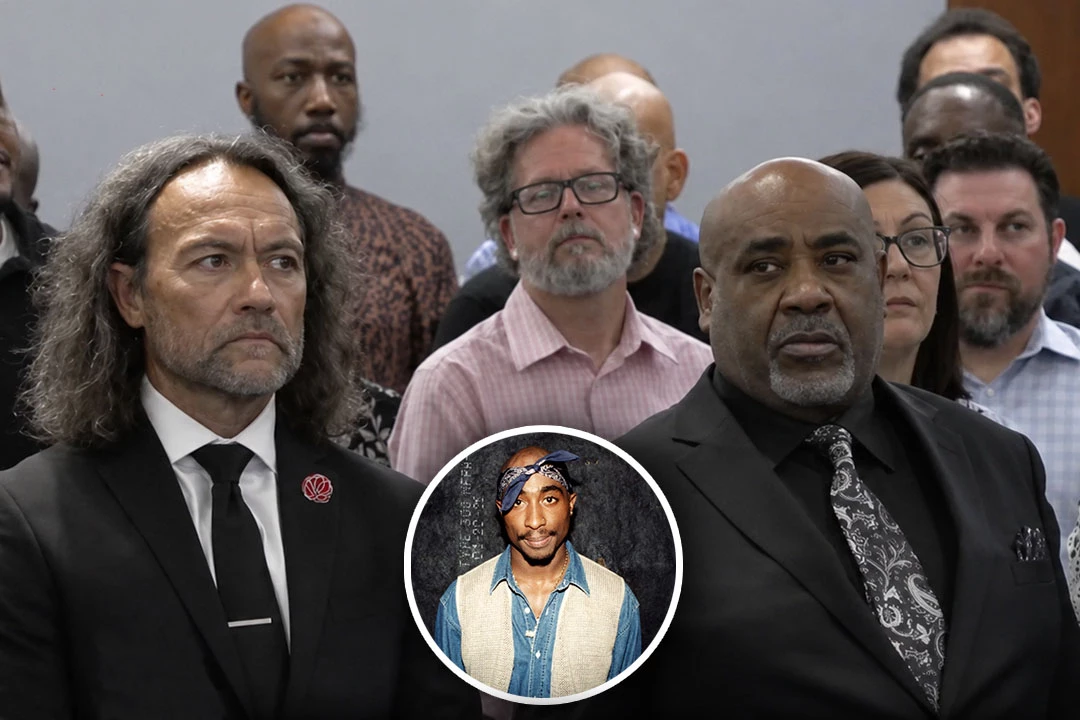
HangupsMusic.com – Las Vegas, NV – After a nearly three-decade wait, Duane "Keffe D" Davis has been found guilty of first-degree murder in the 1996 assassination of rap icon Tupac Shakur. The landmark verdict was delivered on Monday, August 31st, following a meticulous three-hour deliberation by a jury in Clark County District Court. Presiding Judge Carli Kierny formally announced the jury’s unanimous decision: guilty of first-degree murder, with the use of a deadly weapon, and with the intent to promote, further, or assist a criminal gang.
The courtroom, packed with a palpable mix of anticipation and solemnity, erupted with emotion as the clerk read the verdict. Keffe D, who had maintained his composure throughout the proceedings, reportedly offered a brief, raised fist as he exited the courtroom, his gaze sweeping over the assembled attendees. The family of Tupac Shakur, present in the gallery, experienced profound emotional reactions. Sekyiwa "Set" Shakur, the late rapper’s sister, was observed weeping quietly, a testament to the enduring pain and the significance of this long-awaited justice. Sentencing for Keffe D is scheduled for October 13th, where he faces a potential life sentence for his conviction.
Davis’s arrest on September 29, 2023, marked a pivotal moment, stemming from a police raid on his residence two months prior. The charges leveled against him were direct: murder with the use of a deadly weapon, with the explicit intent to advance the goals of a criminal street gang. Investigators have long posited that Keffe D was instrumental in procuring the firearm used in the fatal shooting and was present in the vehicle from which the shots were fired. The other three individuals believed to have been involved in the shooting have since passed away, including his nephew, Orlando Anderson, who was identified as the alleged triggerman and was killed in 1998. Law enforcement has consistently maintained that the shooting was a retaliatory act, a response to Anderson being assaulted by Tupac and members of the Death Row Records entourage following a Mike Tyson boxing match on September 7, 1996.
Despite efforts to secure his release, Keffe D remained incarcerated throughout the trial. While a significant portion of his $750,000 bail, $112,500 to be exact, was posted in 2024 by associate Wack 100, Judge Kierny ultimately denied Davis’s release. The prosecution successfully argued that the motive behind the bail payment was to facilitate Keffe D’s involvement in a series produced by Wack 100, thus posing a flight risk or potential interference with the legal process.

The highly anticipated trial commenced with opening statements on August 17th, bringing a definitive end to the prolonged speculation surrounding one of hip-hop’s most enduring mysteries. Over the course of three weeks, the jury heard testimony from a diverse array of witnesses. These included Reggie Wright Jr., the former head of security for Death Row Records, eyewitness Ingrid Stokes, and former Las Vegas Police officer Garry Dale, among others, who collectively painted a detailed, albeit often conflicting, picture of the events leading up to and following the tragic incident.
Central to the prosecution’s case were excerpts from Keffe D’s 2019 memoir, Compton Street Legend. The book, which details his alleged involvement in the 1996 shooting, including his claim that Tupac reached for a weapon before gunfire erupted from the vehicle he occupied, became a focal point of the trial. This assertion directly contradicted police findings, which indicated no weapon was discovered in the vehicle occupied by Tupac and his then-manager, Suge Knight.
Keffe D’s defense team mounted a vigorous challenge against the admissibility of the book, contending that it was a fictionalized account created for financial gain. They further questioned the extent of Keffe D’s direct authorship, given its co-authored nature, with Davis himself reportedly stating he had not read the book and that the co-author had taken liberties with his narrative. However, Judge Kierny ultimately ruled that the statements within the book could be used as evidence, asserting that Keffe D had implicitly adopted its contents as his own truth, particularly referencing his consistent characterization of the book as containing "the real truth."
The conviction of Duane "Keffe D" Davis represents a monumental conclusion to a case that has captivated the public consciousness for decades. It brings a measure of closure to the family of Tupac Shakur and marks a significant, albeit late, victory for law enforcement in resolving one of the most high-profile unsolved murders in music history. The sentencing hearing on October 13th will formally cap this chapter, delivering the final legal consequence for the role Keffe D played in the tragic events of September 1996.
