 By admin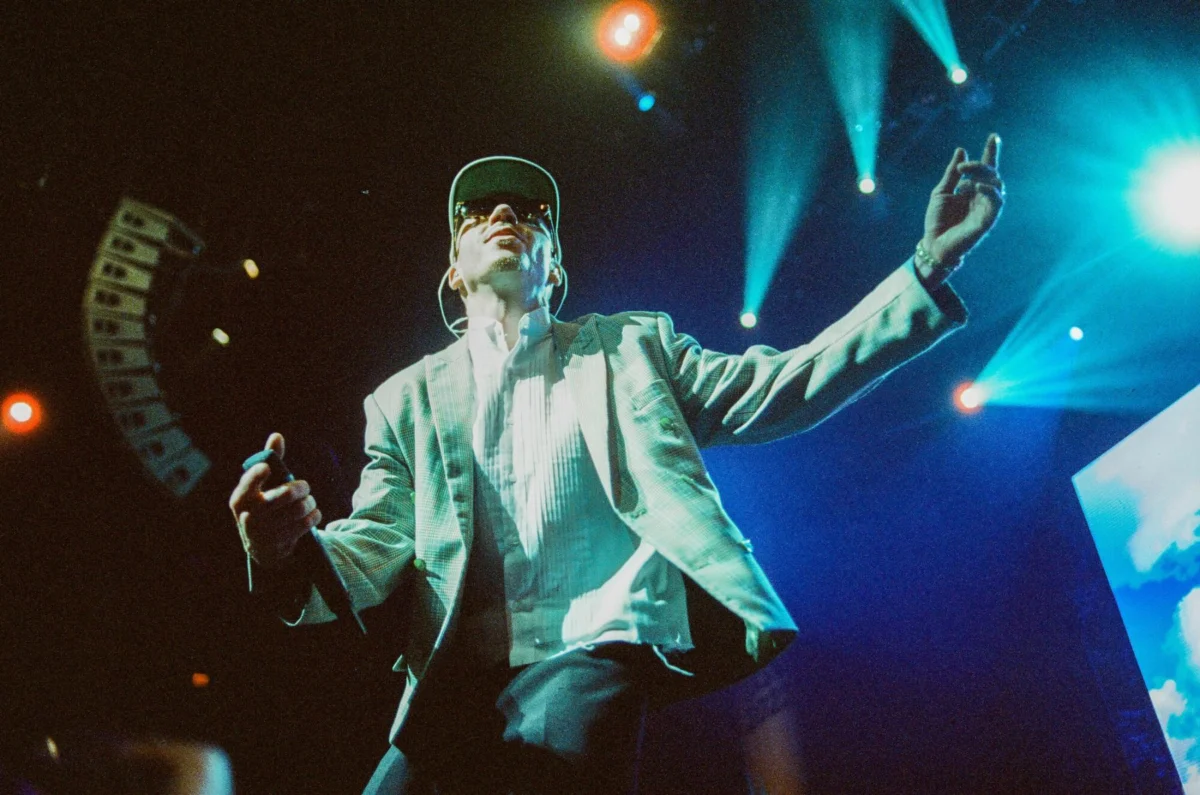
HangupsMusic.com – East Rutherford, New Jersey – The electrifying atmosphere of Ed Sheeran’s "Mathematics Tour" (also referred to as the Loop tour in the original) at MetLife Stadium this past weekend was punctuated by an unexpected and highly charged political declaration from opening act Macklemore. The Seattle-based rapper, born Benjamin Haggerty, used his prominent platform on both Friday, September 4th, and Saturday, September 5th, to express fervent solidarity with Palestinians, a move that has since sent ripples of controversy throughout the music industry and beyond. His on-stage chants of “Free Palestine,” accompanied by impassioned speeches, have sparked a heated debate about artistic freedom, humanitarian advocacy, and the appropriate use of global concert stages.
Macklemore, known for his socially conscious lyrics and willingness to tackle sensitive subjects in his music, articulated his deliberate decision to join Sheeran’s tour precisely to amplify this message. Addressing tens of thousands of concertgoers, he stated on Friday, “A big part of the reason why I wanted to do this tour in the first place is so I could stand up in stadiums like this and say two words that are very near and dear to my heart: ‘Free Palestine.’ I said, ‘Free Palestine!’ I want those words to be loud and clear, so that people from Gaza all the way to the West Bank know that we have not forgotten about them.” This powerful statement immediately set the tone for the weekend, signaling a departure from a typical concert opening set to a moment of direct political engagement.

Adding further weight to his advocacy, Macklemore performed his 2024 protest anthem, "Hind’s Hall." The song, which gained significant traction upon its release, draws its title from the symbolic renaming of a building at Columbia University by pro-Palestinian student activists. This act of renaming honored Hind Rajab, a five-year-old Palestinian girl tragically killed by Israeli forces in the Gaza Strip, whose story resonated globally as a stark reminder of the human cost of the conflict. "Hind’s Hall" itself is a poignant and direct call to action, offering a searing critique of the ongoing violence in Gaza, expressing solidarity with student protest movements on university campuses worldwide, and demanding an immediate end to the conflict. Its performance on such a grand stage underscored Macklemore’s commitment to intertwining his art with his activism, transforming the stadium into a forum for political discourse.
The rapper did not shy away from acknowledging the personal risk associated with his outspoken stance. During his Friday address, he candidly shared his internal struggle, stating, “And if I let that fear I felt on the plane yesterday stop me from speaking my heart in order to keep my own comfort and the audience’s comfort, that is the day I no longer continue to be on stage.” This declaration framed his actions not merely as political rhetoric but as a fundamental aspect of his artistic integrity and purpose. He broadened his message of liberation, extending his chants beyond Palestine to include calls for freedom for America, Cuba, Congo, Sudan, and Iran, and specifically denouncing the U.S. Immigration and Customs Enforcement (ICE) as a "terrorist organization," thereby connecting the Palestinian cause to a wider global struggle for human rights and self-determination.
The immediate fallout from Macklemore’s initial statements was swift and multifaceted. The Israeli-American Council (IAC), a prominent pro-Israel advocacy group, reacted strongly by launching an online petition. The petition explicitly called for Macklemore’s removal from the remaining eight U.S. stadium shows where he is scheduled to open for Ed Sheeran through early November. The IAC’s petition articulated its core grievance, stating, “This was an Ed Sheeran concert — not a political rally, not a protest, and not an activist event. The issue is not whether Macklemore has the right to hold political views. The question is where the line should be drawn when an opening act uses a global concert platform to advance a one-sided political agenda. This becomes even more troubling when the message relies on selective imagery, biased messaging, and disputed claims presented to a massive audience as fact, without context or complexity.” This argument highlights a recurring tension in the entertainment world: the balance between an artist’s right to free expression and the expectations of concert organizers and audiences who may seek an apolitical entertainment experience.
Undeterred by the burgeoning controversy, Macklemore reiterated and expanded upon his position during his Saturday performance. He again chanted "Free Palestine" but added crucial clarifications aimed at addressing potential misinterpretations. He directly addressed the Jewish community, asserting, "To all of my Jewish brothers and sisters: criticism of Israel, criticism of apartheid, being against genocide in no way is a criticism of you. My message is for peace; love for all human beings to be treated with dignity, respect, and equality. So I say Free Palestine, I say Free Lebanon, I say Free Cuba, I say Free Congo, Free Sudan, I say Free all people in America living in fear of this terrorist organization, ICE. None of us will be free until we are all free.” This nuanced statement sought to distinguish between criticism of the Israeli government’s policies and antisemitism, a distinction often lost in the emotionally charged discourse surrounding the conflict. By framing his message around universal human rights and equality, Macklemore attempted to elevate the conversation beyond sectarian divides.
The backdrop to Macklemore’s impassioned pleas is the ongoing and devastating conflict between Israel and Hamas, which escalated dramatically following Hamas’s unprecedented and brutal invasion of Israel on October 7, 2023. That attack resulted in the deaths of nearly 2,000 Israelis and foreign nationals and the abduction of over 250 hostages, sparking a fierce retaliatory military campaign by Israel in the Gaza Strip. Israel has vehemently denied allegations of committing genocide in its military operations. However, the conflict has exacted an immense humanitarian toll, with reports indicating over 73,000 Palestinians killed and approximately 174,000 wounded, according to Palestinian officials. The extensive destruction of infrastructure in Gaza and the severe displacement of its population have drawn widespread international condemnation and calls for a ceasefire from numerous human rights organizations and global bodies. This complex and deeply tragic reality forms the critical context for Macklemore’s decision to speak out, positioning his artistic platform within a global humanitarian crisis.
The controversy quickly transcended the immediate concert environment, drawing reactions from other notable figures in the music industry. Pop superstar P!nk weighed in, albeit indirectly, by reposting an Instagram Story from the organization StopAntisemitism over the weekend. While she offered no personal commentary, the repost itself, as reported by TMZ, was interpreted as a critical stance against Macklemore’s performance, with the original post reportedly calling for attendees to receive ticket refunds and apologies. P!nk’s decision to share content from such an organization, even without explicit text, sent a clear signal about her perspective on the matter.

Adding another layer to the celebrity reactions, Culture Club frontman and solo artist Boy George, who recently released the AI-generated pro-Israel reggae track "We Will Dance Again," made his sentiments unequivocally clear. He posted an AI-generated image depicting Ed Sheeran wearing a T-shirt emblazoned with the phrase "Whack Mack No More." He further cemented his disapproval on X (formerly Twitter), stating, "I have never been an @EdSheeran fan and nothing has changed." Boy George’s overt criticism, coupled with his recent musical release, underscores the deep divisions within the entertainment community regarding the Israel-Palestine conflict, illustrating how artists are increasingly taking public, often opposing, stands.
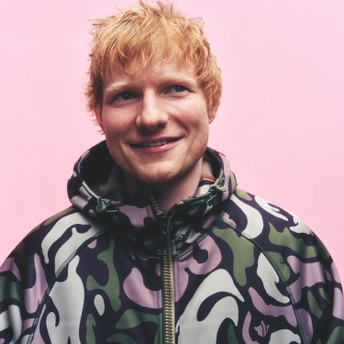
As of press time, Ed Sheeran, the headliner of the tour, had remained conspicuously silent on Macklemore’s statements and the subsequent uproar. A spokesperson for Sheeran had not responded to Billboard’s request for comment. Sheeran’s silence places him in a precarious position, caught between an opening act’s fervent political activism and the backlash from powerful advocacy groups and fellow artists. His tour organizers also face the delicate task of navigating the demands of the IAC petition while upholding contractual obligations and managing the diverse expectations of their global audience. The ongoing situation highlights the growing pressure on artists and event organizers to either embrace or distance themselves from political discourse on their stages, a challenge that continues to redefine the landscape of live entertainment in a highly politicized world.
