
 By admin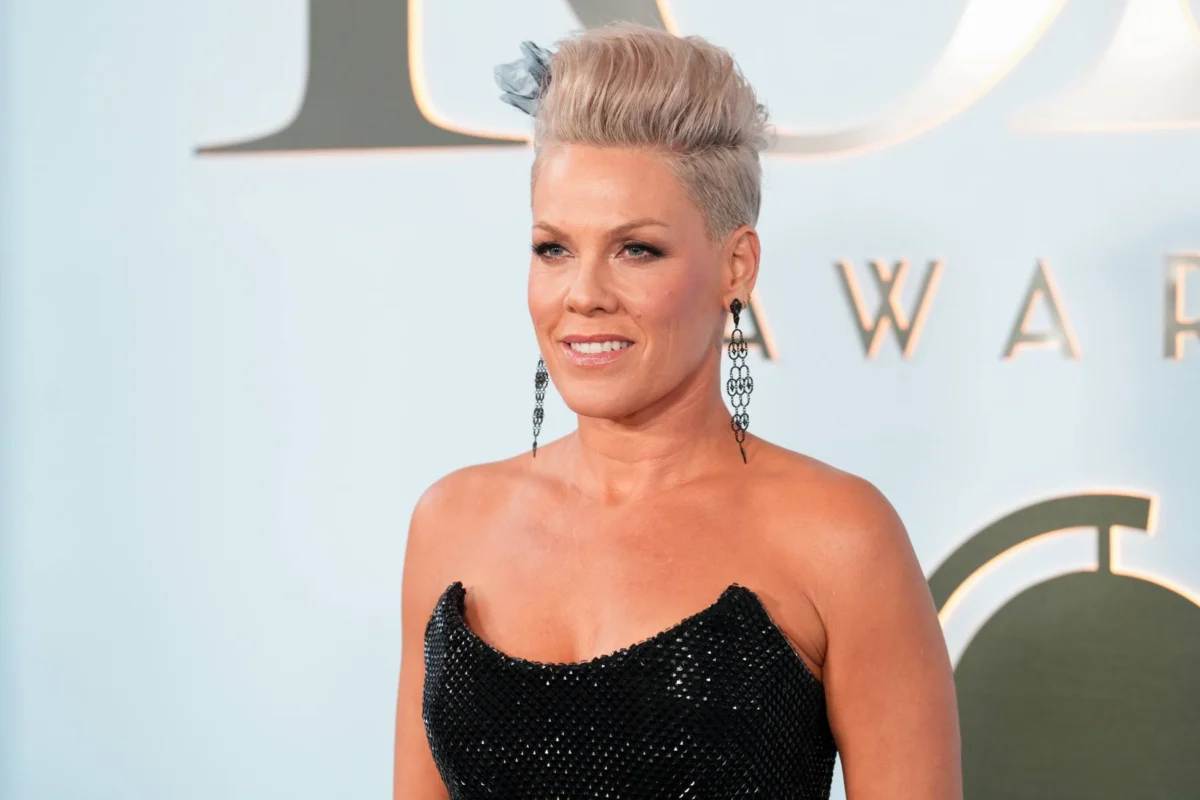
HangupsMusic.com – Pop icon Pink recently found herself at the epicenter of a swirling social media controversy, meticulously detailing her reasoning behind sharing a critical post directed at rapper Macklemore. The "Raise Your Glass" singer’s candid explanation emerged after she faced significant backlash for reposting content that took issue with Macklemore’s on-stage remarks concerning the Israeli-Palestinian conflict during his opening set for Ed Sheeran’s North American tour. Her extensive statement, shared across her social media channels, offered a nuanced perspective on identity, public discourse, and the weight of celebrity platforms.
The genesis of the controversy traces back to a performance by Macklemore at MetLife Stadium in East Rutherford, New Jersey. Addressing a vast crowd of thousands, the Seattle-based rapper used his platform to articulate a deeply personal conviction. "A big part of the reason why I wanted to do this tour in the first place is so I could stand up in stadiums like this and say two words that are very near and dear to my heart: Free Palestine," Macklemore declared. He further emphasized his intent, stating, "I want those words to be loud and clear, so that people all the way in Gaza to the occupied West Bank know that we have not forgotten about them." His impassioned address reportedly elicited a mixed reaction from the audience, with cheers echoing through the stadium while some concertgoers reportedly chose to exit the venue during his performance. The rapper also incorporated visuals into his set, which Pink later referenced as "violent images from a war on the screens."
In the wake of Macklemore’s pronouncements, a swift chorus of criticism arose, with many demanding his removal from the ongoing tour. Among the most vocal critiques was a post from the organization StopAntisemitism, an advocacy group focused on combating antisemitism. This particular post, which Pink subsequently reshared, accused Macklemore of blindsiding concert attendees with "anti-Israel propaganda" and asserted that he had "accused Israel of a false ‘genocide.’" The group’s message reportedly called for an apology from Macklemore and suggested that ticketholders should be offered refunds, framing his statements as an ambush on fans attending a mainstream pop concert.
It was Pink’s decision to amplify this specific critique that redirected the public’s scrutiny towards her. Her repost quickly drew a torrent of criticism, prompting the artist to issue a comprehensive response. On a recent Friday, she took to social media to unravel the complex motivations behind her actions and to articulate why Macklemore’s performance had caused her such profound alarm.
"Last Sunday I reposted somebody else’s post about Macklemore’s set at Ed Sheeran’s show. It said things in words I didn’t write, and I wouldn’t have chosen all of them," Pink began, acknowledging the inherent complexities and potential misinterpretations of sharing content not entirely authored by oneself. She candidly admitted to a familiar coping mechanism: "Then the comments came, and I did what I do when I’m hurt, which is post snarky memes and act like I’m fine. That’s on me." Her statement delved into a broader critique of online communication, asserting, "A repost isn’t a statement, and a meme isn’t a spine. Social media makes all of us cheap and fast, and we all know it." This introspective moment highlighted the often-superficial nature of digital interactions and the ease with which intentions can be misconstrued.
Pink then delved into the personal dimension of her reaction, revealing, "I was born a Jew. I didn’t pick it, and I’ve never hidden it. And this week a whole lot of people decided what I believe without asking me, without checking a single thing I’ve ever said or done, because a repost and the word ‘Jew’ were apparently enough to fill in the rest." This powerful statement underscored her frustration with the instant categorization and assumption of beliefs based on identity and a single online action. She firmly clarified her political independence, asserting that she has "never spoken for Israel, or for any government." Her moral compass, she explained, is guided by humanitarian principles: "Hamas is a terrorist organization. Palestinians deserve a future that honors their humanity and their aspirations. Protecting innocent life comes first, everywhere, and nobody should ever celebrate the death of a child. Anybody’s child." This declaration aimed to articulate a nuanced stance that condemned violence while advocating for the dignity of all lives.
To further buttress her humanitarian credentials, the singer invoked her decade-long tenure as a UNICEF ambassador, dedicating her efforts to "kids who didn’t choose the country or the war they were born into." She emphasized the tangible nature of her commitment, stating, "I didn’t do it from behind a screen; I went to those children and held them." This detail served to contrast her long-standing, active engagement with global suffering against the often-passive or performative nature of online activism, lending significant weight to her emotional appeal.
The narrative of Pink’s evolving perception of Macklemore was a central theme in her extended explanation. She recounted her admiration for his performance of "Same Love" at the 2014 Grammys, where 33 couples exchanged vows live on air, celebrating love and equality. However, this positive memory was juxtaposed with a troubling incident months later when Macklemore appeared in a costume widely interpreted as a Jewish caricature, a move for which he later issued an apology. "I let it go, because that’s what we do. We let it go," Pink wrote, describing a willingness to forgive and move past past transgressions.
Yet, last weekend’s performance, in her view, crossed a line. "Then last weekend he stood in front of a stadium full of music-loving families, with violent images from a war on the screens, dedicated a song to the movement of his choice, and then took the mic to tell all of the Jews in the stadium that it wasn’t about them. You don’t get to decide that for us." This particular point resonated as the crux of her distress. She felt that Macklemore, by dismissing the Jewish community’s concerns as irrelevant to his message, invalidated their lived experiences and anxieties.
Pink painstakingly clarified what her repost was not intended to convey. "That’s what prompted my repost. Not ‘Free Palestine,’ and not anyone’s right to say it. I have never asked for another artist to be silenced and I’m not asking now. I don’t need anyone fired, and I don’t need a refund." Her message was not about censorship or retribution. Instead, her core need was profoundly personal: "What I need is to be able to say, as a Jewish mom, ‘that scared me, and it scared people I love,’ without being told our fear is just propaganda, and without being told I’m somehow cool with genocide because I noticed?" This heartfelt plea highlighted the emotional toll of the conflict and the desire for her fear to be acknowledged and validated, rather than dismissed or weaponized.
Concluding her message, Pink directly addressed those who harbored anger towards her, stating, "you don’t have to agree with me." She then extended a message of solidarity to all those affected by the ongoing global tensions: "To the ones who are frightened this week, Jewish or Muslim or Palestinian or Israeli or just tired of all of it: I see you." She reaffirmed her commitment to authenticity and open dialogue, inviting direct communication: "And if anybody wants to really know what I think, just ask me. I’m right here. I’ve never been hard to find. And I’ll keep speaking out, in my own words." The timing of her statement was also imbued with significance, noting it was the 25th anniversary of September 11th, and at sundown, the beginning of Rosh Hashanah, the Jewish New Year, concluding with "Shana tova."
Amidst this unfolding public dialogue, Macklemore also re-posted his original speech, adding further context to his intentions. In his extended remarks, he explicitly stated, "To all of my Jewish brothers and sisters: criticism of Israel, criticism of apartheid, being against genocide in no way is a criticism of you." He underscored his overarching message as one of peace, advocating for "love for all human beings to be treated with dignity, respect, and equality." Macklemore broadened his call for freedom beyond Palestine, encompassing Lebanon, Cuba, Congo, Sudan, and even individuals in America living in fear of ICE, concluding with the powerful sentiment, "None of us will be free until we are all free."
The exchange between Pink and Macklemore exemplifies the intricate challenges faced by public figures navigating highly sensitive geopolitical topics in the digital age. It underscores the rapid spread of information, the potential for misinterpretation, and the immense pressure to take a stance. Pink’s detailed response serves as a powerful testament to the complexities of identity, the search for authentic expression, and the enduring human need for empathy and understanding amidst a fractured world.
