
 By admin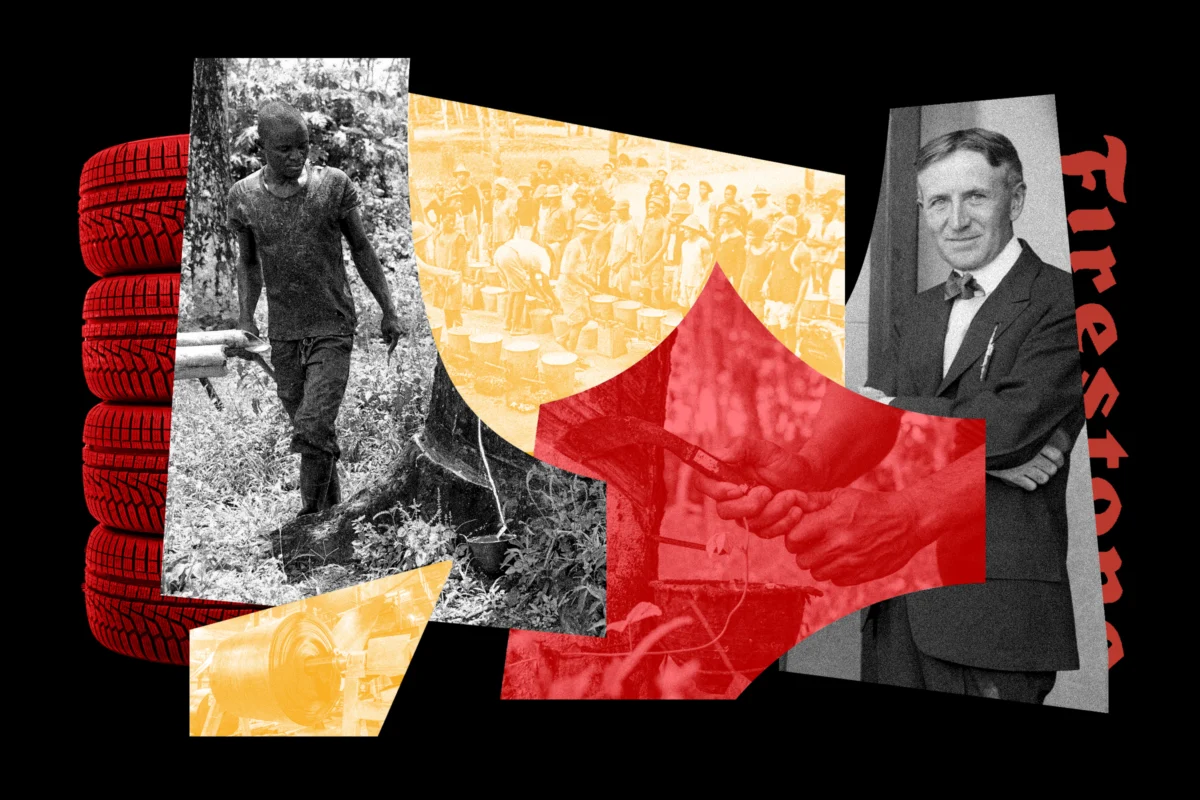
HangupsMusic.com – In the autumn of 2023, the news of acceptance to Princeton University arrived not with a whimper, but a roar – symbolized by the formidable tiger head emblazoned on a computer screen in a Pennsylvania living room. For one student, this achievement transcended personal success; it was a testament to the resilience of a family scarred by Liberia’s brutal conflicts of the 1990s. The prospect of leveraging Princeton’s vast resources to aid nations like Liberia ignited a profound sense of purpose, a stark contrast to the disbelief that initially washed over them. This academic triumph was more than a personal milestone; it represented the culmination of immense parental sacrifice, a father’s arduous journey from war-torn Liberia to raising a son destined for an Ivy League institution, with another academically promising sibling close behind. The weight of this unexpected opportunity, and its full implications, had yet to be fully grasped.
During sophomore year, a seemingly innocuous journalism class assignment unexpectedly opened a portal to this deeper understanding. The course focused on a lesser-known 19th-century saga: the emancipation of trafficked enslaved individuals in Key West, Florida, and their subsequent relocation to West Africa to establish new lives of freedom. Ten weeks into the semester, a startling revelation emerged: Liberia was their ultimate destination. The connection, previously an abstract historical detail, suddenly resonated with a deeply personal significance.
The narrative gained vivid color with the arrival of Dr. Artemus Gaye, a distinguished scholar and activist hailing from Liberia’s capital, Monrovia. Dr. Gaye, who had guided the professor in meeting descendants of those very freed slaves, visited the class to share their stories and countless others interwoven with Liberia’s complex past. He began with a moving account of his own upbringing in Liberia, a life marked by both scholarly ambition and the peril of narrowly avoiding child soldier recruitment. His family’s legacy, a driving force and a profound burden, had propelled him towards international study. Following his poignant introduction, Dr. Gaye led the class on a profound tour of the Princeton campus, a landscape he was experiencing firsthand, yet one deeply etched with Liberian history.
The first stop on this revelatory journey was Pyne Hall, where Dr. Gaye and his two cousins paused beneath the towering, nearly 18-foot statue of John Witherspoon. Witherspoon, Princeton University’s president from 1768 to 1794, is historically lauded for significantly expanding the campus and for his pivotal role as a signer of the Declaration of Independence. However, his legacy is not without its shadows. Four years prior, student activists had vehemently protested the veneration of a man who, despite his enlightened contributions, was a staunch opponent of emancipation and himself enslaved two individuals. Witherspoon famously articulated his belief that freed Black people would be "free to their own ruin." Despite the intense protests, in October of 2024, the university’s trustees concluded that Witherspoon’s multifaceted legacy warranted his continued central placement on campus, balancing his historical contributions against his controversial stance on slavery.
Following Witherspoon’s imposing gaze, Dr. Gaye guided the group across Firestone Plaza towards the library bearing the same name, affectionately dubbed “Stone” by generations of students. For Princeton undergraduates, Firestone Library typically conjures images of caffeine-fueled, late-night study sessions during finals. For Dr. Gaye and his family, however, the name carries a vastly different and far heavier weight. His grandparents, aunts, and uncles – the parents of the cousins accompanying him – toiled on the Firestone plantation in Harbel, approximately 40 miles southeast of Monrovia. This immense operation remains the largest contiguous rubber farm in the world.

Dr. Gaye’s cousin, Nathan, recounted the harrowing tales passed down from his parents and other plantation workers. He described the pervasive, acrid stench of burning rubber that permeated their lives. He spoke of the meager $10 monthly wage, often disbursed through chiefs who frequently withheld portions from the laborers. Most vividly, he painted a picture of the blackened shoulders and perpetually hunched backs, physical manifestations of years spent hauling heavy bars laden with buckets of latex. These were the backs, Nathan asserted, whose relentless labor indirectly funded the very library where Princeton students now pursued their education, supporting its extensive special collections housed within Firestone’s six floors and 70 miles of stacks.
The tour continued down Nassau Street, culminating at the steps of the Nassau Presbyterian Church. Here, Dr. Gaye read excerpts from Reverend Robert Finley, a prominent board member of the Princeton Theological Seminary over a century prior. Finley’s writings articulated a chilling perspective: that free Black Americans would disrupt societal order and would be better served by demonstrating their capabilities in the “land of their fathers,” where they could simultaneously “civilize the savage Africans.”
For Dr. Gaye, whose role as his family’s griot – the designated West African storyteller tasked with preserving records and oral traditions – is deeply ingrained, this particular historical narrative was paramount. He emphasized his own journey from a budding scholar in Liberia, narrowly escaping a child soldier’s fate, to studying abroad, propelled by his family’s history yet burdened by its weight. For Gaye, his family, and indeed for many others, including the student writer, the intricate, often painful, story of Princeton’s prolonged relationship with the Republic of Liberia must be told.
Historian Gregg Mitman, in his 2021 book Empire of Rubber, profoundly states that “the history of Liberia is one intertwined with the history of the plantation in all its forms and meanings.” Indeed, plantation labor in Liberia represented a continuation of ancestral pain for many. The nation itself was founded between 1821 and 1822 by the American Colonization Society (ACS) under the guise of creating an independent haven on the African continent for formerly enslaved people. The justifications for this ambitious and expensive project varied, but all were uniquely demeaning to Black individuals. One argument posited that American social life could not harmoniously integrate free Black citizens as equals. Another asserted that Black people inherently belonged in their ancestral homeland. As an added, cynical bonus, proponents suggested these returnees could "civilize" and Christianize the "savage tribes" already inhabiting the land. This was the deceptive rhetoric of the ACS, a coalition of prominent white men who cloaked what was, in essence, a deportation scheme in the language of progressivism.
Numerous early advocates and architects of the ACS were deeply affiliated with Princeton. Charles Mercer (class of 1797) emerged as a central figure in the African colonization movement, actively soliciting support from Elias Caldwell (1796) and Reverend Finley (1787). Together, these three men became foundational members of the ACS. Smith Thompson (1788) also played a crucial role, appointed by President James Monroe to enforce the 1819 act that permitted the relocation of illegally trafficked foreign slaves – the Atlantic slave trade having been outlawed in 1808. Just a few years later, Liberia would provide the ideal location for Thompson to resettle free Black individuals.
According to Mitman, the land for Liberia was violently seized from the indigenous Dei people at an old slave port named Cape Mesurado. Naval officer Robert F. Stockton, a member of a prominent Princeton family known to many ACS leaders, held a pistol to the head of the local chief, provocatively dubbed “King Peter,” when early negotiations proved unfavorable. Stockton would later assume leadership of the New Jersey Colonization Society (NJCS), an offshoot of the ACS established in 1824. Another key proponent and later president of the NJCS was John Maclean Jr., Princeton University’s president from 1854 to 1868. Maclean, a beloved figure in the Princeton community, was also known as a “dough face” – a Northern politician seen as pandering to the South – and was particularly accommodating to Southern students, especially during the tumultuous Civil War era.

Almost a century later, in 1926, the Firestone Rubber Company established its colossal rubber plantation in Harbel, acquiring vast tracts of land for mere pennies per acre. Historian Walter Rodney, in his seminal 1972 work How Europe Underdeveloped Africa, incisively observed, “to all intents and purposes, [Liberia] was a colony of the United States. In 1926, the Firestone Rubber Company of the United States was able to acquire one million acres of forest land in Liberia at a cost of six cents per acre and 1 percent of the value of the exported rubber. Because of the demand for and the strategic importance of rubber, Firestone’s profits from Liberia’s land and labor carried them to the twenty-fifth position among the giant companies of the United States.” This immense rubber output significantly bolstered the American economy and proved a critical strategic resource for the Allied forces during World War II.
The creation of the Firestone plantation was fraught with severe human rights abuses. Indigenous communities were forcibly displaced, their homes charred by controlled burns. Their only alternative was to join the plantation’s ranks, where indigenous laborers were paid a meager 18 cents per day, wages often funneled through chiefs who frequently withheld them. Throughout the 20th century, men, women, and children endured brutal conditions on the plantation, which eerily mirrored the oppressive structures of Southern antebellum plantations. Rubber “tappers” lived in rudimentary, single-room huts devoid of basic amenities, their relentless labor producing the material that generated immense fortunes for the company.
It was this very wealth that, 21 years later, in 1947, funded the construction of “Stone,” Princeton’s architectural crown jewel, prominently situated at a corner of the campus. Its inauguration was attended by Harvey Firestone Sr.’s sons, including rubber magnates Harvey Jr. (class of 1920) and Leonard (class of 1931), who perpetuated the company’s close ties with Princeton. The library rapidly amassed one of the world’s largest manuscript collections, cementing the university’s status as a leading research institution, while simultaneously providing Firestone with continued advancements and scientific expertise in the rubber industry.
The student writer, like countless others, had spent many hours studying in Firestone Library, consciously grateful for the privilege of being at such a storied academic institution, yet blissfully unaware of its foundational role in the economic exploitation of their father’s homeland. In the 1990s, Liberia descended into a protracted and horrifically violent civil war led by Charles Taylor, who notoriously forced child soldiers into service and escalated the conflict beyond Liberia’s borders. This brutal violence compelled the student’s father, Dr. Gaye, and thousands of other Liberians to seek refuge abroad, contributing to the nation’s profound and enduring trauma. Despite Taylor’s egregious abuses – which ultimately led to his conviction for war crimes in The Hague and a 50-year prison sentence – and a conspicuous lack of international backing, the Firestone Company continued its operations under his control. Their corporate hands, it seemed, were regrettably tied to the volatile geopolitical landscape.
Princeton’s profound connection to the founding and turbulent history of Liberia is not entirely obscured, nor is it undocumented. Much of this intricate narrative can, with deliberate searching, be found on Princeton’s own website. Dr. Gaye, for instance, has dedicated years to recounting Liberia’s story, even authoring a book on its history. Nevertheless, a significant portion of the Princeton community remains largely unaware of these deep-seated historical entanglements.
Princeton’s complex relationship with America’s systems of oppression has been increasingly brought to the forefront of university discourse, largely through the tireless efforts of student organizers like the Black Justice League, whose activism began several years ago. Among their demands were the renaming of the Woodrow Wilson School for Public and International Affairs (now the Princeton School for Public and International Affairs, due to widespread outcry over President Woodrow Wilson’s racist policies), the establishment of designated Black affinity spaces, cultural training for staff, an undergraduate requirement on minority history, and the creation of an African American Studies concentration. However, no formal, university-wide initiative has yet emerged to comprehensively address Princeton’s specific relationship with Liberia, the ACS, and the Firestone Company, nor to explore how these historical injustices might be formally reconciled.

Behind two locked doors leading into the offices of Morrison Hall, past reception and a comfortable lounge, down a short hallway, behind another unmarked and locked door guarded by an electric doorbell with an ever-present camera, and finally, beyond yet another locked door, sits the office of Eddie Glaude Jr., the James S. McDonnell Distinguished University Professor of African American Studies. The student writer visited him in March to delve deeper into the insights gleaned from Dr. Gaye’s visit. Having previously attended Professor Glaude’s annual Malcolm X Memorial Lecture, this was a rare opportunity for a one-on-one conversation. That semester, the academic landscape had been marred by a nationwide assault on Diversity, Equity, and Inclusion (DEI) initiatives, a federal crackdown on anything deemed “woke” in Black history education, and a freshman class at Princeton that saw the lowest Black admissions numbers since 1968.
Colleges across America have witnessed consistent declines in minority, and particularly Black, admissions following the 2023 repeal of affirmative action programs in Students for Fair Admissions v. Harvard. Elite institutions like Princeton have experienced particularly sharp drops in Black enrollment, which dwindled from nine percent in 2023 to just 5.4 percent in the last academic year. These declines, coupled with aggressive, White House-led financial attacks targeting DEI and efforts to uplift underprivileged groups at universities, paint a bleak picture for the future of higher education.
Professor Glaude listened intently as the intricate history of Liberia and its intimate relationship with Princeton unfolded. He paused, reflecting deeply, before sharing his thoughts. Dr. Glaude, known for his unwavering commitment to speaking truth to power, often faces threats, necessitating the extra security measures for his office and family. A devoted aficionado of James Baldwin, he effortlessly thumbed through a book from his vast, ceiling-high collection, finding the desired page in mere seconds. He then quoted from Baldwin’s Nothing Personal: “If one cannot use the past, one cannot function in the present, and so one can never be free.”
There, in his office, Glaude articulated that “we’re in a moment of disremembering, to use Toni Morrison’s word,” referencing the esteemed writer, longtime Princeton professor, and namesake of the very building they occupied. As an institution “often thought of as the ‘Southern Ivy,’” Glaude noted, Princeton “plays a central role [in erasing Black history] in many ways – in reproducing ideologies that would undergird racist policies and institutions in the country… You can see this in regards to slavery, you can see this in regards to Jim Crow, you know, with Woodrow Wilson, why Paul Robeson had to go to Rutgers as opposed to here, how late in the game Princeton actually is in terms of admitting Black students, and the current reality [of Black admissions].”
Yet, remembrance, Glaude emphasized, is the vital path forward. It is the driving force behind Dr. Gaye’s commitment as a griot, the motivation for the student writer’s pursuit of an African American Studies major, and the impetus for crafting this very narrative. Armed with this newfound knowledge and direction, the student plans to return to Liberia, to visit Monrovia and the Firestone plantation in Harbel, to bear witness to the present-day lives that Princeton and the United States have, for too long, overlooked, and to envision a path forward from this profound historical reckoning.
