
 By Azzam Bilal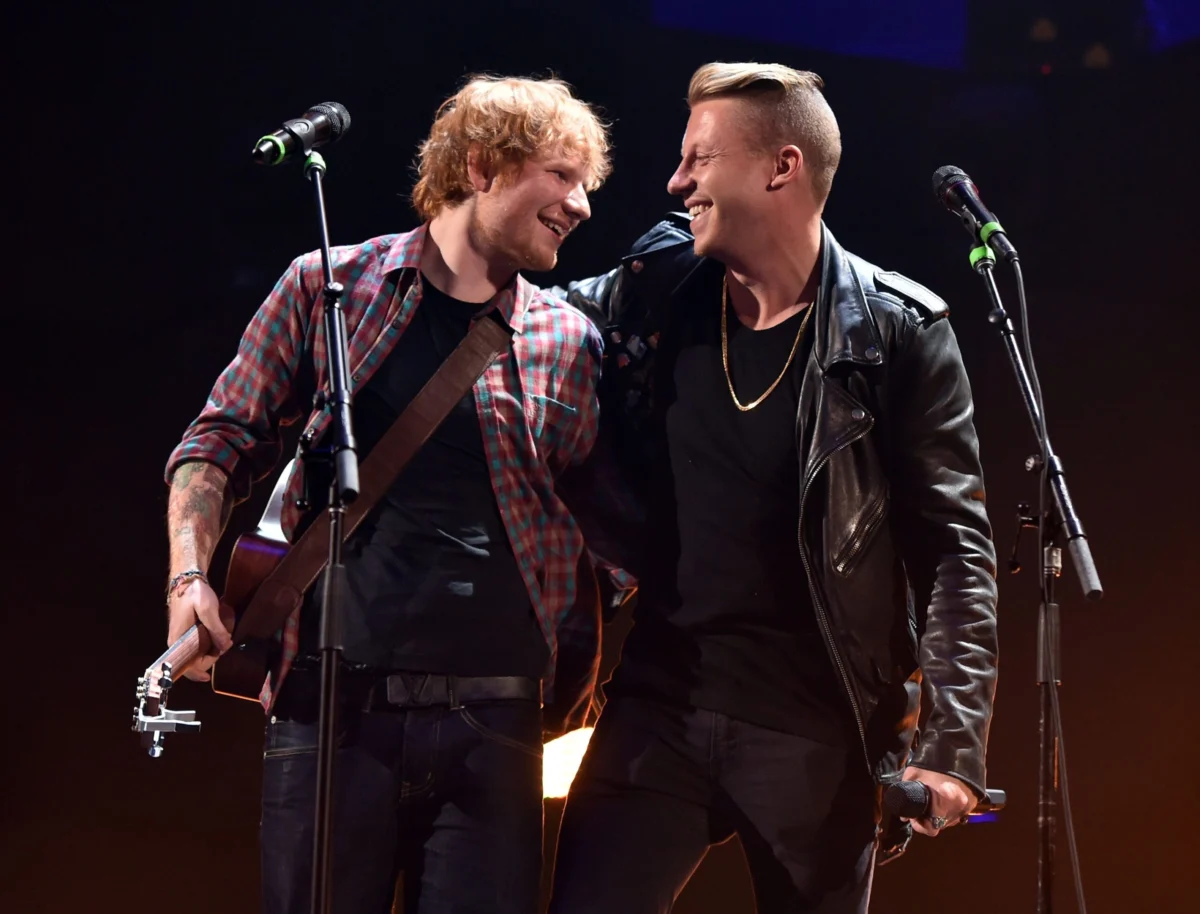
HangupsMusic.com – The high-stakes world of stadium-level concert touring is rarely a place for overt political friction, yet a significant rift has emerged between two of the industry’s most recognizable figures. Ben Haggerty, the Seattle-based rapper known globally as Macklemore, has publicly detailed his removal from Ed Sheeran’s massive North American tour. The fallout, which Macklemore attributes to his vocal advocacy for Palestinian rights, has exposed a complex web of influence involving billionaire sports team owners, major touring promoters, and the delicate balancing act of maintaining a global pop brand in a polarized era. According to the rapper, his departure was not a creative choice but the result of a coordinated effort by venue owners to suppress his message.
The controversy centers on Macklemore’s role as the primary support act for Ed Sheeran, a position that placed him in front of tens of thousands of fans in some of the largest sporting arenas in the United States. While Macklemore has a long history of weaving social justice themes into his music—ranging from LGBTQ+ rights in "Same Love" to critiques of consumerism in "Thrift Shop"—his recent focus on the humanitarian crisis in Gaza proved to be a bridge too far for certain stakeholders. In a detailed statement released via social media, Macklemore alleged that his removal was catalyzed by Robert Kraft, the influential owner of the New England Patriots and Gillette Stadium.
According to the rapper’s account, Kraft allegedly threatened to cancel Sheeran’s scheduled performances at Gillette Stadium in Foxborough, Massachusetts, unless Macklemore was removed from the bill. The pressure reportedly did not stop there; Macklemore claims Kraft reached out to other stadium owners across the country, urging them to take a similar stand. This alleged ultimatum put the tour’s promoter, Messina Touring Group, and Ed Sheeran himself in an unenviable position. The financial implications of canceling stadium dates are astronomical, involving millions of dollars in ticket refunds, logistical losses, and potential legal battles.
Macklemore’s statement offered a rare glimpse into the private conversations between high-level artists. He described Sheeran as a "brother" and a longtime friend, acknowledging that the British singer-songwriter was placed in a "fucked up position." Sheeran, whose public persona is famously apolitical and centered on universal themes of love and resilience, found his "I don’t take sides" philosophy tested by the reality of the situation. Macklemore noted that Sheeran informed him that venue owners and stakeholders were particularly offended by the phrase "Free Palestine," which Macklemore had used during his opening sets at previous tour stops.
The rapper’s advocacy was not limited to spoken words. During his time on stage, Macklemore had been performing "Hind’s Hall," a poignant protest track named after Hind Rajab, a six-year-old Palestinian girl who was killed in Gaza. The performance was often accompanied by stark visual footage of destruction in the region, turning a traditional pop concert opening into a somber piece of political theater. For Macklemore, the stage had become a site of "resistance." He argued that while he has spoken about Palestine for years, the reaction intensified because of the scale of the Sheeran tour. At the level of American stadiums, he suggested, the message became a perceived risk to the corporate structures that facilitate such massive events.
The response from the other side of the conflict was equally firm. Robert Kraft, through a statement provided to national news outlets, confirmed that the decision to bar Macklemore from Gillette Stadium was intentional. Kraft cited Macklemore’s recent actions and a "broader history of antisemitic rhetoric and imagery" as the primary reasons for the ban. Kraft’s statement emphasized that the decision was not intended to silence advocacy for Palestinian civilians but was rather a response to rhetoric that he deemed "deeply offensive and hurtful to the Jewish community." Kraft argued that Macklemore’s presentation of the conflict was dishonest, alleging that the rapper ignored the actions of Hamas and contributed to a climate of divisiveness and hate.
This clash highlights a growing tension within the entertainment industry regarding where the line is drawn between political activism and hate speech. While Macklemore maintains that his "Free Palestine" message is a call for human rights and an end to military violence, critics like Kraft view the framing of his message as exclusionary and inflammatory. The situation was further complicated by reactions from other peers in the industry. The singer Pink, for instance, found herself in the middle of a social media firestorm after expressing that Macklemore’s rhetoric caused fear for her as a Jewish mother. These interpersonal and professional fractures illustrate the deep emotional and cultural stakes involved.
The logistics of the removal were confirmed by Messina Touring Group, a subsidiary of AEG. A representative for the promoter acknowledged that multiple venues had reached a point where they would "not allow a concert to take place with Macklemore on the lineup." The list of objecting venues is a "who’s who" of American professional sports cathedrals. In addition to Gillette Stadium, the list reportedly included Lincoln Financial Field in Philadelphia, Mercedes-Benz Stadium in Atlanta, Lucas Oil Stadium in Indianapolis, Bank of America Stadium in Charlotte, AT&T Stadium in Arlington, and Raymond James Stadium in Tampa. These venues are the crown jewels of the NFL and major collegiate sports, representing a massive block of corporate and cultural power.
The removal of a support act of Macklemore’s stature is a rare occurrence in the modern touring industry. Usually, such changes are due to illness, scheduling conflicts, or "creative differences." To have a lineup altered due to the political demands of venue owners suggests a shift in the power dynamics of live music. It raises questions about the autonomy of artists and the extent to which the owners of the "halls" can dictate the content of the performances they host. Macklemore’s critique of Sheeran’s neutrality—suggesting that refusing to take a side when one side possesses overwhelming military and financial support is, in itself, a choice—points to a larger debate about the responsibility of global superstars.
Despite the professional setback and the "painful disagreement" regarding the tour, Macklemore insisted that his personal bond with Sheeran remains intact. He portrayed the situation as one where the machinery of the music business overrode the intentions of the individuals involved. However, the incident has left a lasting mark on the narrative of the tour. What was intended to be a celebratory run of stadium shows has instead become a case study in the limits of free expression within corporate-sponsored entertainment.
As the dust settles, the industry is left to grapple with the implications. For Macklemore, the "silencing" he describes has only served to amplify his message on digital platforms, where he continues to advocate for a ceasefire and Palestinian liberation. For Ed Sheeran, the incident serves as a reminder that in an increasingly connected and polarized world, even the most apolitical artists can find themselves at the center of a geopolitical firestorm. The involvement of figures like Robert Kraft ensures that this story will be remembered not just as a footnote in music history, but as a significant moment where the worlds of professional sports, high-finance real estate, and pop culture collided over the most contentious issue of the day.
The venues involved have largely remained silent following the initial reports, but the precedent set by this tour could influence how future contracts are negotiated. If venue owners continue to exercise veto power over support acts based on political speech, the landscape of the American concert tour could become significantly more sanitized—or significantly more contentious. For now, Macklemore’s absence from the remaining dates of the tour stands as a silent testament to the friction between the "stadium as a business" and the "stage as a platform."
