
 By admin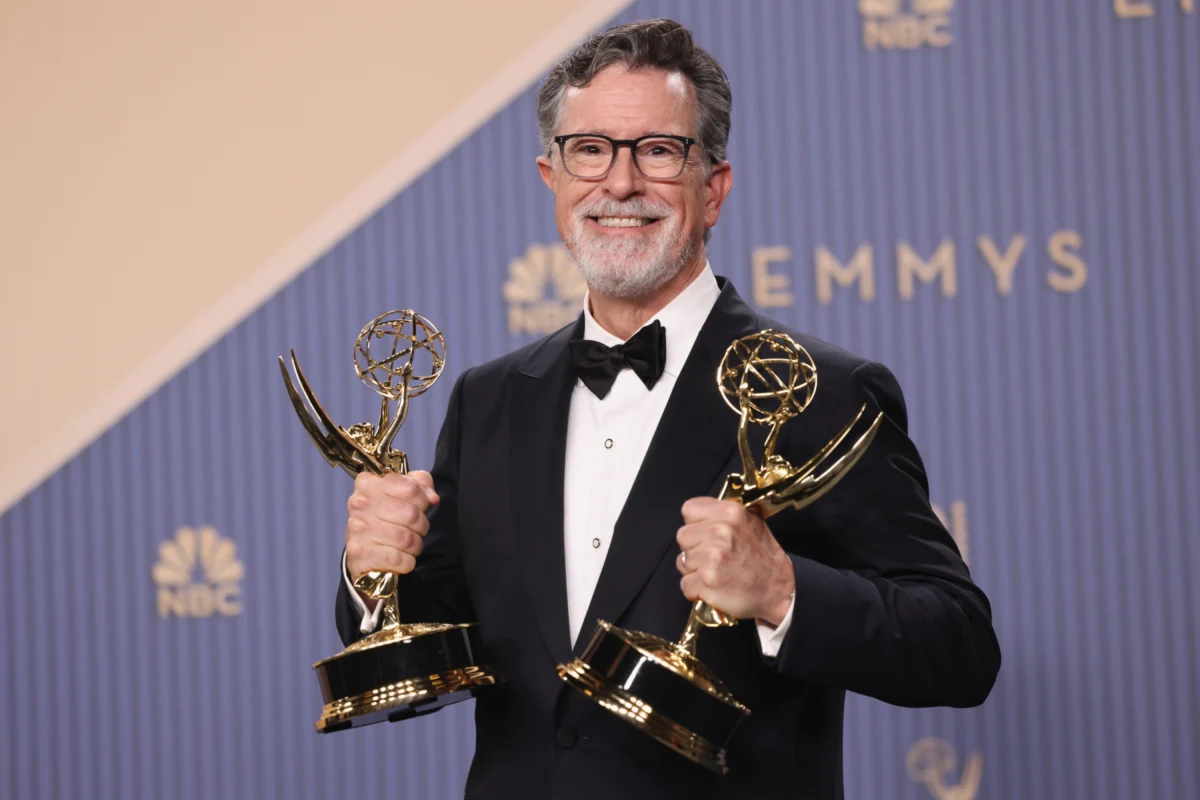
HangupsMusic.com – Los Angeles, CA – Following a triumphant evening at the Emmy Awards, where his long-running program, The Late Show with Stephen Colbert, clinched the coveted Outstanding Variety Series award, Stephen Colbert offered a compelling assessment of the current late-night television landscape and shed light on his unexpected new creative venture. Amidst the celebratory atmosphere, Colbert conveyed a steadfast belief in the enduring relevance and critical importance of the genre he so masterfully navigated for years, asserting that its comedic and communicative power remains as potent as ever.
Speaking to reporters backstage, the acclaimed host firmly dismissed any notion that the conclusion of his show in May signified a seismic shift in American discourse or a threat to fundamental freedoms. "I think that late night is just as funny and just as vital as it ever has been," Colbert articulated, emphasizing the robust health of free expression within the media sphere. He elaborated, "Because if you can’t say something because you go to jail, that is a violation of free speech." His statement, delivered with characteristic wit and precision, underscored the fundamental distinction between professional transitions and genuine infringements upon liberty, suggesting that the public square, particularly within the late-night format, remains a vibrant arena for commentary and critique.
Colbert’s reflections extended beyond his own recent departure, encompassing a broad appreciation for his peers. He lauded the collective talent populating the late-night ecosystem, specifically naming colleagues such as Jimmy Fallon, Jimmy Kimmel, John Oliver, John Mulaney, and Seth Meyers. His admiration for their ongoing contributions was palpable, highlighting a sense of camaraderie rather than competition. "I love watching Jimmy and Jimmy and John and John and Seth and everybody else," he remarked, expressing a fervent hope that this dynamic and essential form of television would persist for generations. For Colbert, the opportunity to collaborate with such gifted individuals was, in itself, an immeasurable reward. This perspective offers a glimpse into the collegial spirit often observed among late-night hosts, who, despite their individual brands and networks, frequently acknowledge the shared challenges and unique demands of their craft.
The Emmy win itself served as a poignant capstone to The Late Show‘s impactful run. While the Outstanding Variety Series award was the crowning glory of the main ceremony, the program had already garnered significant recognition at the Creative Arts Emmys held the preceding weekend. These earlier accolades celebrated the intricate, often unseen, artistry that underpins a nightly production of such scale. The Late Show was honored for its exceptional writing, precision directing, technical direction, sophisticated lighting design, and meticulous editing. These awards collectively underscored the collaborative brilliance of the hundreds of individuals who brought Colbert’s vision to life each night. Colbert himself took a moment to acknowledge these vital contributions, expressing profound gratitude. "I’m so glad that the show got recognized, and especially last week, all the people who won the creative arts, the writers and our director, our technical director, camera, lighting, and the digital team, and then tonight, all these incredible people," he conveyed, emphasizing the collective effort. The reunion with his former colleagues after a four-month hiatus further amplified the emotional weight of the evening, creating a moment of shared triumph and camaraderie. "First of all, just to be together after not seeing these guys for four months, it’s incredible. And we couldn’t be more grateful to the academy and everybody who voted for the show," he added, underscoring the deep bond within the production team.
Amidst the sincere gratitude and thoughtful commentary, Colbert also demonstrated his signature comedic agility when confronted with pointed inquiries regarding the circumstances of The Late Show‘s conclusion. When asked if the political climate under Donald Trump played a role in the show’s ending, Colbert playfully feigned a hearing impairment, a classic deflection technique that elicited laughter and deftly sidestepped a potentially loaded political discussion. Similarly, when questioned about Bari Weiss, recently appointed head of CBS News, Colbert maintained an air of disarming ignorance. "I’ve never heard of her," he quipped, before adding, with a twinkle in his eye, "Do you know her? I hear great things." These responses exemplify Colbert’s ability to inject humor into serious journalistic encounters, maintaining his persona while subtly signaling his perspective without direct confrontation. Such maneuvers are a hallmark of late-night satire, transforming potentially uncomfortable questions into comedic opportunities.
However, the most intriguing revelation of the evening concerned Colbert’s current professional undertaking, a project that marks a significant pivot from his late-night dominion: he is now actively involved in writing a new Lord of the Rings movie. This announcement, initially made in March, has kept the polymath entertainer intensely occupied since The Late Show wrapped its final season. Colbert, a famously ardent admirer of J.R.R. Tolkien’s Middle-earth saga, is collaborating on the script with renowned screenwriter Philippa Boyens, a key architect of Peter Jackson’s original cinematic adaptations, and Peter McGee. This move solidifies Colbert’s long-standing connection to the fantastical realm, transitioning him from a passionate fan and occasional expert commentator to a direct contributor to its expanding narrative universe.
The commitment required for such an ambitious cinematic endeavor was humorously underscored by Colbert’s travel itinerary to the Emmys. He recounted a surreal journey that highlighted the global nature of his new work and the disorienting effects of traversing time zones. "Literally, I woke up in New Zealand yesterday. I flew here for the Emmys," he explained to reporters backstage. "Yesterday, [when I was in] New Zealand [it was] was tomorrow there. I went from yesterday to tomorrow, so I don’t know how many days today has been. What did I say in my speech? I was hallucinating up there." This anecdote, delivered with self-deprecating charm, not only provided a glimpse into the demanding schedule of a major film project but also perfectly encapsulated the whimsical, often absurd, nature of awards season itself. It further illustrated the immersive scope of his new role, leaving little doubt about the depth of his engagement with the beloved fantasy world.
Colbert reaffirmed the all-consuming nature of his new responsibilities, jokingly challenging his audience to comprehend the scale of his task. "That’s what I’m doing," he stated with a wry smile. "That takes a lot of time, man. You ever written a Lord of the Rings movie? It’s a full-time job." This declaration not only confirms his dedication to the project but also playfully acknowledges the immense pressure and intricate world-building inherent in adapting Tolkien’s epic narratives. For fans of both Colbert and Middle-earth, this unexpected career chapter promises a fresh perspective and a unique blend of intellectual rigor and creative passion to one of fantasy’s most revered sagas. As Stephen Colbert embarks on this new journey, trading the nightly monologue for the intricate lore of Elves, Dwarves, and Hobbits, his recent Emmy win serves as a testament to a remarkable television legacy, even as he prepares to forge a new one in the annals of cinematic fantasy.
