
 By admin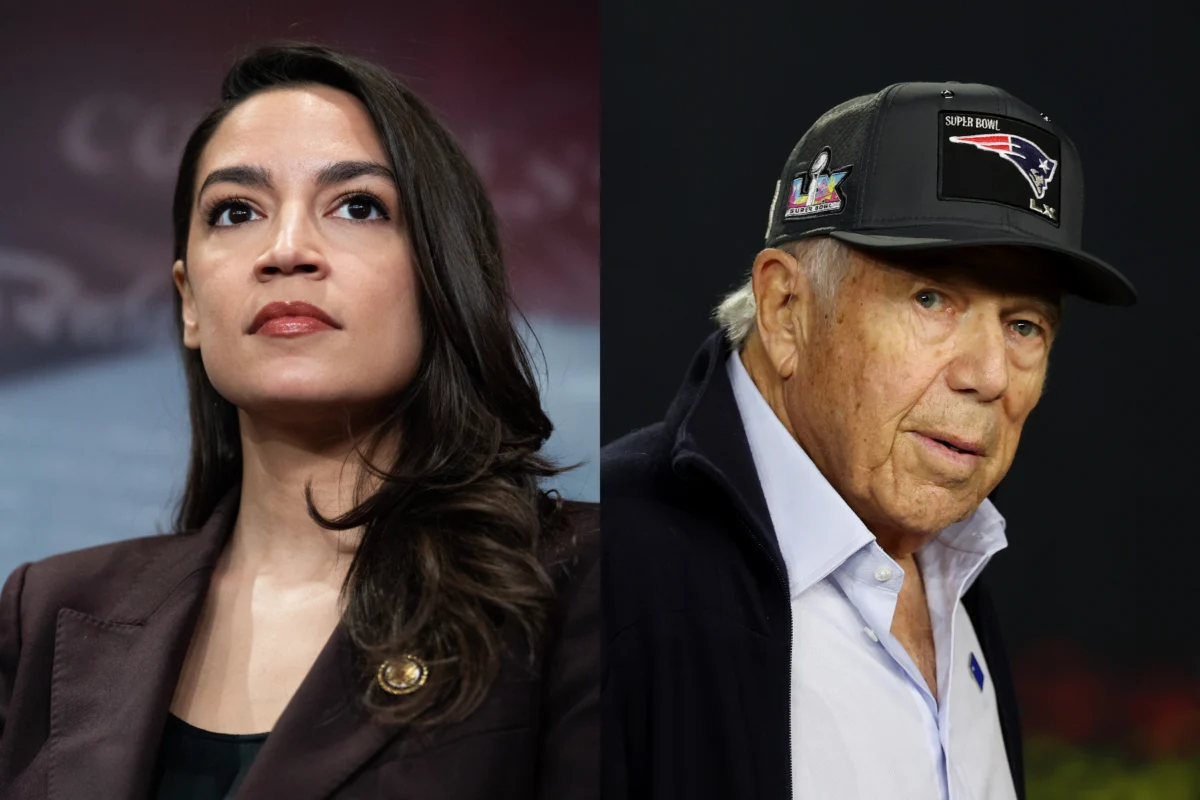
HangupsMusic.com – New York, NY – The recent removal of recording artist Macklemore from Ed Sheeran’s highly anticipated tour has sparked a fervent debate across the music industry and political landscape, drawing sharp criticism from figures like Congresswoman Alexandria Ocasio-Cortez. The controversy centers on the rapper’s vocal support for Palestinians amidst the ongoing conflict in Gaza, with accusations of concerted efforts by powerful venue owners to suppress artistic expression. This incident not only highlights the volatile intersection of music and geopolitics but also raises serious questions about the limits of free speech in privately owned entertainment spaces.
The saga began following Macklemore’s appearances as an opening act for Sheeran’s "Loop Tour" in early September, specifically during two performances at MetLife Stadium in New Jersey. During these sets, the Grammy-winning artist, known for his socially conscious lyrics, utilized his platform to advocate for Palestinian rights. His performance included a powerful declaration of "Free Palestine," expressions of solidarity with residents in Gaza and the occupied West Bank, and the projection of stark imagery depicting the humanitarian devastation caused by the conflict. A particularly poignant moment was his rendition of "Hind’s Hall," a recent protest song inspired by pro-Palestinian student demonstrations at Columbia University, which explicitly critiques U.S. foreign policy and the Israeli military actions.
The response to Macklemore’s on-stage activism was immediate and intense. Various pro-Israel advocacy groups swiftly condemned his statements and visual presentation. Among them, the Israeli American Council initiated a petition campaign, urging Ed Sheeran and his management to remove Macklemore from the remainder of the tour dates. This rapid mobilization underscored the deep sensitivities surrounding the conflict and the polarized opinions it elicits within the public sphere.
The situation escalated dramatically when Macklemore himself issued a statement on Monday, detailing the circumstances of his departure. According to the artist, Ed Sheeran communicated to him that Robert Kraft, the billionaire owner of the New England Patriots and a prominent figure in venue ownership through the Kraft Group, had directly intervened. Macklemore recounted Sheeran’s explanation that Kraft declared he would not be permitted to perform at Gillette Stadium, a venue owned by the Kraft Group in Foxborough, Massachusetts. More alarmingly, Macklemore’s statement alleged that Kraft had engaged other stadium owners, presenting Sheeran with an ultimatum: if Macklemore remained on the tour, Sheeran would face exclusion from performing in their collective venues. This alleged coordinated pressure campaign, if substantiated, points to a significant challenge to artistic freedom within the live music ecosystem.
Robert Kraft, in his subsequent public statement, confirmed his decision to bar Macklemore from performing at Gillette Stadium. His justification cited "material shared from the stage during Ed Sheeran’s shows in New Jersey, and a broader history of antisemitic rhetoric and imagery." Kraft, a staunch supporter of Israel and a philanthropist with significant ties to Jewish organizations, did not, however, address Macklemore’s specific claim regarding the alleged rallying of other stadium owners to enforce a broader ban. This omission left a critical piece of the narrative unconfirmed by Kraft, fueling further speculation and debate about the extent of the alleged coordinated action.
Congresswoman Alexandria Ocasio-Cortez, a vocal progressive Democrat representing New York’s 14th congressional district, quickly entered the fray, publicly criticizing Robert Kraft. In remarks that garnered significant media attention, Ocasio-Cortez expressed profound concern over the implications of Kraft’s actions. "It’s not just what has happened with the act and not just in removing Macklemore from the lineup," she stated, "but when you see what Robert Kraft did to line up all of the stadiums to censor speech in that one specific way, it’s become clear that this is not just about one music artist or two music artists, but this is about how just a handful of stadium owners and the elite can prevent an entire massive issue, in this case, the genocide in Gaza." Her use of the term "genocide" reflects a specific political stance on the conflict, aligning with her broader critiques of U.S. foreign policy and human rights issues.
When questioned by TMZ about Ed Sheeran’s potential responsibility in the matter, Ocasio-Cortez acknowledged that everyone plays a role but unequivocally directed the primary focus toward Kraft and "the actual people who are kind of twisting things here." She emphasized the dangerous precedent this sets for freedom of expression, particularly when powerful financial interests are perceived to be dictating artistic content. Ocasio-Cortez’s intervention elevated the discussion from a mere music industry dispute to a broader national conversation about corporate power, censorship, and the protection of dissenting voices in the public square.
The controversy reverberated through the entire "Loop Tour" lineup. In a remarkable display of solidarity, all other supporting artists scheduled to perform with Ed Sheeran subsequently announced their withdrawal from the tour. These artists included Finneas, the acclaimed producer and musician known for his work with Billie Eilish; Lukas Graham, the Danish pop and soul band; and Aaron Rowe. Their collective departure underscored a shared commitment to artistic integrity and the principle of free speech.
Lukas Graham, in a statement shared on Instagram, articulated the sentiment driving their decision. "It’s hard to watch families in other parts of the world burying the people they love," the band wrote. "We should be able to speak about war, about civilians being killed, about children who deserve to grow up. Wherever they live. Whatever flag flies over them." The statement powerfully asserted that "Money doesn’t give you the right to own the conversation. Nobody’s bank balance should decide who gets to speak or which suffering we’re allowed to acknowledge." This sentiment encapsulates the core argument of those who view Macklemore’s removal as a chilling effect on artists’ ability to engage with pressing global issues.
The incident forces a critical examination of the dynamics between artists, promoters, venue owners, and the political climate. While private venues are not typically subject to the same First Amendment protections as public spaces, the scale of the alleged coordinated pressure campaign, as described by Macklemore and critiqued by Ocasio-Cortez, raises concerns about an informal network of censorship. This situation highlights the immense power wielded by a few individuals and entities who control the physical infrastructure of the live music industry. Artists, often dependent on these venues for their livelihoods and reach, may find themselves in an increasingly precarious position when their political views diverge from those of powerful stakeholders.
Moreover, the debate around "antisemitic rhetoric and imagery," as cited by Robert Kraft, is a deeply contentious aspect of discussions surrounding the Israeli-Palestinian conflict. Critics argue that conflating criticism of Israeli government policies or actions with antisemitism can be a tactic to silence legitimate dissent and suppress free speech. Proponents of Kraft’s stance, however, maintain that certain expressions of pro-Palestinian solidarity cross a line into antisemitic territory, especially when they invoke tropes or demonize Jewish people. This definitional struggle is central to understanding the fierce opposition Macklemore faced and the justification for his removal.
This episode serves as a stark reminder of the challenges facing artists who choose to use their platforms for political expression in an increasingly polarized world. It compels a broader conversation about the responsibilities of cultural figures, the ethical obligations of corporations that host public events, and the fundamental right to free expression. As the dust settles on Macklemore’s tour exit, the echoes of this controversy will likely resonate for some time, shaping future discussions on artistic freedom, corporate power, and the complex interplay between music and global politics. The incident underscores a critical juncture where the concert stage has become a battleground for competing narratives, with profound implications for the future of public discourse in the arts.
