
 By Azzam Bilal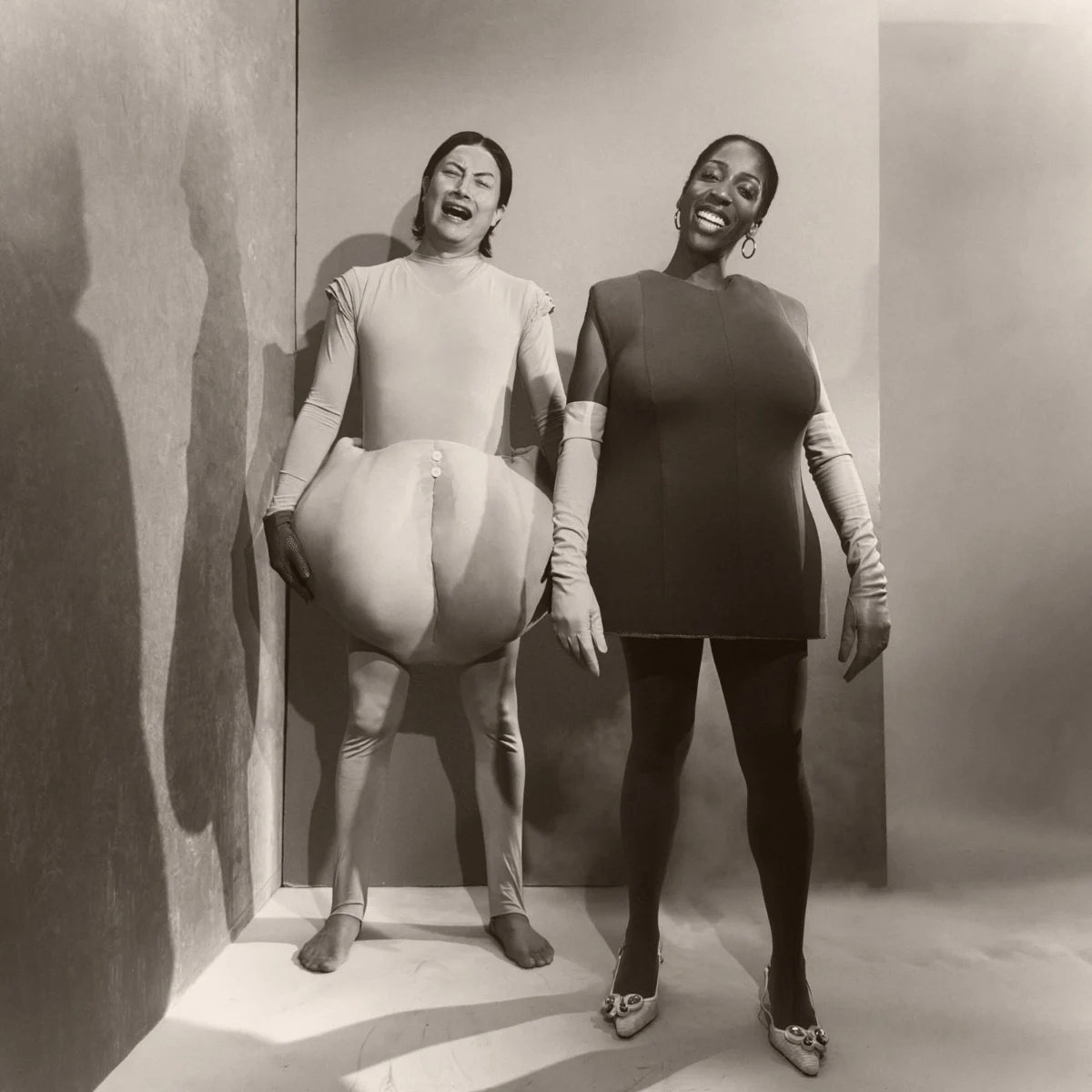
HangupsMusic.com – GHENT, Belgium, The landscape of contemporary electronic music is often defined by its ability to provide an escape from the mundane realities of daily life. However, for the Belgian duo Charlotte Adigéry and Bolis Pupul, the most compelling art is frequently found in the friction between the dancefloor and the domestic sphere. Following a period of relative quiet since their critically acclaimed 2022 debut album, Topical Dancer, the pair has officially signaled the commencement of a new creative chapter. Their latest single, "Googoo Gaga," serves as both a sonic reawakening and a visceral exploration of the transformative, often exhausting experience of new parenthood. This release, arriving as their first significant new material in a four-year cycle that spans the development and aftermath of their debut, marks a poignant shift in focus from the societal to the deeply personal.
Produced in collaboration with their long-term mentors and fellow Ghent residents, Stephen and David Dewaele—better known as Soulwax—"Googoo Gaga" is a masterclass in the "Deewee sound." The track is released via the Soulwax-run Deewee label in partnership with Because Music, continuing a fruitful relationship that has helped define the duo’s unique aesthetic. The song arrives accompanied by a striking visual treatment directed by Lennert Madou, which seeks to translate the disorienting and high-stakes environment of early childhood care into a medium that fits the duo’s penchant for the surreal.
To understand the weight of "Googoo Gaga," one must first look back at the impact of Topical Dancer. When that album arrived in early 2022, it was hailed as a landmark release for its sharp wit and fearless tackling of complex themes such as xenophobia, post-colonialism, and gender politics, all set against a backdrop of infectious, avant-garde pop. Adigéry and Pupul established themselves as artists who could make an audience "move, laugh, and squirm" simultaneously. Their music functioned as a mirror to a globalized world, reflecting its absurdities with a wink and a heavy bassline. However, as the world moved out of the pandemic and the duo toured the globe, their personal lives underwent a tectonic shift. Both Adigéry and Pupul became parents during this period, a transition that fundamentally altered their perspectives and, by extension, their creative output.
"Googoo Gaga" is the direct result of this evolution. In a press statement accompanying the release, the duo spoke candidly about the inspiration behind the track, describing it as an account of the grueling reality of mothering a young child. They referenced the age-old proverb that "it takes a village to raise a child," only to highlight the modern paradox: "and yet you’re doing it alone." This sentiment of isolated labor serves as the emotional core of the single. The song delves into the feelings of being physically and mentally drained, the inherent self-sacrifice required by a newborn, and the overwhelming nature of the responsibility. Yet, true to their artistic identity, they do not present this merely as a lament. Instead, they speak of "embracing all of it," finding a strange, rhythmic beauty in the chaos of the nursery.
The title itself, "Googoo Gaga," is a clever subversion. While typically associated with the nonsensical babbling of an infant, in the context of the song, it suggests a regression of the parent—a state where exhaustion has stripped away the ability to communicate in complex sentences, leaving only raw emotion and basic instinct. Sonically, the track reflects this mental state. It is built upon the kind of precise, analog synthesis that has become a hallmark of the Deewee studio. The production is lean but heavy, with rhythmic patterns that mimic the repetitive, almost meditative nature of childcare tasks—rocking, feeding, pacing. The influence of Soulwax is evident in the track’s structural integrity; it is a song designed for the club, yet its lyrical DNA is rooted in the 4:00 AM silence of a darkened bedroom.
Charlotte Adigéry’s vocal performance on the track is particularly noteworthy. Known for her ability to shift between spoken-word satire and melodic grace, she adopts a tone here that captures the "overwhelm" she describes. There is a sense of urgency in her delivery, a reflection of the high-wire act of balancing a burgeoning international music career with the demands of a new life. Bolis Pupul’s instrumental contribution provides the perfect counterpoint, offering a digital landscape that feels both futuristic and oddly grounded. The chemistry between the two remains their greatest asset; Pupul’s meticulous attention to sonic texture provides the playground upon which Adigéry’s narrative sensibilities can run wild.
The music video, directed by Lennert Madou, further enriches the narrative of the single. Madou, who has previously worked with the duo, understands their visual language—one that favors bold colors, centered compositions, and a touch of the uncanny. In "Googoo Gaga," the visuals lean into the claustrophobia of the domestic space. By using stylized imagery to represent the "village" and the "loneliness" mentioned by the artists, the video creates a dreamlike (or perhaps nightmarish) atmosphere that perfectly complements the song’s themes. It avoids the clichés of "mommy vlogging" or sentimental depictions of parenthood, opting instead for a more honest, artistic representation of the psychological toll and the fierce love that defines the experience.
The release of "Googoo Gaga" also highlights the ongoing importance of the Deewee label within the European electronic scene. Based in a purpose-built studio in Ghent, Deewee has cultivated a reputation for high-fidelity recordings and a strict aesthetic code. Every release on the label is numbered, and the artwork usually follows a specific minimalist template. This level of curation has turned the label into a beacon for artists who want to experiment within the boundaries of electronic pop. For Adigéry and Pupul, Deewee is more than just a label; it is a creative laboratory where they are encouraged to push their boundaries. The involvement of the Dewaele brothers in the co-production of "Googoo Gaga" ensures that the track maintains the high technical standards expected of the duo while allowing them the freedom to explore such a personal subject.
As they embark on this new era, the duo faces the challenge of following up a debut that was widely considered one of the best albums of its year. Topical Dancer was a difficult act to follow precisely because it felt so complete. However, by turning their gaze inward and focusing on the life-altering experience of parenthood, Adigéry and Pupul have found a way to remain "topical" in a different sense. They are addressing a universal human experience that is rarely discussed in the context of avant-garde electronic music. Parenthood is often seen as the end of one’s "cool" or "relevant" creative period, but "Googoo Gaga" argues the opposite. It suggests that the intensity of raising a child can be a powerful catalyst for innovation, providing a new set of rhythms and anxieties to explore.
The "four-year" gap mentioned in the lead-up to this release is also significant. In the fast-paced world of digital streaming, four years can feel like a lifetime. Yet, for an act like Adigéry and Pupul, this time has clearly been used for gestation—both literal and metaphorical. They have allowed their experiences to settle, ensuring that when they did return, they had something substantial to say. "Googoo Gaga" does not feel like a rushed attempt to capitalize on previous success; it feels like a necessary expression of their current reality.
In the broader context of the music industry, Charlotte Adigéry and Bolis Pupul represent a refreshing break from the norm. They are artists of mixed heritage—Adigéry with Martinican and French roots, Pupul with Chinese and Belgian ancestry—who use their diverse backgrounds to create music that is truly global. While "Googoo Gaga" focuses on the domestic, the duo’s ability to weave their personal identities into their work remains a constant. They continue to be ambassadors for a modern Belgium—one that is multicultural, artistically adventurous, and unafraid to confront its own contradictions.
As fans and critics begin to digest "Googoo Gaga," the anticipation for a potential sophomore album continues to build. If this single is any indication, the next era of Charlotte Adigéry and Bolis Pupul will be just as challenging, danceable, and thought-provoking as the last. By embracing the "overwhelm" of their new lives, they have managed to find a new frequency—one that resonates with anyone who has ever felt the exhaustion and the exhilaration of caring for another human being. "Googoo Gaga" is a bold return, proving that even in the midst of sleep deprivation and self-sacrifice, the beat goes on.
