
 By admin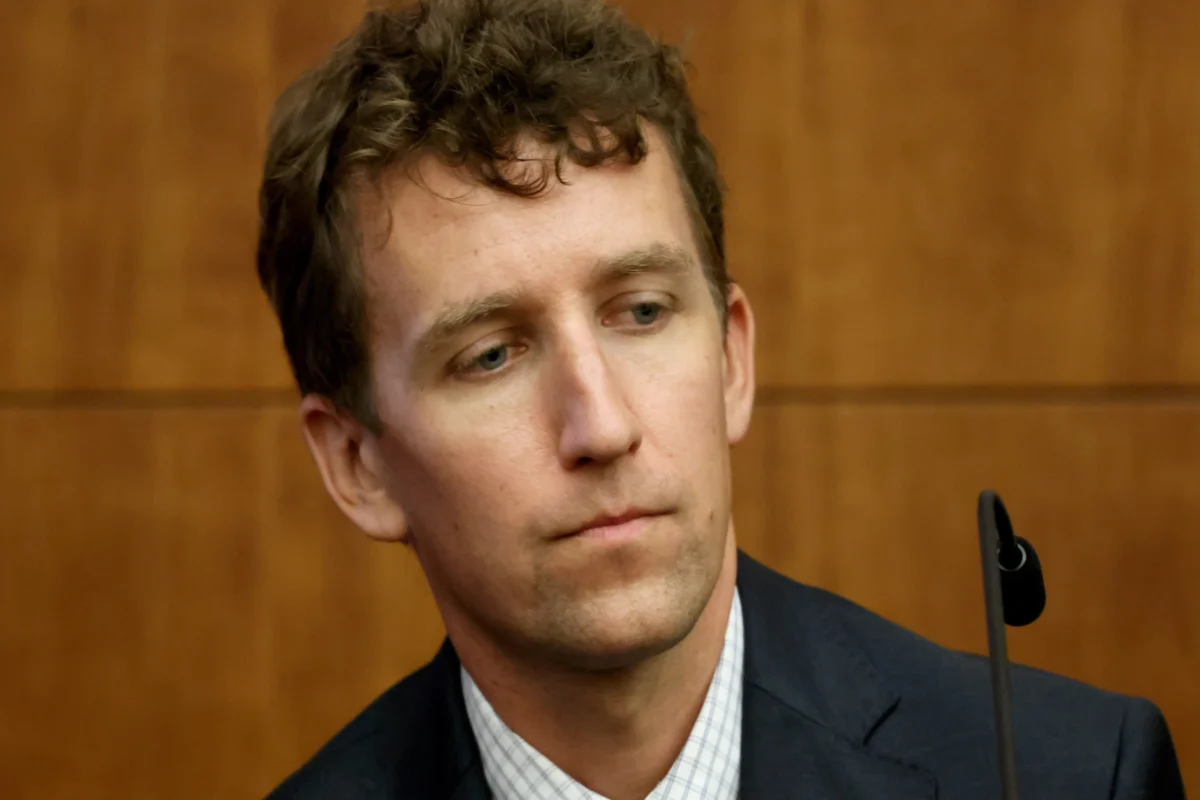
HangupsMusic.com – The profound silence that often follows unimaginable tragedy has been broken by Patrick Clancy, the former husband of Lindsay Clancy, whose case has captivated and horrified a nation. In an emotional and revealing interview with CBS’s 60 Minutes, the 38-year-old opened up for the first time since the recent mistrial in his ex-wife’s high-profile case, offering a raw glimpse into his journey of immense loss, the complexities of forgiveness, and the arduous process of rebuilding a life shattered by an event that brought the discussion of perinatal mental health to the forefront of public consciousness. His words shed light not only on his personal anguish but also on the insidious dangers of online speculation and the desperate need for greater understanding of severe mental illness.
The narrative of January 2023 remains etched in the collective memory: a Duxbury, Massachusetts family home, a seemingly ordinary evening errand, and a horror that unfolded in Patrick’s absence. Lindsay Clancy, a nurse, stands accused of strangling their three young children—Cora, five; Dawson, three; and eight-month-old Callan—in the basement of their residence. Upon his return, Patrick discovered his wife severely injured after allegedly jumping from a second-story window, leaving her paralyzed, and the devastating truth about his children. The subsequent legal proceedings thrust the family into a national spotlight, culminating in a triple murder trial focused not on the act itself, which Lindsay did not deny, but on her state of mind at the time—specifically, whether she was legally culpable given her struggles with severe postpartum mental illness. The trial concluded in a mistrial earlier this month, leaving the possibility of a retrial uncertain and the legal outcome unresolved.
In his candid conversation, Patrick Clancy offered a poignant defense of his ex-wife, challenging the sensationalized labels that had been affixed to her. "I saw headlines that said ‘Killer Mom,’ and ‘Baby Murderer,’ ‘Monster.’ And none of [them] were accurate. I believe that it was her mental illness that caused that," he asserted. This statement, delivered with a quiet conviction, underscores a profound struggle for understanding and empathy in the face of an incomprehensible act. His perspective on forgiveness was equally startling, revealing a deeply personal and almost self-preservational stance. "When it comes to forgiveness, I also felt that if I didn’t get there, I would be eaten up inside forever," he confessed, illustrating the internal battle waged against consuming bitterness and despair. This act of forgiveness, he clarified, was not sought by Lindsay, but rather a solitary, internal decision he made to preserve his own spirit.
Patrick recounted the insidious onset of Lindsay’s mental health struggles, which he first observed in the fall of 2022. What began as difficulty sleeping gradually escalated, leading her to seek help for what was diagnosed as postpartum depression. However, the illness manifested in intense dark periods and deeply intrusive thoughts, culminating in her voluntary admission to McLean Psychiatric Hospital in December 2022, just weeks before the tragedy. His account highlights the often-invisible and rapidly deteriorating nature of severe perinatal mood and anxiety disorders.
Reflecting on his own capacity to comprehend and manage the crisis, Patrick admitted to the immense challenge. "I could piece together what it was like to be really, really anxious or depressed, but I didn’t know how to manage a postpartum illness," he stated. His words resonate with countless partners and family members who find themselves ill-equipped to navigate the complexities of severe mental health conditions. He further emphasized the deceptive nature of such illnesses: "I think mental illness has this ability to be tragically deceptive. So I’m sure there are things that I didn’t see." This acknowledgment speaks to the profound difficulty in discerning the severity of internal suffering, especially when masked by societal expectations or the sufferer’s own attempts to cope.
The moments following his discovery were a blur of disbelief and desperate hope. Patrick recalled the initial arrival of first responders, who did not immediately convey the full extent of eight-month-old Callan’s injuries. This omission fueled a fragile hope that his youngest son might survive. Through tears, he recounted the agonizing journey to the hospital, clinging to a singular prayer. "I remember thinking, ‘Just gimme one kid, and I would raise him as best I could, and I would give him the best life I possibly could. I’d tell him about his brother and sister.’ I was holding out hope for that," he shared. The crushing reality came with the doctor’s somber expression, confirming his deepest fears. This raw detail paints a vivid picture of a father’s desperate love and the final, brutal extinguishing of hope.
While Patrick did not specify the exact timeline of his conversations with Lindsay during her hospitalization or incarceration, he revealed a chilling detail about her recollection of the events. When asked if she remembered strangling their children, Lindsay described it "the way you would remember a dream after waking up." This fragmented memory, indicative of a dissociative state often associated with severe mental illness, adds another layer of tragic complexity to the case, further reinforcing the debate over her legal responsibility. The emotional toll on Patrick himself was immense, leading to a period of intense suicidal ideation. "There was a time where I didn’t think I would live to see my 35th birthday," he confessed, adding, "And I was completely fine with it." His survival, therefore, is a testament to an incredible inner fortitude.
In the years since the tragedy, Patrick Clancy has embarked on a profound journey of healing and reconstruction. He has since relocated to New York City, where he has found a new chapter of life with his wife, Rachel Danis, whom he married in April 2026. Their paths intersected at a run club, and it was over coffee that Patrick, with remarkable candor, first spoke of his children to Rachel. Her commitment to his healing and their shared future is evident in her words: "I always try to take some of the weight from Pat. I always wanna strive to do that. I know I can’t fix [it]. I can’t bring his kids back," Danis said. "But if I can honor them and allow Pat to grieve but also just continue to honor them in the present, I guess that’s all I can do." The couple has expressed their intention to "start a family," a hopeful beacon amidst the shadows of their past, signaling a courageous step towards new beginnings.
While Patrick has extended forgiveness to Lindsay, his words for the burgeoning phenomenon of online "TikTok sleuths" and internet commentators were far less conciliatory. He described the rampant rumors and unfounded accusations, which included theories that he had framed his ex-wife or was himself responsible for the murders, as "deeply harmful." More significantly, he viewed these baseless conjectures as a dangerous "distraction" from the vital discussion surrounding "perinatal mental health"—a conversation desperately needed to prevent future tragedies. "It’s done real harm to real people, myself included but also others. It’s painful to see," he asserted, highlighting the corrosive impact of unchecked misinformation. "It makes it difficult to be in public, and it’s possible that some of those people, after seeing lie after lie after lie, they start to believe it." His condemnation serves as a stark warning about the unchecked power of social media to distort truth and inflict further pain on those already suffering.
Despite the geographical distance and the passage of time, memories of his children remain a vibrant presence in Patrick’s New York City apartment. Cora’s cherished baby sloth figurine, a plush reminder of her favorite animal, sits alongside photographs of all three children. Dawson’s helicopter, still bearing the marks of playtime, stands as a tangible link to a joyful past. Patrick is resolute in his intention to share the stories and memories of Cora, Dawson, and Callan with any future children he may have, ensuring their legacy endures. When confronted with the deeply personal and agonizing question of whether he felt he had failed Lindsay, his response was both simple and profoundly resonant. "I think I did the best I could with what I had at the time," Patrick said. "And I live with the outcome. I live with it every day." His statement encapsulates the enduring weight of his grief, the unanswerable questions, and the quiet courage of a father who, against all odds, continues to choose life, love, and a future imbued with the memory of his lost children.
