
 By Azzam Bilal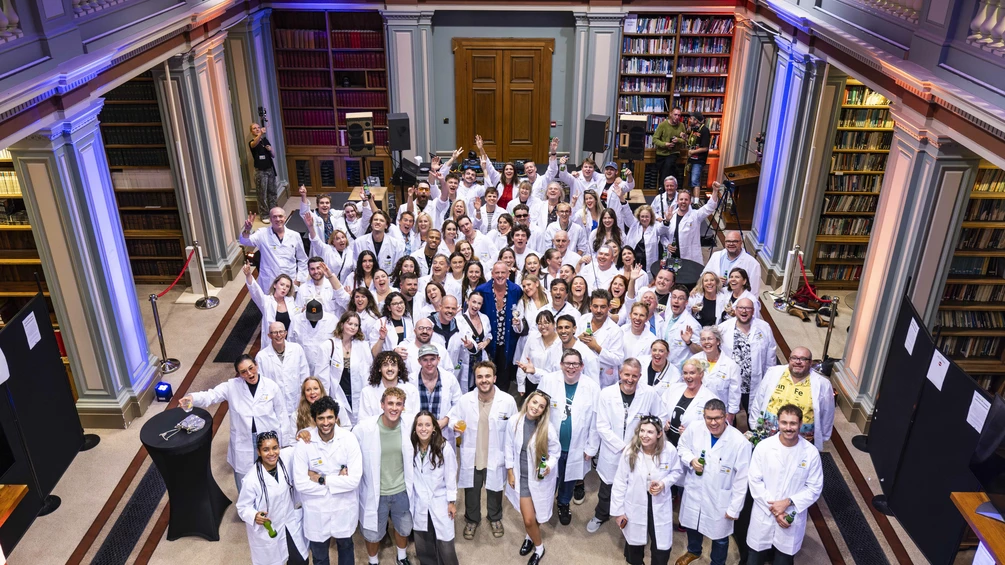
HangupsMusic.com – London, England, witnessed a collision of scientific heritage and electronic music history this week as Norman Cook, better known to the world as Fatboy Slim, took over the prestigious halls of the Royal Society of Chemistry. The event, an intimate and highly exclusive one-off performance, served as a centerpiece for the ongoing celebrations surrounding the 30th anniversary of his seminal debut studio album, Better Living Through Chemistry. Held within the hallowed walls of Burlington House, the evening was more than just a DJ set; it was a conceptual homage to the record that helped define a genre and catapulted a Brighton-based producer into global superstardom.
The choice of venue was as deliberate as it was unconventional. Burlington House, located in Piccadilly, serves as the headquarters for several of the United Kingdom’s most esteemed learned societies. To see the historic library of the Royal Society of Chemistry—a room usually reserved for quiet study and the preservation of centuries-old scientific discourse—transformed into a pulsating dance floor was, in the words of the artist himself, "bonkers." The library, characterized by its towering wooden alcoves and shelves lined with ancient leather-bound volumes, provided a stark but strangely fitting backdrop for an artist whose breakthrough work was named after a mid-century advertising slogan for the chemical giant DuPont.
The atmosphere of the evening was heightened by a playful commitment to the theme. Attendees were provided with white lab coats upon entry, a nod to both the venue’s purpose and the aesthetic of the 1996 album. This sea of amateur "scientists" filled the makeshift dance floor, creating a visual spectacle that bridged the gap between the rigid world of academia and the hedonistic spirit of the 1990s rave scene. The event marked only the second time in the building’s long history that it has hosted a musical performance; the first occurred in the 18th century, when the legendary composer George Frideric Handel performed on the premises. The transition from Baroque masterpieces to the distorted breakbeats of "Going Out of My Head" highlighted the vast cultural shifts that have occurred in the intervening centuries.
The night began with a curated warm-up set by Joshua James, a resident of the renowned "Feel It" club nights. James successfully primed the audience, navigating the unique acoustics of a room designed for silence rather than sub-bass. When Norman Cook finally took his place behind the decks, the energy in the room shifted. Cook, who has spent the last four decades reinventing himself across various musical projects, seemed genuinely moved by the setting. For a DJ who has played to hundreds of thousands on the beaches of Rio de Janeiro and Brighton, the intimacy of the library offered a rare opportunity to reconnect with his roots and his most dedicated followers.
Reflecting on the performance, Cook described the experience as a "sweaty reunion" rather than a standard gig. He noted that the unique environment encouraged a different kind of interaction with the music. It was, he admitted, the first time in many years that he had sat down to properly listen through Better Living Through Chemistry in its entirety, and hearing those tracks again in such a specialized setting brought a fresh perspective to the work. The audience, he remarked, was "mad," matching the intensity of the music despite the formal surroundings of the scientific institution.
Better Living Through Chemistry was originally released in 1996 on Skint Records. At the time, Cook was already a veteran of the music industry, having found success in the 1980s as the bassist for the indie-pop group The Housemartins and later as a founding member of the electronic act Beats International. However, it was under the Fatboy Slim moniker that he truly revolutionized the dance music landscape. The album is widely regarded as one of the foundational pillars of "big beat," a genre characterized by its heavy breakbeats, distorted basslines, and eclectic use of samples ranging from rock and roll to soul and jazz. By blending the energy of hip-hop with the structural sensibilities of house music and the rebellious spirit of punk, Cook created a sound that was accessible yet innovative.
The 30th-anniversary celebrations are not limited to this single performance. Fans who were unable to attend the London event will soon have the opportunity to revisit the album through a series of special reissues. An expanded digital version of Better Living Through Chemistry is scheduled for release this Friday, September 30th. This will be followed on October 2nd by the release of physical editions, including specially mastered vinyl and CD versions. These reissues aim to capture the raw energy of the original recordings while providing the high-fidelity sound quality expected by modern listeners. The anniversary serves as a reminder of how well the tracks have aged, with songs like "The Rockefeller Skank" and "Everybody Needs a 303" remaining staples in DJ sets across the globe.
This milestone comes on the heels of a busy year for the producer. Last year, Cook marked 40 years in the music business, a journey he documented in his illustrated book, It Ain’t Over ’til The Fatboy Sings. The book offers a comprehensive look at his career, from his early days in the Hull-based Housemartins to his rise as a global icon of the decks. Additionally, he recently saw the official release of his famous "Satisfaction Skank" mash-up. For twenty-five years, the track—which blends The Rolling Stones’ classic with a driving electronic beat—existed only as a coveted "white label" or a highlight of his live performances. Its official arrival on streaming platforms was a long-awaited gift to fans who had spent decades listening to low-quality bootlegs.
The Royal Society of Chemistry event also highlighted the enduring legacy of the "Brighton sound." In the mid-to-late 90s, Brighton became the epicenter of the big beat movement, with Cook at its helm. The music was a reaction against the increasingly serious and minimal direction of techno and trance at the time. It was music designed for fun, for parties, and for the cross-pollination of different subcultures. Seeing that same spirit alive in a London library three decades later suggests that the appeal of Cook’s work transcends mere nostalgia. It represents a specific era of British creativity that refused to be pigeonholed.
As the final tracks echoed through the library’s alcoves and the guests filtered out into the London night, still clad in their white lab coats, the significance of the evening was clear. Fatboy Slim remains a vital figure in the electronic music world, not just as a legacy act, but as a performer capable of creating moments of genuine surprise and joy. By bringing Better Living Through Chemistry to a place of scientific inquiry, he reminded the world that music, much like chemistry, is about the reaction—the spark that occurs when different elements are brought together in the right environment.
The upcoming reissues will undoubtedly introduce a new generation to the "chemical" sounds of 1996, ensuring that Norman Cook’s contribution to the evolution of dance music continues to be studied and celebrated. Whether in a massive stadium or a historic library, the mission of Fatboy Slim remains the same: to find the perfect beat and share it with the world. As the 30th-anniversary campaign continues, it is evident that the "Better Living" promised three decades ago is still very much in effect.
