
 By admin
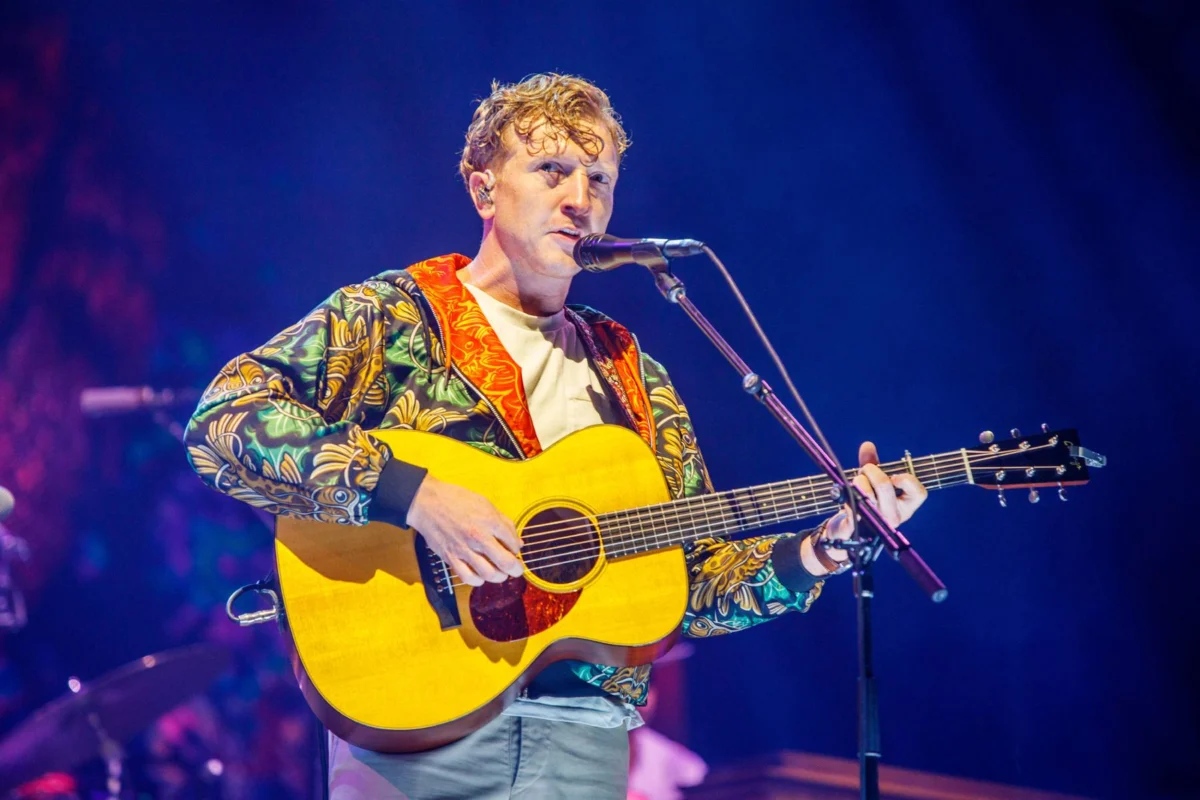
HangupsMusic.com – Dana Point, California, the sun dipped below the horizon on the second day of Eddie Vedder’s meticulously curated Ohana Festival, painting the Southern California sky in a breathtaking palette of fiery oranges and deep purples. This dramatic natural spectacle perfectly framed an evening dedicated to potent musical declarations and calls for solidarity, transforming Doheny State Beach into a vibrant crucible of shared experience and artistic expression. The air, still warm from the day’s coastal sun, hummed with anticipation as thousands gathered, ready to absorb the messages and melodies of a diverse lineup poised to deliver performances steeped in themes of unity and compassion.
The day’s narrative was punctuated by a series of high-impact performances that transcended mere entertainment, venturing into the realm of social commentary and heartfelt connection. Headlining Saturday was Tyler Childers, whose rugged sincerity and profound lyricism anchored the evening. His set echoed an earlier, impassioned address from Brittany Howard, frontwoman of Alabama Shakes, who boldly sported an "ICE OUT" pin during her band’s electrifying performance, advocating fiercely for human dignity and community support. As dusk settled, New Orleans’ own bandleader and composer, Jon Batiste, unleashed a torrent of infectious joy and poignant reflection, effortlessly navigating a musical landscape that spanned ragtime classics to contemporary anthems, embodying the very spirit of freedom.
The early afternoon hours had already set a tone of thoughtful artistry, with a significant portion of Saturday’s programming dedicated to country acts whose storytelling often wove tales of everyday American life and pleas for collective understanding. Among these, Stephen Wilson Jr., a rising star hailing from Nashville with a fascinating past as a microbiologist, delivered a standout performance. His set included a playful yet pointed jab at the burgeoning influence of artificial intelligence before he launched into "Gary," his heartfelt ode to the working class. "This is for all our fixers out there that show up and get our lives back on track," Wilson declared to the receptive crowd. "Cause I do not believe AI will show up at your dorm when life hits the fan. But I do believe a human will, and if his name is Gary, you’re probably in pretty good shape." His words resonated deeply, underscored by the whimsical sight of a tiny robot held symbolically captive within a birdcage behind him, a visual metaphor for the human touch AI cannot replicate.
A collective gasp swept through the audience mid-way through Wilson Jr.’s set when festival founder Eddie Vedder made a surprise appearance, joining the Nashville artist on stage. The two musicians then launched into a powerful, unexpected rendition of "Hunger Strike," the iconic Temple of the Dog track originally immortalized by Vedder and the late Chris Cornell. Vedder’s baritone intertwined seamlessly with Wilson Jr.’s vocals, creating a poignant tribute that stirred deep emotions among longtime fans. This wasn’t Vedder’s only cameo of the weekend, underscoring his pervasive, hands-on presence at his festival; on Friday, he had also lent his voice to Bad Religion for a spirited take on "American Jesus," a track from their 1993 album Recipe for Hate, for which he originally provided backing vocals. These spontaneous collaborations are a hallmark of Ohana, fostering a sense of camaraderie and shared musical heritage that elevates the festival experience.
As the sun’s final rays kissed the Pacific, Jon Batiste and his ensemble took to the stage, igniting the atmosphere with a non-stop, hour-long medley that was a masterclass in musical fusion. Batiste, a whirlwind of kinetic energy and boundless talent, seamlessly blended New Orleans jazz, gospel, soul, and funk. He danced across the stage with an irrepressible exuberance, effortlessly transitioning between piano, saxophone, and melodica, each instrument becoming an extension of his joyous spirit. The zenith of his performance was a majestic rendition of "Freedom" from his Grammy-winning album We Are, amplified by the formidable vocal power of Desiree "Desz" Washington, whose voice soared with an electrifying intensity. In a moment of profound communion, Batiste led the thousands gathered in a powerful, collective singing of Leonard Cohen’s "Hallelujah," before ramping up the energy with a rollicking, foot-stomping version of "When the Saints Go Marching In," transforming the beach into a vibrant, communal celebration.
Following Batiste’s spirited set, as twilight deepened into night, Alabama Shakes commanded the stage. The band, fresh off the release of I Must Be Dreaming – their first album in 11 years – delivered a dazzling performance that artfully blended their new material with beloved classics. Their set reached back to their 2012 debut, Boys & Girls, and included fan favorites like "Guess Who" and "Dunes" from their critically acclaimed album Sound & Color. Offerings from their latest LP, particularly the standout "American Dream," showcased their evolving sound while retaining their signature raw power.

Mid-set, Brittany Howard paused the music to address the audience directly, her voice resonating with clarity and conviction in the heart of Orange County, an area often associated with conservative values. "I was thinking about people who risk their life, living to protect each other, protect their communities, protect their neighbors, protect our rights, and when I see that, it gives me hope for our future," Howard articulated, her words imbued with profound sincerity. "At the end of it all, it’s really just us taking care of each other." Her powerful message of empathy and mutual support was met with thunderous cheers and applause from the diverse crowd, affirming the festival’s underlying ethos of unity.
An unexpected, yet welcome, addition to the evening’s lineup was Florence Road. The Irish rock band, originally slated to perform on Friday afternoon, had faced a distressing setback when their gear was stolen from their van earlier in the day. Through the swift and compassionate efforts of the festival organizers, Florence Road was granted an evening slot, performing during the interlude before Childers’ headlining set. Lead singer Lily Aron expressed profound gratitude to Eddie Vedder and his team for allowing them to play "on this gorgeous stage at this gorgeous time," a testament to the festival community’s resilience and support.
As Tyler Childers finally took the stage to close out the night, he created an intimate, almost domestic atmosphere with his unique stage design. Lamps cast warm glows, an old console TV flickered softly, and a wooden chair was casually strewn among his band members, evoking the comfort of a living room. Childers opened with the searing "Eatin’ Big Time," the lead track from his album Snipe Hunter, immediately captivating the audience with his raw, authentic sound. He followed with the "randy" title track "Rustin’ in the Rain" from his 2015 album, then shifted gears to the more "appropriately considered" love song and fan-favorite "All Your’n," showcasing his impressive lyrical range and emotional depth.
Childers proceeded to tear through an exhilarating lineup that included the yearning "Oneida," the toothy "Dirty Ought Trill," and the ornery, tall-tale telling "Whitehouse Road." His performance was a masterclass in storytelling, each song a vivid narrative brought to life by his distinctive voice and formidable band. At one point, he had the entire crowd literally barking and howling in a playful, yet spirited, ode to his rabies-wishing "Bitin’ List," demonstrating his unique ability to connect with his audience on a visceral level. He brought his set to a gut-wrenching close with "Lady May," a deeply personal ballad that he confessed was the one song he hoped to remember if he were ever to "be hit in the head tomorrow and I couldn’t remember anything that I ever wrote or played."
Before bidding farewell, Childers left the audience with a profound, neighborly invitation, delivered in one breathless, eloquent stream of thought. He urged them to connect with someone new in the crowd, emphasizing the deeper purpose of their shared experience. "One of the most important things that you’ve had the opportunity to partake in this evening, other than listening to music, one of the most important things above all the clinking jangling of the keys and the beating of the strings and the banging of the drums, the one biggest, most important thing that you’ve had the opportunity to do is a little bit of fellowship," he proclaimed, his voice imbued with a thoughtful urgency.
Acknowledging that the likelihood of having nothing in common with a stranger might seem high, Childers offered a simple, powerful truth: "You both showed up September 26, 2026 at the Ohana Festival. That, ladies and gentlemen, is called an icebreaker." He pressed on, his message resonating with the unifying spirit of the festival: "And if you ask me, there needs to be a little bit more breaking of the ice so that we can all swim in the cool waters of fellowship that lay beneath it." It was a fitting, poignant conclusion to a day that had, through its diverse musical offerings and outspoken voices, championed the very essence of human connection and mutual care.
