
 By admin
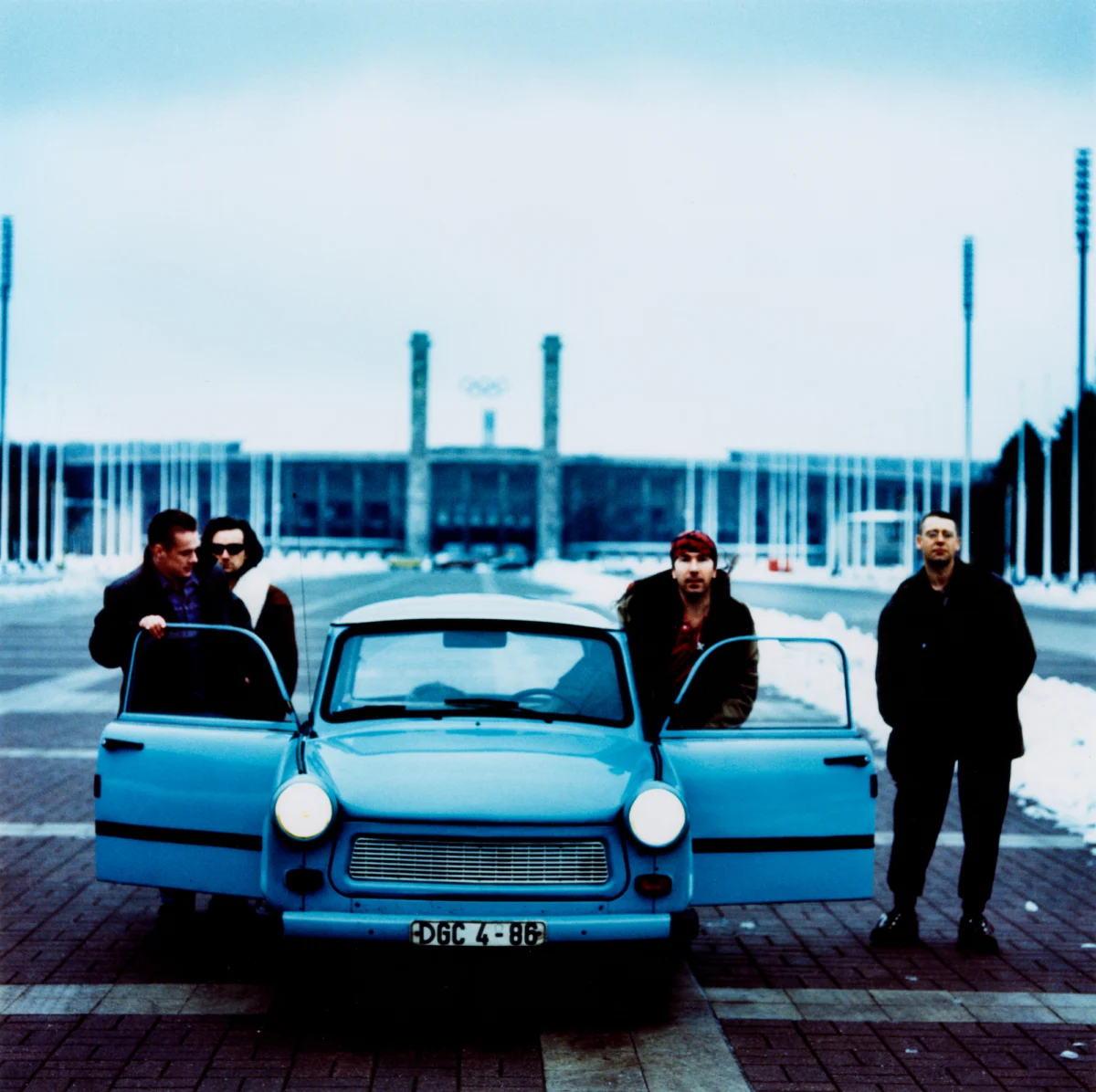
HangupsMusic.com – French Riviera, Basked in the gentle, early September light of the French Riviera, the four architects of U2—Bono, The Edge, Adam Clayton, and Larry Mullen Jr.—convened for a rare, expansive conversation. Nearly five decades since their initial meeting in Larry Mullen Jr.’s Dublin kitchen, the iconic Irish quartet is not merely reflecting on a monumental anniversary but embarking on a bold new chapter. With their upcoming album, Carnaval De Luz, set for a November 13 release, they reveal a project infused with audacious spirit, born from both global turmoil and profound personal reckoning, signaling yet another defiant reinvention for one of rock’s most enduring acts.
The occasion, just shy of their 50th anniversary, found the band in a characteristically jocular mood. Larry Mullen Jr., ever the laconic counterpoint to Bono’s effusiveness, quipped, "Honestly, it’s been 50 years of hell." His dry wit, delivered impeccably from behind Wayfarers and a perfectly coiffed pompadour, underscored a half-century of shared experience. The conversation quickly veered into humorous recollections, particularly The Edge’s jab about the band’s "mullet phase," a testament to the deep-seated camaraderie and irreverence that has sustained their extraordinary journey.

Carnaval De Luz, U2’s first new material in nine years, emerges not as a nostalgic look back, but a vibrant leap forward. The album, whose title translates to "Carnival of Light," is steeped in a theme of "defiant joy" – a powerful response to the pervasive darkness of contemporary global events. Bono eloquently linked this artistic stance to historical moments of resilience, referencing a Ukrainian rave amidst devastation and Dan Savage’s reflections on queer life during the AIDS crisis: "We buried our friends in the morning, we protested in the afternoon, and we danced all night… It was the dance we were fighting for." This philosophy permeates the record, pushing beyond a "status-quo U2 moment" and embracing risk with a surprising inclusion of Spanish-language lyrics.
The album serves as a mission statement, encapsulated in a lyric from the opening track, "Go (Carnaval De Luz)": "The past and me have got to break up." This echoes their past pronouncements of artistic renewal, such as Bono’s declaration in 1989 to "dream it all up again" before Achtung Baby, or their return to "musicians-in-the-room basics" with All That You Can’t Leave Behind. For U2, evolution isn’t just a choice; it’s a constant imperative. As Bono remarked, each new album demands a metaphorical "break up and make up" within the band, a willingness to dismantle and rebuild their sound.
At the heart of U2’s enduring narrative, Bono emphasized, lies an unwavering faith. "Faith in each other, I suppose. Faith in ourselves, faith in our community that got us here. Faith that something bigger than us had a wind at our back." This spiritual bedrock has guided their path, even when facing existential questions. The Edge admitted to entering the creative process grappling with doubts: "Are we still relevant? Do we have anything to say that’s of interest to anybody?" Ultimately, the decision was not whether they were relevant, but whether they would try to be, a resolve that infused the project with urgency and purpose.

Carnaval De Luz is revealed to be part of a larger, ambitious artistic endeavor structured around the liturgical calendar: Carnival, Lent, and Easter. Preceded by two EPs, Days of Ash and Easter Lily, released earlier in the year, the full body of work forms an eternal cycle, with the final notes of the Easter EP leading back to the beginning of Carnaval. Bono playfully acknowledged the challenge of asking fans to follow such a calendar, calling it an "art project" that reflects the band’s consistent embrace of the "death and resurrection show"—a concept of constant artistic renewal drawn from Rogan P. Taylor’s book, The Death and Resurrection Show: From Shaman to Superstar.
Adam Clayton, sporting a dashing silver mustache and a tropical Casablanca shirt, articulated a crucial lesson learned over their long career: "It took us a long time to realize that the less you put into a recording, the better it sounds. And actually, the sound of the band is good enough." Mullen, with typical self-deprecation, added, "We’re slow learners. Very slow learners." This newfound appreciation for their core sound marks a significant shift, a shedding of extraneous elements to highlight the raw power of their collective chemistry.
One of the album’s most poignant collaborations features the late Dolly Parton. Her final recorded vocal, a duet with Bono on the track "Torn," holds immense emotional weight. Bono had pursued Parton for months for a separate project, a courtship that involved sending her bagpipes for her birthday. When Parton offered her own song, "Torn," Bono and collaborator Johnny McDaid reimagined its lyrics from a tale of romantic indecision to a mother’s anguish over divided sons, evoking themes of civil strife relevant to Ireland, the US, and beyond. Parton’s performance, recorded while she was ailing, left Bono profoundly moved. The Edge observed a "keening" quality in her voice, connecting it to ancient Irish mourning traditions. Producer Jacknife Lee emphasized the care taken to ensure the song resonated with Parton’s audience while retaining U2’s artistic vision, ultimately earning her enthusiastic approval. The Edge lauded Parton as a figure of "the radical center," a rare artist beloved across divides, whose "secret weapon" of humor disarms even tyrants.

Another living artist, the Spanish phenomenon Rosalía, is celebrated in "The Mirror Maker (Rosalía)." Bono, a fervent admirer of her work, particularly her 2025 masterpiece Lux, saw a kindred spirit in her pursuit of "the re-enchantment of the world." The song itself, originating from an Edge demo called "Kuti Rocker," underwent 196 versions, a testament to U2’s meticulous creative process. Lee highlighted the effort to infuse the track with "femininity," moving it away from "cock rock" to a more Bowie-esque sensibility. Bono’s concept of artists who "go through the mirror" to explore metaphysics, rather than just gazing at reflections, underscores his admiration for Rosalía’s artistic courage.
Perhaps the most compelling narrative woven into Carnaval De Luz is Larry Mullen Jr.’s personal journey back to the drum kit. A debilitating neck injury, a congenital fusion aggravated by years of relentless drumming, had doctors advising him to retire. This led to his absence from the Sphere residency, a difficult but understood decision for the band. Mullen candidly spoke of the "humiliation" he felt, a personal struggle separate from any feelings of being "left behind" by his bandmates. His commitment to U2, however, superseded all else. Despite his family’s reservations and doctors’ warnings about the risks of paralysis, Mullen "overrode" their concerns, choosing to undergo a perilous neck surgery.
His recovery was a process of rediscovery. Sitting at the kit months later, Mullen found he was "playing differently," forced to return to the "most efficient" techniques, shedding years of ingrained habits. He rejoined the band for recording sessions, contributing to the single "Atomic City" and then the new album. Bono noted a "more authority" and a new "playfulness" in his drumming. Adam Clayton, whose bass and drums form the band’s rhythmic backbone, described playing with a substitute as "promiscuous" and affirmed that Carnaval De Luz would not have existed without Mullen’s return. Mullen, in turn, embraced a "new Larry"—softer, less of a "veto merchant," and accepting of drum machines where appropriate. He recognized that U2 "can’t be like everybody else. We just can’t. We always will be and have to be outliers," a profound realization after 50 years.

The band’s evolving musical philosophy extended to their long-standing "prog rock" debate. Bono, historically a vocal detractor of the genre, surprisingly issued an "apology" to The Edge, who is a confessed Yes fan. This shift came after Bono discovered Jon Anderson’s co-authorship of Donna Summer’s "State of Independence," a song that profoundly influenced U2. He recognized a shared spirit with Yes guitarist Steve Howe in The Edge’s distinctive style, even jokingly linking The Edge’s moniker to Yes’s album Close to the Edge. This newfound openness is reflected in tracks like the nearly seven-minute "Coexist (I Will Bless the Lord at All Times?)," originally a 17-minute Eno collaboration, demonstrating U2’s willingness to embrace expansive musical forms.
Bono admitted to having largely let go of the ambition for chart-topping hits, finding "the song is its own reward." He cited Bob Dylan’s late-career philosophy of simply "doubling down on being himself." However, the band is still exploring a radio edit for "The Greatest Show on Earth," a sprawling, IMAX-sized epic Bono considers "maybe our greatest song in a very long time." The track, a shattered love affair interwoven with critiques of Christian nationalism, aims for the "ecstatic, crooning heartbreak" of "You’ve Lost That Lovin’ Feelin’," yet remains firmly rooted in U2’s unique lyrical and musical landscape.
The production process for Carnaval De Luz marked a deliberate return to a "band in a room" ethos, a reaction against what Clayton described as the "cloudy, muddy" sound of earlier albums that resulted from too many producers. Jacknife Lee, the album’s producer, confessed his own past failure to fully grasp "the power of Larry and Adam," now recognizing their foundational chemistry. The Edge acknowledged previous "overcorrections" in their sound, highlighting a commitment to authenticity this time around.

In a remarkable anecdote, former President Barack Obama visited the studio and offered notes on "The Tears of Things," a deeply resonant track Bono describes as an "elliptical take on the thousands of years that led up to Gaza." The song, narrated by both biblical David and Michelangelo’s statue, pleads for unity ("Everybody is my people/Let my people go") and questions the very notion of being "chosen." Bono condemned Hamas’s actions while expressing horror at the rhetoric of Israeli far-right figures, emphasizing that "justice is at the heart of Judaism."
The unconventional release of the Days of Ash and Easter Lily EPs was a strategic move, a deliberate "hiding" of new music to avoid a repeat of their 2014 "big accident" of unsolicited album drops. The EPs were created with "nearly crazed intensity" in a matter of weeks, an emergency effort that yielded profound songs like "American Obituary," which Bono crafted after connecting with the family of Renée Good, a woman killed by an ICE agent.
The album’s fierce single, "Silencio," delves into Bono’s recent reflections on the nature of evil. Inspired by Simon McBurney’s adaptation of The Master and Margarita, where Satan thrives in a world denying his existence, Bono sees "something entered the air" that threatens everything "sacred." "Silencio" distinguishes between a reflective, beautiful silence and a dangerous "censorship, self-censorship," drawing a direct line to Hannah Arendt’s concept of the "banality of evil."

Looking ahead, U2 is planning an unannounced stadium tour, alongside a wealth of unreleased material. The Edge’s archives hold over 11,000 voice memos and eight folders of side projects, including the long-teased Songs of Ascent and further collaborations with Brian Eno. Bono envisions smaller, separate "teatro" venues to showcase new material, a concept Mullen views as "great in theory" but challenging in practice.
The conversation naturally turned to aging. Adam Clayton, now 66, mused about the value of good health and the eventual "downscaling" of life, questioning whether U2 would still be performing in their 80s like the Rolling Stones, whom he considers "an aberration." The Edge, however, remains optimistic, distinguishing between "age and biological age" and believing that U2’s "next song, our next album could be our best ever." Mullen, invigorated by his recent journey, concurred: "It’s worth fighting for. And it’s also worth compromising for." His journey, and the band’s collective rebirth, underscores a renewed commitment to their singular, shared purpose. As the interview concluded, Mullen, with a characteristic twinkle, couldn’t resist a final, playful query: "So, did Bono say any nice things about me?" The answer, undoubtedly, was yes.
