
 By admin
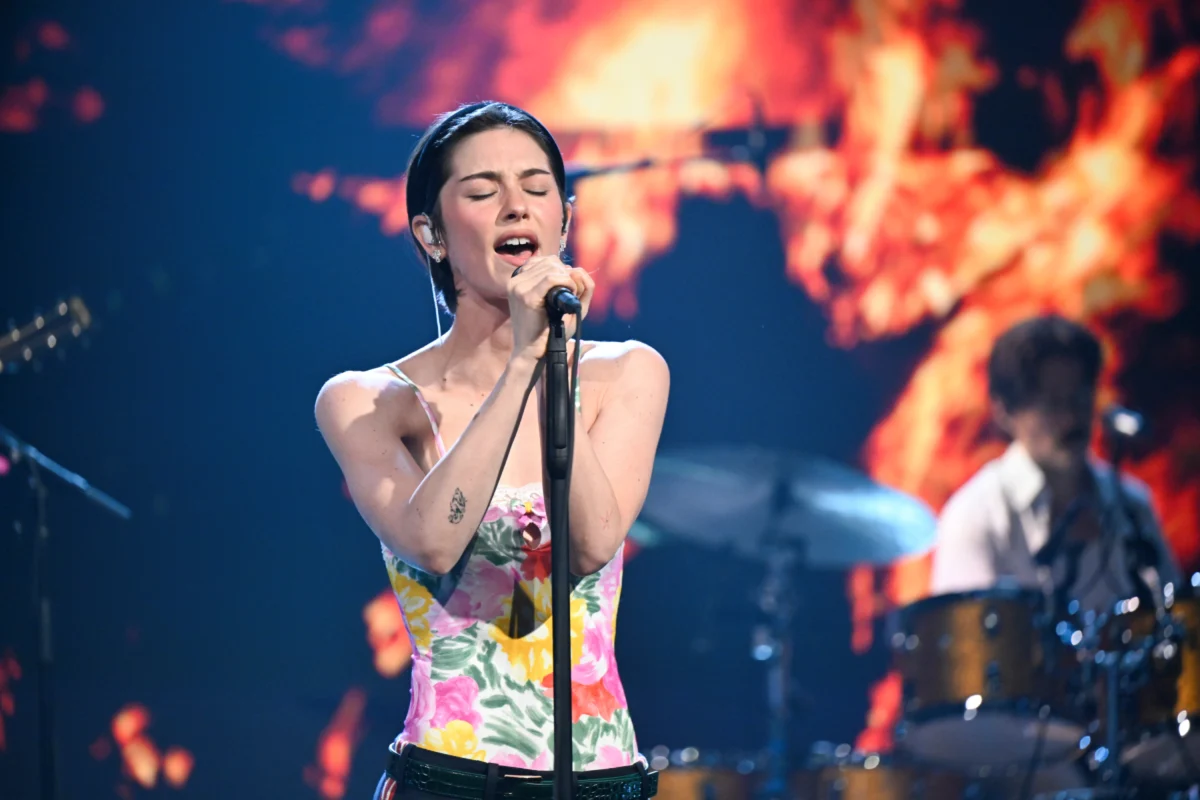
HangupsMusic.com – New York, Gracie Abrams delivered an emotionally charged performance of "Look at My Life" on The Tonight Show Starring Jimmy Fallon, offering audiences a poignant glimpse into the soul-searching narrative of her latest album, Daughter From Hell. This evocative rendition, marked by her signature blend of vulnerability and intense musicality, served as a powerful reminder of the record’s profound impact since its release in July, an impact that has seen Abrams soar to unprecedented heights in her burgeoning career.
The late-night appearance saw Abrams command the stage with an understated yet compelling presence. Flanked by a tight live band, the singer-songwriter transformed the Tonight Show set into an intimate space, her voice, a delicate instrument capable of profound emotional resonance, weaving through the track’s intricate melodies. "Look at My Life" is a quintessential Abrams track, characterized by its introspective lyrics and a gentle build-up that culminates in a cathartic release. Her delivery was both raw and polished, showcasing the genuine emotion that has endeared her to a rapidly expanding global fanbase. The minimalist staging allowed her powerful storytelling to take center stage, drawing viewers into the deeply personal world she constructs within her music. This high-profile platform not only amplified the album’s reach but also solidified Abrams’ reputation as a compelling live performer, capable of translating the delicate nuances of her studio recordings into a captivating on-stage experience.
The performance arrived on the heels of Daughter From Hell‘s triumphant debut, which saw the album claim the coveted top spot on the Billboard 200 chart. This monumental achievement, her first-ever Number One album, was fueled by an impressive 124,000 equivalent album sales in its first week. The commercial success of Daughter From Hell represents a significant milestone for Abrams, signaling her transition from a critically acclaimed indie darling to a bona fide mainstream force. It underscores the profound connection she has forged with her audience, who have embraced her honest, diaristic songwriting with unwavering enthusiasm. This chart-topping success is not merely a number; it’s a testament to the growing resonance of her authentic voice in an industry often driven by fleeting trends. It positions her firmly among the most impactful artists of her generation, proving that raw vulnerability can indeed lead to widespread acclaim and commercial triumph. The album’s journey to the top of the charts reflects a dedicated and passionate fanbase, eager to consume every layer of her artistic output.
Daughter From Hell is a sonic landscape meticulously crafted under the seasoned guidance of producer Aaron Dessner, a collaboration that has become a cornerstone of Abrams’ artistic identity. Dessner, widely celebrated for his atmospheric and emotionally resonant work with artists like Taylor Swift and his own band, The National, has been instrumental in shaping Abrams’ sound across her last three projects. His involvement extends beyond this latest offering, encompassing her critically lauded debut album, Good Riddance, and its subsequent follow-up, The Secret of Us. Dessner’s production style, characterized by its intricate textures, subtle instrumentation, and ability to amplify emotional depth without overshadowing the artist’s voice, perfectly complements Abrams’ confessional songwriting. He creates a sonic world that feels both expansive and intimately personal, providing the ideal backdrop for her nuanced narratives. This consistent partnership has allowed Abrams to develop a distinctive sound, evolving with each release while maintaining a cohesive artistic vision.
The album’s creative tapestry is further enriched by an impressive roster of co-writers, each bringing a unique perspective to its introspective themes. Among the notable contributors is Justin Vernon, the enigmatic frontman of Bon Iver, whose distinctive artistic sensibility has undoubtedly infused a unique layer into the album’s lyrical and melodic framework. Vernon’s reputation for crafting evocative, often melancholic, soundscapes and profound, abstract lyricism suggests his contributions would lean towards the album’s more introspective and experimental facets, potentially lending a haunting beauty to certain tracks. His involvement speaks volumes about the respect Abrams commands within the indie music community. Additionally, Abrams’ long-time confidante and collaborator, Audrey Hobert, lent her creative talents to the project. The synergy of a deeply personal friendship often translates into authentic and unfiltered songwriting, allowing for a level of honesty that might be harder to achieve with other collaborators. Hobert’s involvement likely grounds the album in relatable, everyday experiences, reflecting the nuances of shared youth and evolving identities.
Perhaps one of the most intriguing collaborations on Daughter From Hell comes from Abrams’ partner, Paul Mescal, who co-wrote the track "Imaginary Friend." Mescal, primarily known for his critically acclaimed acting career, brings an unexpected dimension to the songwriting process. His background in performance and character exploration could have informed a narrative richness within the song, perhaps delving into themes of emotional introspection, the complexities of relationships, or the inner monologue of a protagonist. This particular collaboration adds a layer of personal intimacy to the album, blurring the lines between Abrams’ public and private life in a way that resonates with her overarching artistic ethos of raw honesty. The title "Imaginary Friend" itself hints at themes of loneliness, internal dialogue, or perhaps the creation of comfort in times of solitude, all subjects that align seamlessly with Abrams’ established lyrical landscape. The diversity of these co-writers, from established musical luminaries to close personal connections, underscores the multifaceted nature of Daughter From Hell, allowing it to explore a broad spectrum of human emotion and experience.
In a candid interview with Rolling Stone, Abrams offered profound insight into the thematic core of Daughter From Hell, describing it as an exploration of an "in-between quality." She articulated the album’s ambition to "paint an accurate picture of all of these different versions of who you are in this decade when you are sort of one foot in a past life and one foot in the future." This sentiment perfectly encapsulates the tumultuous yet transformative period of early adulthood, a time characterized by rapid change, self-discovery, and the navigation of new responsibilities while still grappling with echoes of adolescence. The album’s title itself, Daughter From Hell, while seemingly provocative, can be interpreted as a playful, perhaps even ironic, nod to the internal struggles and external perceptions that accompany this phase of life. It speaks to the feeling of being misunderstood, of pushing boundaries, and of the intense emotional highs and lows that define the journey of self-actualization. The album, therefore, serves as a poignant sonic diary, capturing the beautiful messiness of growth, the anxieties of an uncertain future, and the lingering comforts of the past. Abrams masterfully articulates the universal experience of feeling simultaneously grounded and adrift, creating a musical space where listeners can find solace and recognition in their own transitions.
Prior to the album’s widespread release, Abrams offered an exclusive glimpse into Daughter From Hell‘s origins during an intimate "underplay" show at the renowned Bowery Ballroom. These smaller, more personal performances are often cherished by artists and fans alike, providing a raw, unfiltered connection that larger venues can’t always replicate. In this setting, Abrams further elaborated on the album’s genesis, noting, "This album came from being kind of quiet after we had went our separate ways after tour ended." This period of introspection, away from the constant motion of touring, clearly allowed her to process and distill the complex emotions that inform the record. She spoke eloquently about the unique challenges and revelations of being in her twenties: "Being in your 20s is so strange and weird, it can feel lonely in a new way and it can feel like thrilling in a new way. You imagine your future differently all of a sudden and then your adolescence still feels like it’s like right behind." This powerful articulation resonated deeply with her audience, many of whom are navigating similar life stages. Her words painted a vivid picture of the album as a sanctuary for these conflicting feelings, a testament to the internal tug-of-war between the person one was and the person one is becoming. The Bowery Ballroom event wasn’t just a concert; it was a communal sharing of vulnerability, reinforcing the profound bond between Abrams and her listeners.
Gracie Abrams’ artistic journey has been a gradual yet undeniable ascent, marked by a consistent evolution in her songwriting and vocal delivery. From her earliest EPs to her breakthrough debut Good Riddance, she has cultivated a signature style characterized by confessional lyricism, melancholic melodies, and an ethereal vocal quality. Her music often explores themes of heartbreak, self-doubt, and the complexities of young love, delivered with a raw honesty that feels profoundly relatable. With Daughter From Hell, Abrams demonstrates a newfound maturity and confidence, expanding her sonic palette while deepening her lyrical explorations. The album solidifies her position as a leading voice in contemporary indie-pop and folk, an artist who fearlessly confronts her innermost thoughts and feelings, transforming them into universally resonant anthems. Her ability to articulate the often-unspoken anxieties and joys of her generation has cemented her status as a vital voice for countless listeners.
The overwhelming success of Daughter From Hell and the captivating Tonight Show performance mark a pivotal moment in Gracie Abrams’ career. It’s a testament to her unwavering artistic integrity, her poignant storytelling, and her ability to connect with an audience on a deeply emotional level. As she continues to tour and share her music, the impact of this album is sure to reverberate, shaping not only her own trajectory but also influencing the landscape of contemporary pop music. Gracie Abrams is not just an artist; she is a chronicler of a generation’s experiences, and Daughter From Hell stands as her most compelling and successful chapter yet, promising an even brighter future for this extraordinary talent.
