
 By Azzam Bilal
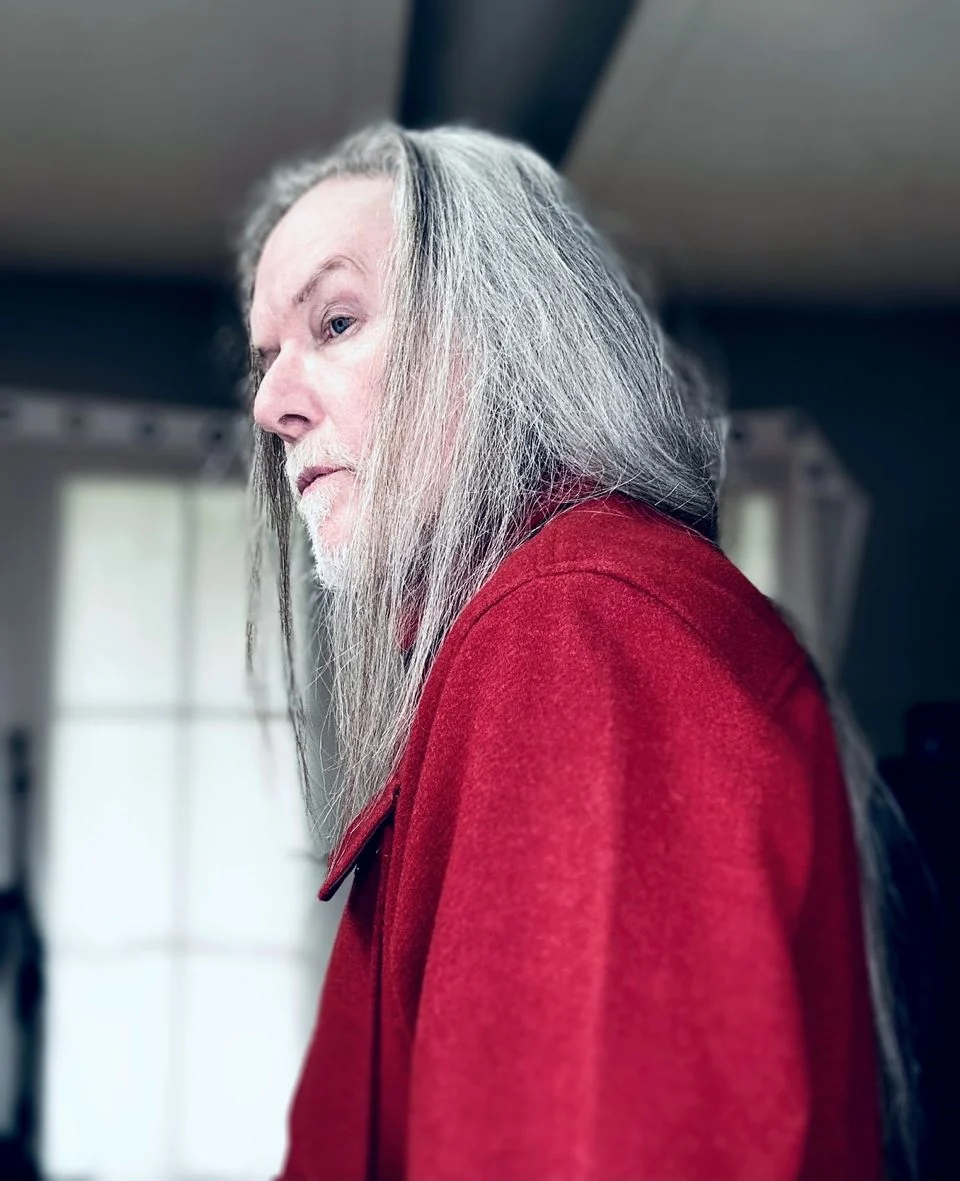
HangupsMusic.com – For more than four decades, David Sylvian has occupied a singular space in the landscape of contemporary music, evolving from the stylized glam-pop of Japan into one of the most rigorous and respected practitioners of avant-garde composition and ambient improvisation. After a prolonged period characterized more by retrospective collections and archival curation than by new solo statements, Sylvian has finally announced the arrival of a major new work. Titled The Distance Between the Killer and the Killing, the upcoming album is set for release on February 27. This marks a significant milestone in the artist’s career, not only because of the duration since his last official solo LP but also because it signals the launch of a new creative home, his latest label venture, NANOQ.
The upcoming release is an ambitious project that defies the traditional structures of the recording industry. Rather than a collection of individual tracks, The Distance Between the Killer and the Killing is presented as a single, continuous 46-minute instrumental piece. This long-form composition is the result of a meticulous assembly process, drawing from a deep well of improvisational sessions recorded over a thirteen-year period between 2012 and 2025. The album serves as a sonic document of Sylvian’s journey through the second decade of the 21st century, a time during which his public output became increasingly sparse and his artistic focus moved further toward the periphery of experimental sound.
While the album is entirely instrumental, its DNA is woven from the contributions of several luminaries in the fields of contemporary classical, electronic, and improvised music. Among the featured collaborators is the late Ryuichi Sakamoto, whose partnership with Sylvian spans decades and produced some of the most enduring music of the 1980s and 1990s, including the haunting "Forbidden Colours." Sakamoto’s involvement in these sessions, which took place before his passing in 2023, adds a layer of poignancy to the project, marking perhaps one of the final instances of their legendary synergy.
Joining Sakamoto are other masters of texture and silence. Otomo Yoshihide, the Japanese multi-instrumentalist known for his groundbreaking work in noise and turntable experimentation, brings his unique sensibility to the recordings. The project also features the contributions of violinist Biliana Voutchkova and electronic musician Jamie Drouin. Voutchkova, a prominent figure in the Berlin experimental scene, is known for her ability to blend classical precision with spontaneous exploration, while Drouin’s minimalist electronic aesthetics align perfectly with Sylvian’s recent explorations into the "micro-sound" and reductionist movements.
NANOQ, the label responsible for the release, has positioned The Distance Between the Killer and the Killing as the official successor to 2009’s Manafon. This distinction is important for Sylvian’s dedicated following. Manafon was a polarizing yet critically acclaimed work that saw Sylvian stripping away the melodic comforts of his earlier solo career in favor of "improvised songs," where his vocals were set against a backdrop of free-improvisation recorded by artists like Christian Fennesz and Evan Parker. By billing the new album as the "official follow-up," the label suggests that this 46-minute instrumental represents the next logical step in Sylvian’s primary artistic narrative—a narrative that prioritizes the exploration of space, silence, and the inherent tension found in unplanned musical interaction.
The sixteen-year gap between Manafon and this new work does not imply that Sylvian has been idle. On the contrary, his activities since 2009 have been focused on refining his legacy and exploring the intersections of music and visual art. In 2010, he released Sleepwalkers, a compilation that gathered various non-album collaborations he had undertaken with artists like Nine Horses, Ryuichi Sakamoto, and Steve Jansen. This was followed in 2012 by A Victim of Stars: 1982-2012, a comprehensive career retrospective that tracked his evolution from the synth-pop of "Ghosts" to the abstract textures of his later years.

In more recent years, Sylvian has overseen high-quality reissues of his foundational solo catalog. In 2019, his first four solo albums—Brilliant Trees, Alchemy: An Index of Possibilities, Gone to Earth, and Secrets of the Beehive—were re-released on vinyl, allowing a new generation of listeners to experience the lush, jazz-inflected art-pop that first established him as a major solo artist. These reissues served as a reminder of his capacity for profound melody, making his subsequent pivot toward total abstraction all the more striking.
The move to NANOQ also suggests a new era of independence for Sylvian. For much of his career, he was associated with Virgin Records and later his own Samadhisound imprint. The establishment of NANOQ may indicate a desire for even greater control over the presentation and distribution of his work, which has become increasingly uncompromising. The title of the new album, The Distance Between the Killer and the Killing, evokes a sense of philosophical inquiry, perhaps touching on themes of causality, morality, and the thin line between action and consequence—themes that have often permeated his lyrical work, even if they are now expressed through purely instrumental means.
Musically, the 46-minute duration of the piece suggests an immersive experience, one that requires the listener’s full attention and a willingness to engage with slow-developing textures. In an era of short-form content and algorithmic playlists, Sylvian’s decision to release a single, nearly hour-long track is a defiant act of slow-listening. It aligns him with the traditions of minimalist composers like Morton Feldman or the ambient pioneers of the 1970s, where the passage of time becomes an essential component of the music itself.
The inclusion of Otomo Yoshihide and Biliana Voutchkova points toward a sound palette that likely balances the organic with the synthetic. Sylvian’s recent work has often focused on the "grain" of sound—the friction of a bow against a string, the hum of an amplifier, or the resonance of a piano’s sustain pedal. By editing and "composing" these improvisational sessions into a single cohesive whole, Sylvian acts as a sort of sonic architect, finding the hidden structures within spontaneous performances.
As the music world looks toward February 27, the anticipation for The Distance Between the Killer and the Killing is fueled by more than just curiosity. For many, David Sylvian represents the archetype of the artist as a seeker—someone who is willing to abandon commercial success and established styles in pursuit of a deeper, more personal truth. Whether this new album provides a bridge back to more accessible forms or pushes even further into the avant-garde remains to be heard. However, given the caliber of the collaborators and the decade-plus gestation period, it is certain to be a work of significant weight and complexity.
In the context of his entire discography, this album may be seen as the ultimate distillation of Sylvian’s aesthetic. From the "Quiet Life" of his youth to the profound silences of his maturity, his career has been a steady march toward the essence of sound. The Distance Between the Killer and the Killing promises to be a stark, beautiful, and perhaps challenging addition to that journey, confirming that even in his quietest moments, David Sylvian remains a vital and uncompromising voice in modern music.
