
 By admin
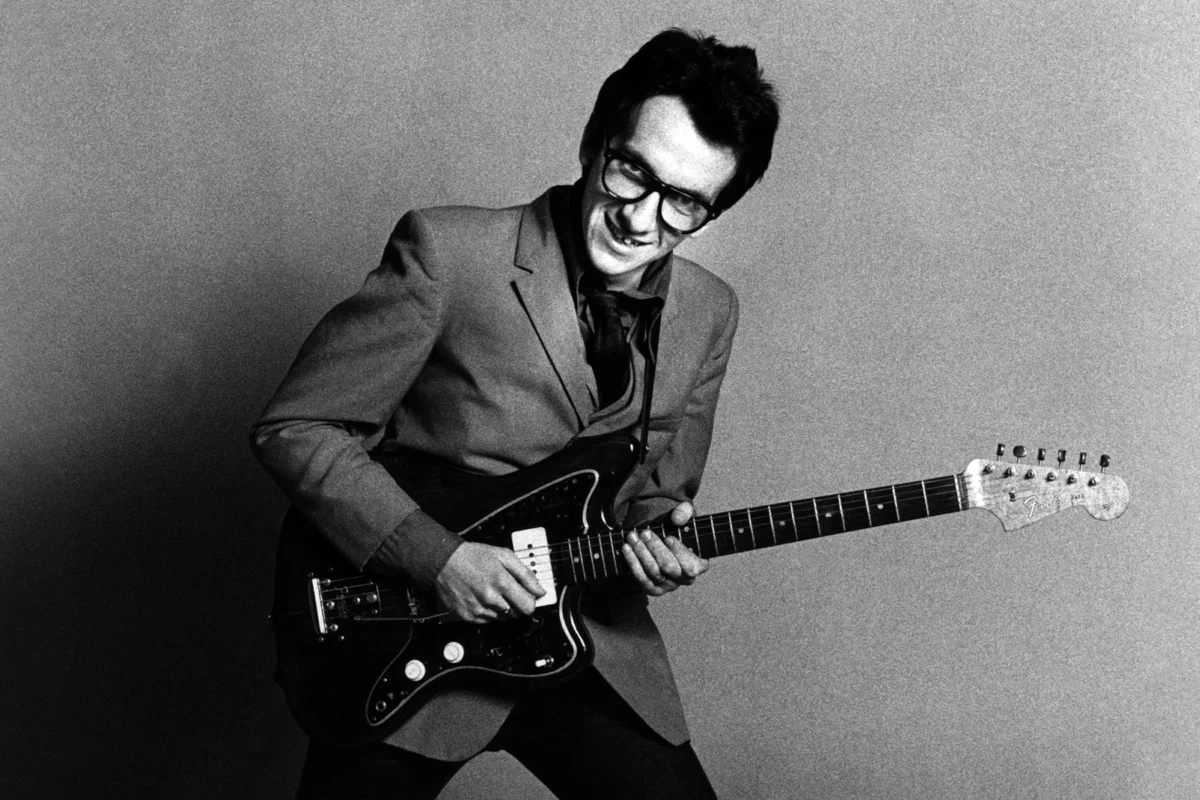
HangupsMusic.com – London, UK – A pivotal figure in modern music, Elvis Costello, has peeled back the layers of his enigmatic origin, offering an unprecedented look into the foundational moments that shaped his iconic career. In a revealing new interview with Rolling Stone Music Now, Costello delves deeply into the creative crucible of his early days, dissecting the lightning-fast creation of his seminal 1977 debut, My Aim Is True, and, more significantly, bringing to light a treasure trove of previously unheard material that traces his artistic evolution. This comprehensive retrospective arrives alongside the just-released, five-disc My Aim Is True (49th Anniversary Edition) box set, a monumental collection promising to redefine understanding of one of music’s most prolific and articulate songwriters.
The anniversary edition, while marking an unusual 49-year milestone, is far more than a simple reissue. It’s an archaeological excavation of Costello’s past, presenting a freshly remastered version of My Aim Is True alongside an astonishing array of unearthed recordings. Central to this collection is The Blue Print, a captivating selection of acoustic recordings from 1975 and 1976 that offers an intimate glimpse into Costello’s nascent songwriting. Complementing these are early demos and outtakes, notably including country-infused tracks that remained hidden for decades, revealing a broader stylistic palette than many might have assumed at the time. The set also includes live recordings that chronicle the incendiary birth of The Attractions, his legendary backing band, capturing their raw energy as they coalesced into a formidable musical force. Rounding out the package is a poignant 2007 San Francisco benefit concert, where Costello reunited with the very musicians who played on his original debut sessions, bringing his journey full circle.
In the candid Rolling Stone Music Now conversation, Costello unpacks the profound significance of these long-buried recordings and offers fresh insights into the making of My Aim Is True. He shares the authentic narrative behind "Alison," one of his most beloved and enduring compositions, alongside numerous other revelations. The interview, available on Apple Podcasts and Spotify, provides essential context for the newly unveiled musical artifacts.
Among the many fascinating anecdotes, Costello recounted the spontaneous genesis of "(The Angels Wanna Wear My) Red Shoes," a track that epitomized the vibrant, urgent energy of his debut. The inspiration struck him vividly while traveling to his mother’s house. In an era devoid of portable recording devices, the urgency to capture the burgeoning melody and lyrics was paramount. "I was on my way to visit my mother, and the song came into my head," he explained, painting a picture of a young artist driven by pure creative impulse. Upon arrival, after a swift greeting, he rushed upstairs to locate an old, battered guitar, tirelessly drilling the composition into his memory for an hour to ensure it wouldn’t slip away. The curious imagery of "red shoes" and angels, he admits, had no logical antecedent; they simply presented themselves as a compelling, slightly surreal metaphor for something coveted and unattainable, yet inherently attractive. This anecdote perfectly illustrates the raw, almost subconscious wellspring of his early lyrical genius.
Perhaps one of the most compelling aspects of the box set is the inclusion of The Blue Print, a collection of raw, acoustic recordings that Costello nearly released 35 years ago before hesitating. He openly discusses his past reluctance, admitting, "I cannot for the life of me think why I felt they revealed too much." He likens the experience to "showing your pictures, you know, in clothes that you now know don’t suit you," highlighting a common artistic vulnerability concerning early, less polished work. This self-consciousness, he reflects, kept these formative pieces under wraps for decades. However, his perspective has matured with time. He now hears them not as embarrassing relics, but as the sincere efforts of an artist in development. "They just sound like somebody learning, and there should be nothing to be embarrassed about that," he asserts, embracing the imperfect beauty of artistic growth. He expresses hope that these recordings might inspire younger writers, demonstrating that even celebrated artists begin with unrefined ambition, a process he hopes encourages burgeoning talents to find confidence in their own evolving craft.
The pivotal transformation from Declan MacManus to the iconic Elvis Costello was a marketing masterstroke orchestrated by Stiff Records, his original label. Costello recalls the moment he was informed of the name change, initially dismissing it as a prank. Yet, understanding the power dynamics at play – "They were the ones that held the cards," he concedes – he ultimately acquiesced. The label then meticulously crafted his public image, deliberately playing up his "ordinariness" and "unfashionable clothes." His distinctive glasses, far from being a mere accessory, became a central visual motif, evoking comparisons to figures like Superman’s alter ego Clark Kent, Buddy Holly, or Phil Silvers, cementing a quirky, intellectual, yet accessible persona that would become instantly recognizable.
Costello also used the interview as an opportunity to challenge prevailing historical narratives about the musical landscape of the late 1970s. He emphatically rejected the "new wave" label that was frequently applied to him and his peers. "I never felt part of any gang," he states, dismissing the term as "completely made up" by journalists striving to categorize bands that possessed energy and an edge distinct from the raw aggression of punk. He further critiques what he terms "the big book of history version" of 1977, which often portrays punk rock as a movement that unilaterally swept away all other genres. The reality, he clarifies, was far more nuanced. While punk certainly made its mark, the charts were still dominated by disco, established acts like Fleetwood Mac, and classic rock veterans. Many innovative "new" groups, including his own, found themselves struggling for airplay, often languishing in the lower echelons of the charts. His experience with television exposure was also counterintuitive: "When people got a look at us, the record usually went down the charts the next week," he wryly observes, an honest, self-deprecating admission that punctures the myth of universal appeal.
One of the more poignant moments in the interview involves Costello’s candid reflection on his past rudeness concerning Linda Ronstadt’s hugely successful cover of "Alison." Ronstadt’s rendition, featured on a major hit record, initially drew criticism from Costello, primarily due to its arrangement. "Not a version that I initially was very polite about," he admits. He attributes his aversion to the "very, very much of its location" Los Angeles sound, a style he confessed to being "allergic to" at the time. However, with the wisdom of hindsight, he expresses deep regret for his earlier remarks. He now recognizes the immense honor of being chosen alongside songwriters of the caliber of Lowell George, Warren Zevon, Smokey Robinson, and Buddy Holly, all artists Ronstadt covered. "That I would be chosen in the company of… all the people that Linda chose, was a tremendous compliment, and I just didn’t know how to take it gracefully, frankly," he humbly concedes, demonstrating a profound personal and artistic maturity.
In a lighter, yet equally revealing exchange, Costello was posed a whimsical question: did he have more in common with the Ramones or the Muppets, both of whom coincidentally found themselves in the Top 20 around the release of My Aim Is True? Without hesitation, Costello chose the latter. While acknowledging the undeniable greatness of the Ramones as "just a thing," he articulated a deeper affinity for the Muppets, praising their "great songwriters," such as Paul Williams. He humorously identifies his own early persona as being "closer to Oscar the Grouch, actually, initially," before gradually evolving "towards Sam the Eagle as time went on." The discussion culminates with a delightful anecdote about performing with Kermit the Frog, an experience he describes as "the most extraordinary thing," underscoring his eclectic tastes and willingness to embrace unexpected artistic collaborations.
The My Aim Is True (49th Anniversary Edition) and the accompanying Rolling Stone Music Now interview serve as an indispensable resource for understanding the origins and evolution of Elvis Costello. From the raw acoustic sketches of The Blue Print to the nuanced reflections on his image and the music industry, this comprehensive look at his formative years not only enriches the legacy of a singular artist but also offers a compelling narrative of creative self-discovery and the enduring power of music. It’s a testament to Costello’s continued relevance and his willingness to re-examine his past with both critical insight and profound humility.
