
 By Azzam Bilal
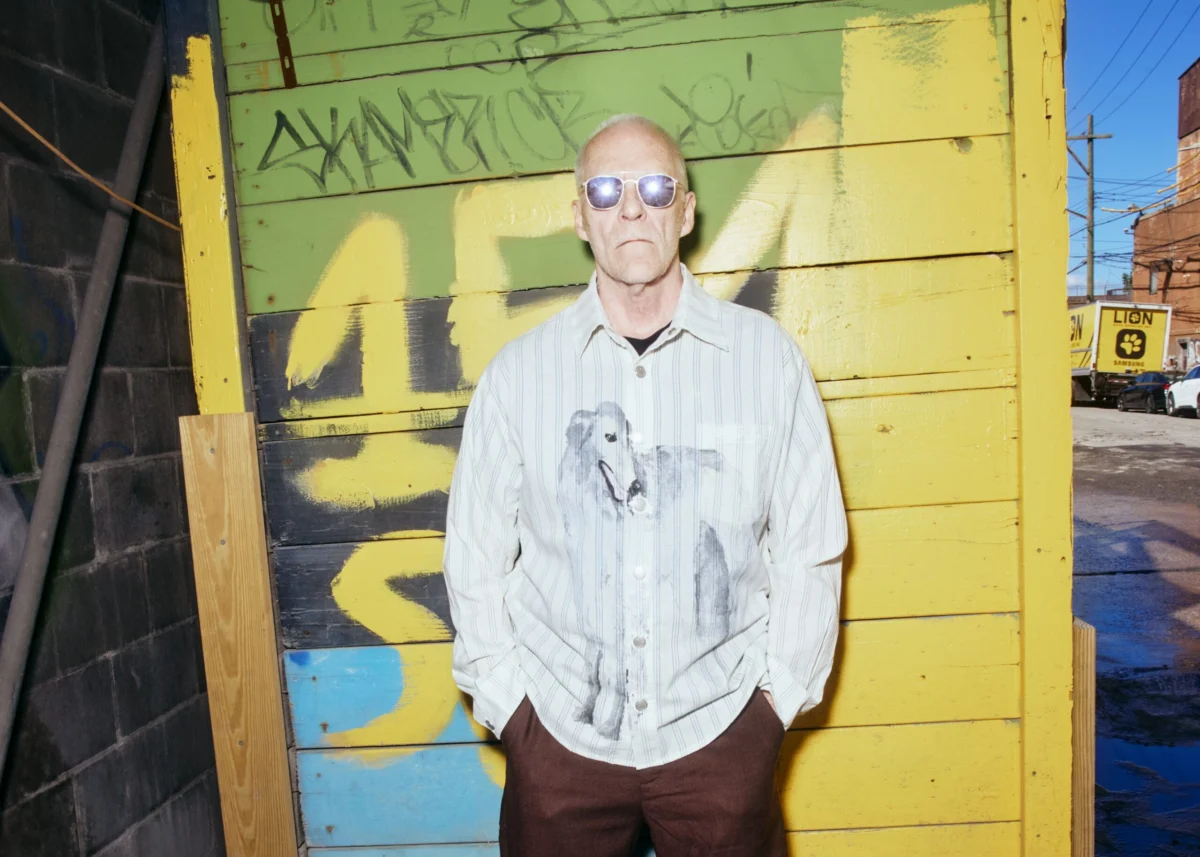
HangupsMusic.com – New York, In an era where archival discoveries often feel like mere footnotes, Steven Hall—the enigmatic force behind the Nirosta Steel moniker—has proven that the past is a living, breathing entity. The artist has recently delved into his personal vaults to unearth and polish two significant artifacts from his creative journey: the "Boss Mix" editions of "Grey Boy" and "Boss Trix." These tracks, which find their roots in the sessions for his critically acclaimed album My Skyscraper, are now seeing the light of day via digital streaming platforms and a physical 7-inch vinyl release, offering fans a deeper look into the nomadic recording process that defines Hall’s late-career renaissance.
The story of the "Boss Mixes" is one that spans continents and a full decade of gestation. While My Skyscraper was celebrated upon its release earlier this year as a definitive statement of Hall’s avant-pop sensibilities, these specific versions of "Grey Boy" and "Boss Trix" provide a different atmospheric lens. Recorded during a period of intense travel between 2010 and 2011, the tracks were captured in a series of sessions across Hong Kong, Taipei, and Bangkok. The nomenclature of these new editions pays direct homage to their final destination; they were mixed at the Boss Tower in the Thai capital, an architectural landmark that provided the sonic backdrop for Hall’s experimentation with texture and rhythm.
To understand the significance of these releases, one must look at the trajectory of Steven Hall himself. A veteran of the downtown New York scene, Hall is perhaps most widely recognized for his deep and enduring collaboration with the legendary Arthur Russell. As a member of Russell’s inner circle and a contributor to the seminal World of Echo sessions, Hall inherited a specific musical philosophy: one that favors the blurred lines between disco, folk, and experimental electronica. Under the Nirosta Steel name, he has successfully carried that torch into the 21st century, blending the grit of the Manhattan art-rock scene with a more global, contemporary electronic palette.
The "Boss Mix" of "Grey Boy" is particularly evocative of this cross-pollination. Where the original album version leaned into a certain subterranean coolness, the "Boss Mix" feels infused with the humid, neon-lit energy of Southeast Asian urbanism. There is a precision to the percussion that speaks to the influence of the region’s bustling soundscapes, yet Hall’s vocals remain characteristically detached and poetic. "Boss Trix," on the other hand, leans further into the rhythmic playfulness that has made Nirosta Steel a favorite among club DJs who prefer the "left-field" side of the dance floor. The mixing at Boss Tower seems to have added a layer of analog warmth to the tracks, a "high-rise" sheen that justifies the 7-inch single’s status as a collector’s item.
This double-sided release marks Hall’s second major contribution to the musical landscape this month alone. It follows closely on the heels of his poignant contribution to the soundtrack of the A24 film Club Kid. For that project, Hall returned to his roots by covering Arthur Russell’s "The Boy With a Smile." The cover was more than just a tribute; it was a bridge between generations, appearing alongside tracks by contemporary heavyweights like Shygirl and Brutalismus 3000. By placing Hall’s work in the context of a modern cinematic exploration of club culture, A24 helped reintroduce Nirosta Steel to a younger demographic that prizes authenticity and historical depth.

The resurgence of Nirosta Steel is not confined to the recording studio. After the release of My Skyscraper earlier this year, Hall embarked on his first proper headlining tour, a move that many fans had been anticipating for years. The tour saw him performing at high-profile events such as Pitchfork Music Festival London and Pitchfork Music Festival Paris. These performances were noted for their intimacy and their ability to translate the complex, multi-layered production of the studio recordings into a compelling live experience. Hall’s stage presence—a mix of seasoned New York cool and genuine artistic vulnerability—has solidified his reputation as a performer who transcends the "cult artist" label.
Looking ahead, the momentum behind Nirosta Steel shows no signs of slowing down. Industry insiders and festival-goers are already buzzing about Hall’s scheduled debut at Coachella in 2027. While a debut at such a massive venue might seem a world away from the experimental lofts of the East Village where Hall began his journey, it represents the ultimate validation of his staying power. It suggests that the music he created in the shadow of Arthur Russell, and the tracks he meticulously refined in Bangkok’s Boss Tower, have a universal resonance that can fill a desert valley just as easily as a basement club.
The decision to release "Grey Boy" and "Boss Trix" on a 7-inch single is also a nod to the tactile history of the independent music scene. In a digital-first world, the physical record serves as a totem of the 2010 era from which these mixes originated. It honors the specific geography of their creation—the humidity of Taipei, the density of Hong Kong, and the towering heights of Bangkok. For Hall, these are not just songs; they are diary entries from a period of self-discovery and musical wandering.
Critics have often struggled to categorize Nirosta Steel, moving between labels like "art-disco," "post-punk," and "ambient pop." However, the "Boss Mixes" suggest that Hall is less interested in genre than he is in the "feel" of a space. The Boss Tower sessions were about capturing the resonance of a specific room in a specific city at a specific time. By releasing them now, Hall allows the listener to travel back to 2010, seeing the world through the eyes of an artist who was then laying the groundwork for the success he is enjoying today.
As the music industry continues to grapple with the influence of AI and the rapid-fire cycle of viral trends, the steady, deliberate output of Nirosta Steel serves as a reminder of the value of the long game. Hall did not rush these mixes to the public; he waited until the context was right, until the songs could sit alongside his modern achievements and his historical legacy. Whether through his work on the Club Kid soundtrack or these archival treasures, Steven Hall remains a vital link between the avant-garde past and the electronic future.
For those who have followed Hall since his early days in the New York underground, the "Boss Mix" editions are a welcome expansion of a discography that has always prioritized quality over quantity. For new listeners drawn in by the A24 connection or the festival circuit, they provide a perfect entry point into the sophisticated world of Nirosta Steel. As "Grey Boy" and "Boss Trix" spin on turntables and stream through headphones this week, they carry with them the echoes of three cities and the enduring spirit of an artist who refuses to be pinned down by time or geography. The skyscraper that Steven Hall built is still growing, and its view of the musical horizon has never been clearer.
