
 By admin
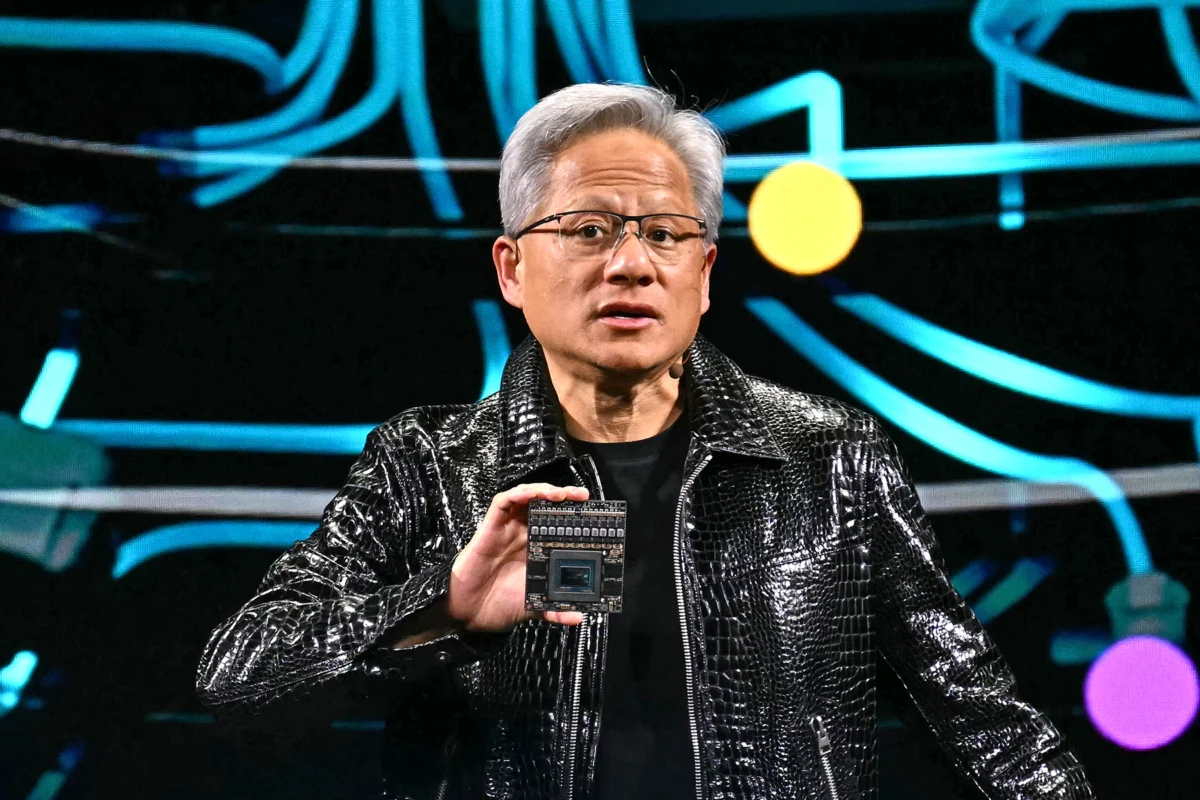
HangupsMusic.com – The dramatic narrative of alleged corporate espionage and illicit affairs often belongs to the realm of fiction, yet recent reports have cast a stark spotlight on the very real, high-stakes intersection of technology, national security, and international intrigue. At the heart of a swirling controversy is Jensen Huang, the visionary CEO of Nvidia, a company whose advanced semiconductors are universally acknowledged as the bedrock of modern artificial intelligence. The sensational suggestion of Huang’s involvement with an alleged Chinese operative, potentially linked to the clandestine transfer of these indispensable chips, paints a vivid, albeit alarming, picture of the intense geopolitical competition currently underway. This unfolding saga, however, is far more intricate than a simple tale of spies and stolen secrets; it lays bare the profound strategic questions surrounding China’s relentless pursuit of AI dominance and the underlying motivations behind its efforts to acquire American technological prowess.
Nvidia’s preeminence in the realm of AI is virtually unchallenged. Its Graphics Processing Units (GPUs), initially designed for rendering complex visuals in video games, proved serendipitously perfect for the parallel processing demands of machine learning and deep neural networks. Chips like the A100 and the newer H100 are not merely components; they are the fundamental engines driving the most advanced AI models, capable of training vast datasets and performing billions of calculations per second. Without these specific high-performance GPUs, the cutting edge of AI development—from foundational large language models to sophisticated scientific simulations—would simply grind to a halt. The manufacturing process for these marvels of engineering is equally complex, relying on a singular facility in Taiwan, operated by TSMC, which in turn utilizes highly specialized lithography machines produced by ASML in the Netherlands. This intricate, geographically concentrated supply chain makes access to these chips a critical geopolitical leverage point, transforming semiconductors into the new oil of the digital age.
Broadly, two divergent philosophies frame the global AI race, particularly between the United States and China. The first, predominantly held by many in the U.S. tech industry and government, posits AI as a winner-take-all contest towards Artificial General Intelligence (AGI). AGI refers to a hypothetical AI capable of understanding, learning, and applying intelligence across a wide range of tasks, essentially mimicking or surpassing human cognitive abilities. Proponents of this view believe that the nation or entity that first achieves true AGI will gain an insurmountable advantage in every conceivable domain—economic, military, scientific, and cultural—thereby shaping the future of global power. This perspective fuels the urgent rhetoric surrounding an "existential" competition, justifying aggressive measures to slow down rivals, particularly China, from acquiring the necessary computational horsepower.
However, the Chinese perspective, heavily influenced by their practical constraints and strategic priorities, offers a contrasting view. Rather than focusing solely on the distant horizon of AGI, China largely perceives AI as a powerful, general-purpose technology to be rapidly integrated into society and the economy for immediate, tangible benefits. This long-term game is less about a singular, revolutionary breakthrough and more about the holistic application of AI across various sectors. As experts like Kyle Chan of the Brookings Institution and Kenton Thibaut of the Atlantic Council’s Digital Forensic Research Lab suggest, China’s focus is on "near frontier" technology—making existing AI useful and efficient, rather than solely chasing the absolute bleeding edge.
This practical orientation manifests in China’s extensive deployment of AI across its infrastructure. From advanced facial recognition systems in smart cities to optimizing logistics and manufacturing processes, and from accelerating drug discovery to enhancing military capabilities, Chinese policies consistently prioritize how AI can serve immediate societal and economic goals. While discussions in the U.S. often revolve around the potential risks and ethical implications of highly advanced AI, such debates are less prevalent in China. This is partly due to the hardware limitations imposed by U.S. export controls, which compel Chinese firms to innovate by "doing more with less" computational power, and partly due to a governmental predisposition to control societal disruption. Their version of "winning" involves maximizing the benefits of AI integration, fostering widespread adoption, and enhancing national competitiveness across a multitude of domains.
The U.S. government, recognizing Nvidia’s strategic importance, has implemented stringent export controls to restrict China’s access to the most advanced AI chips. These regulations aim to curb China’s progress in developing sophisticated AI applications that could bolster its military or surveillance state. However, China’s determined pursuit of technological independence has led to sophisticated circumvention strategies. The alleged "honeypot" scandal involving Jensen Huang and a purported Chinese spy, reportedly operating a Singaporean front company, illustrates one such method. This entity allegedly established data centers in Southeast Asia, equipped with Taiwan-made super-chips, and then leased access to these powerful resources to Chinese companies, effectively creating a "bridge" around U.S. sanctions. This complex network of re-routing and third-party leasing highlights the resourcefulness with which China seeks to bypass direct prohibitions and maintain competitive computing power.
Such clandestine operations are not merely isolated incidents but symptomatic of a broader Chinese strategy to overcome its reliance on the Western "tech stack." While acquiring Nvidia chips through covert means provides a temporary solution to "keep pace today," China’s ultimate goal is self-sufficiency. This involves massive state-backed investments in developing indigenous capabilities across the entire semiconductor supply chain—from advanced chip design to cutting-edge manufacturing equipment and fabrication facilities. Companies like Huawei and SMIC are at the forefront of this national endeavor, striving to produce their own versions of advanced chips and sophisticated machinery, with the long-term vision of creating a fully independent technological ecosystem that is immune to foreign sanctions and controls.
Adding another layer of complexity to this geopolitical chess game are the apparent inconsistencies within the U.S. government’s own approach. While some officials advocate for a hardline stance to contain China’s technological ascent, others seem to prioritize economic interests or harbor different strategic viewpoints. Reports have surfaced suggesting that Commerce Secretary Howard Lutnick, for instance, has been perceived as lax in enforcing restrictions on Nvidia and Huang personally, allowing continued sales to companies with known links to China. Furthermore, despite former President Trump’s rhetoric about an AI winner-take-all race, his administration reportedly approved the sale of hundreds of thousands of AI chips to Chinese entities. Figures like David Sacks, a former AI Czar during the Trump era, have even explicitly advocated for selling more chips directly to China, arguing against overly restrictive policies. These internal divisions and policy ambiguities within the U.S. create avenues that China, with its blend of espionage and strategic partnerships, seems adept at exploiting.
Ultimately, the unfolding narrative surrounding Nvidia, alleged espionage, and China’s AI ambitions transcends mere corporate intrigue. It represents a critical front in the broader technological and ideological competition between two global superpowers. The stakes are immense, encompassing not just economic leadership and technological innovation, but also national security and the very definition of future global power dynamics. As China continues its multi-pronged approach—leveraging every available means, from sophisticated espionage to exploiting policy loopholes and accelerating indigenous development—the outcome of this "chip crucible" will undoubtedly shape the contours of the 21st century, determining who leads the world into the age of artificial intelligence.
