 By admin
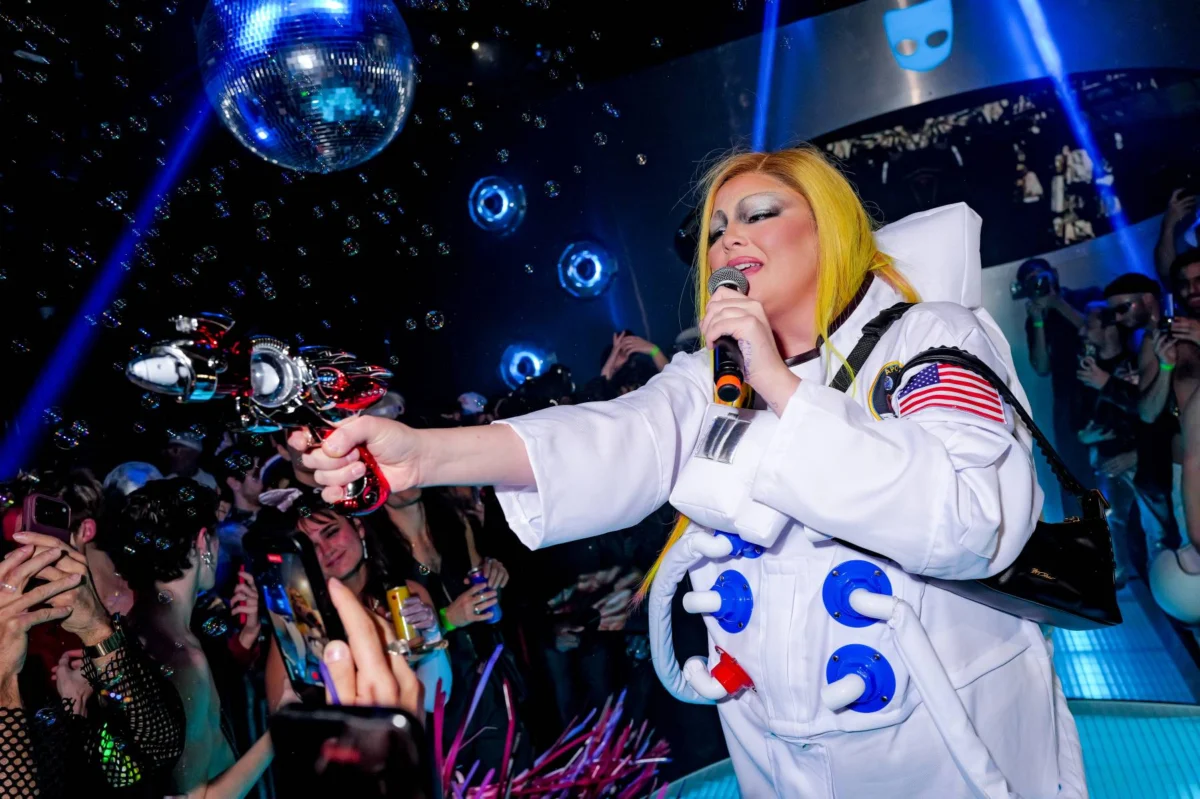
HangupsMusic.com – Manhattan, The pulsating heart of queer nightlife converged last Thursday, October 22nd, as comedian, actor, and now musical artist Meg Stalter took center stage at the highly anticipated Grindr Pleasure Ball. Clad in a striking astronaut suit, a sartorial choice that perfectly encapsulated her ethereal yet grounded stage persona, Stalter engaged with Billboard backstage moments before her headlining set, offering insights into her unique artistic journey that defies easy categorization. Her presence at such a pivotal event, a sci-fi-themed extravaganza attracting an eclectic mix of cultural luminaries, underscored her growing influence at the intersection of queer culture, comedy, and the burgeoning landscape of electropop.
Stalter’s brand of humor is a masterful blend of the deadpan and the delightfully absurd, a style often described as dry, satirical, and intentionally awkward, yet always imbued with an underlying warmth that prevents it from veering into cruelty. This distinctive comedic voice, honed through viral "Hi, gay!" internet clips and refined across acclaimed television (the Emmy-winning Hacks) and the Broadway stage (Oh, Mary!), now seamlessly translates into her musical endeavors. Her debut album, Crave, is a testament to this versatility, an auditory journey layered with sharp social commentary and biting satire, but also brimming with genuinely infectious, campy electropop tracks that invite listeners to dance while contemplating the deeper ironies. It’s a delicate tightrope walk, navigating the specificities of queer niche appeal while simultaneously broadening her reach into mainstream consciousness, a negotiation she executes with remarkable finesse.
The Grindr Pleasure Ball itself was an event of galactic proportions, an exclusive, invite-only affair designed to be a spectacle. The celestial theme drew a constellation of stars and cultural icons, including music sensation Adam Lambert, the formidable Dominique Jackson, fashion maestro Christian Siriano, nightlife legend Susanne Bartsch, performance art icon Joey Arias, and even the infamous Anna Delvey. The evening’s festivities were further elevated by a vibrant Halloween costume contest, hosted with irrepressible flair by Dashaun Wesley and judged by an esteemed panel comprising Bartsch, Siriano, Kelly Cutrone, and Grindr’s Tristan Pineiro. The energy of the room was palpable, a dazzling tapestry of glitter, elaborate costumes, and an undeniable sense of collective celebration.
As the headliner, Stalter’s performance was nothing short of captivating. Donning her astronaut attire, she commanded the stage with an idiosyncratic charm, bouncing and weaving as she delivered tracks from Crave. The setlist included fan favorites like "Prettiest Girl in America," "Famous Me," and "Gay," each delivered with her signature blend of earnestness and playful irony. She didn’t merely sing; she performed a comedic masterclass, playfully ribbing the vibrant, costumed audience. In one memorable moment, she paused a song to comically insist that attendees engage in FaceTime calls during her set, a direct challenge to the unspoken rules of live performance. Later, with mock severity, she "dressed down" an audience member sporting an Aladdin Sane-inspired look for the cardinal sin of talking during her impassioned delivery. These spontaneous, meta-theatrical interventions are hallmarks of Stalter’s live shows, blurring the lines between stand-up, musical performance, and performance art.
Speaking backstage, Stalter reflected on the unique connection she shares with her queer audience, a bond first forged during her live musical debut at the WeHo Pride Street Fair in June. "Gay people live for a diva. They really do. That’s why people love the show I was on, Hacks," she mused. This observation highlights a fundamental truth about queer cultural appreciation – a deep reverence for figures who embrace their authentic selves, often through a blend of vulnerability and theatricality. While Stalter undeniably leans into "diva antics" for comedic effect, there’s an undeniable authenticity to her embrace of the dance-pop genre. The pulsating, unapologetically queer sound of her music, perfectly suited for the nightclubs she references, is a source of genuine joy for her. "I think there’s something about really being yourself… Truthfully, I think gay and queer people like to see someone being exactly who they are. When I’m on stage, I am who I really am – I feel the closest to my inner child. I’m up there being silly or doing very serious music because I’m having so much fun." This sentiment encapsulates the essence of Stalter’s appeal: a performer who invites her audience to revel in the uninhibited freedom of self-expression, whether through humor or heartfelt music.

While Stalter’s work often leaves audiences questioning the boundaries between character and self, she maintains that there’s a profound empathetic core to certain pieces, particularly "Famous Me" from Crave. The song, which delves into the often-unseen struggles of wealthy but unhappy pop stars, is not, she insists, entirely a joke. "No one feels bad for pop stars or famous people because they seem to have the world," she explained. "When you hear it, a lot of people might think I’m joking but I’m not. I do feel bad for pop stars for people don’t feel bad for." This statement offers a glimpse into Stalter’s nuanced worldview, where even the most seemingly privileged individuals can be subjects of genuine compassion.
This empathetic connection to the struggles of public figures resonates deeply within the queer community, which has historically embraced divas – from Judy Garland to Britney Spears – not despite their public and personal challenges, but often because of them. These figures, through their resilience and vulnerability, become conduits for shared experiences of marginalization and triumph. For Stalter, her own journey has been marked by a relatively seamless ascent, enjoying a stellar decade that has seen her transition from DIY social media clips to a prominent role on HBO Max. Her personal life, too, seems to be a source of profound contentment. "I do feel like I pretty much have it all, because I have an amazing girlfriend I’m in love with. I’m a gay Christian, so I have God and my family," she shared, painting a picture of a well-rounded and grounded individual. Her professional collaborations are also thriving, notably with Hacks costar Paul W. Downs, whose awkward, hysterical chemistry with Stalter has delighted audiences on red carpets, late-night shows, and awards ceremonies alike.
Stalter’s identity as a gay Christian is another facet she approaches with unshakeable sincerity, emphasizing that her faith is not a comedic bit. "I’m never joking when I talk about God and Jesus," she affirmed. "I think it’s really important for queer people who are spiritual to talk about it, because so many times they’re told they can’t have God. And it just doesn’t make sense, because God loves gay people. It hurts me to think some people feel like God’s not for them." This powerful advocacy for inclusive spirituality positions Stalter as a voice of comfort and affirmation within a community often alienated by traditional religious institutions. She finds inspiration in others who openly discuss their faith, citing a recent Ella Langley concert where a poignant song about God, "Speaking Terms," moved her to tears. As a self-proclaimed Dolly Parton devotee and a fan who secured a Kacey Musgraves cameo on her Crave track "Leave a Message at the… Interlude," Stalter’s country music appreciation runs deep, hinting at a potential future sonic direction. "I’m a huge country music fan – hint, maybe for the next album," she teased, igniting speculation about a genre pivot.
The prospect of Stalter shifting from faux-sleazy electropop to country music is, in itself, a deliciously Stalter-esque move, typically a reverse trajectory in the music industry. The question remains: how much of this potential detour would be genuine, and how much a finely crafted, tongue-in-cheek performance? It’s a mystery that audiences may have to wait to unravel, and even then, the answer might remain elusive. In conversation, Stalter maintains a masterful poker face, discussing deeply personal details – like her years spent nannying before achieving viral fame – with the same deadpan delivery she employs when riffing on her astronaut costume. When asked about her outfit, she quipped, "We’re going to the moon for the first time – the first time for real. The other ones, the government lied to us." And when pressed about the possibility of discovering moon cheese, she deadpanned, "I’m looking into that."
Beyond the cosmic costumes and comedic flourishes, Meg Stalter remains strikingly grounded. For someone who has navigated an enviable ascent in the entertainment world over the past decade, entirely on her own terms, her self-awareness is profound. Asked to encapsulate her personal story, she delivered a succinct and poignant summary: "It’s about a country bumpkin who has big dreams and has accomplished basically all of them." It’s a narrative that speaks to the power of authenticity, the triumph of self-belief, and the limitless possibilities for those brave enough to forge their own path, one satirical electropop anthem, one Broadway show, and one interstellar outfit at a time.
