
 By admin
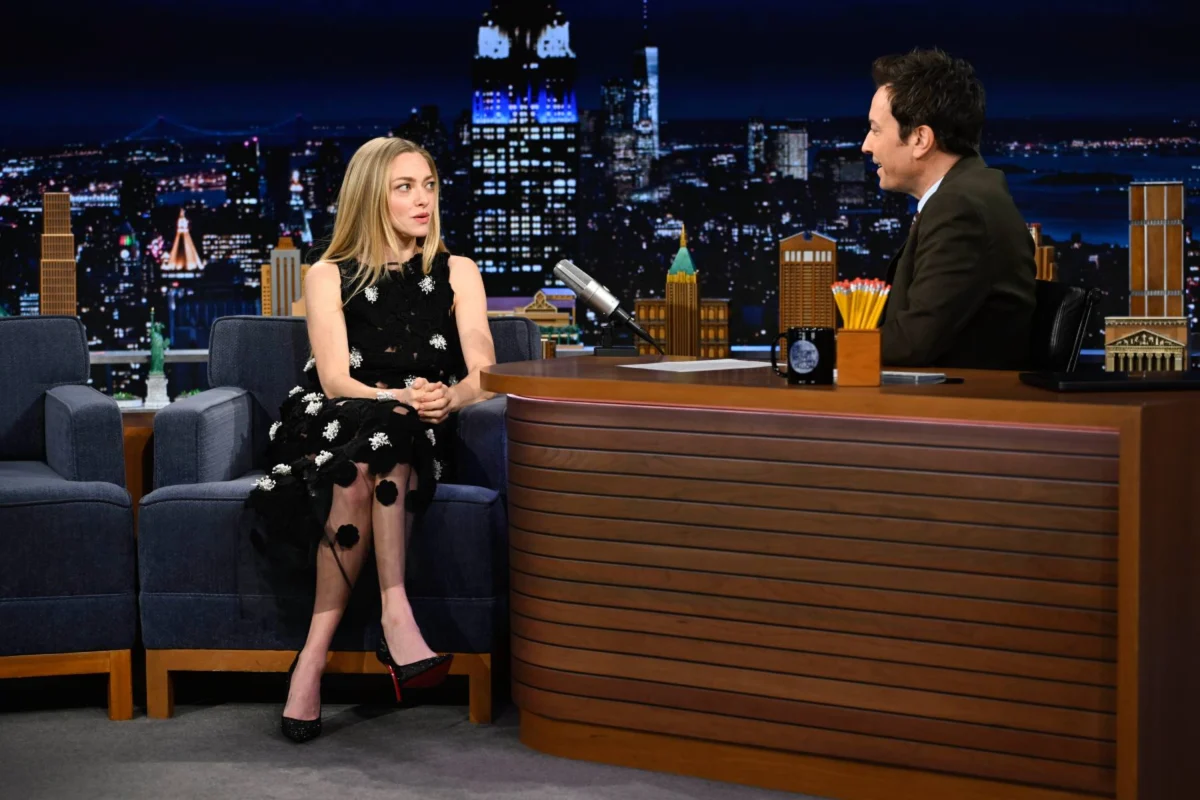
HangupsMusic.com – New York, NY – Appearing recently on NBC’s The Tonight Show Starring Jimmy Fallon, acclaimed actress Amanda Seyfried offered a candid glimpse into her clandestine involvement with the new Elizabeth Holmes documentary, You Can See Everything. Her participation, shrouded in secrecy and marked by an unorthodox creative process, culminated in a surprising return to the character she famously embodied in Hulu’s The Dropout, a role that earned her widespread critical acclaim, including an Emmy Award.
The conversation with host Jimmy Fallon quickly turned to the unexpected nature of her reprisal. Seyfried confessed to Fallon, "How the hell did I manage to keep it under wraps? I told a lot of people. But I guess I could trust them all." This statement alone hints at the extraordinary circumstances surrounding the project, which saw Seyfried delve once more into the complex psyche of the disgraced Theranos founder, a character she had initially believed she had left firmly in the past.
Seyfried’s initial reluctance to revisit the world of Elizabeth Holmes was palpable. Having spent months meticulously crafting her award-winning performance in The Dropout, she felt a natural inclination to move on. "It was never my intention to recreate Elizabeth Holmes ever again," she conveyed to Fallon, articulating a desire to distance herself from the intense preparation and immersion required for such a demanding role. However, fate, or perhaps a unique artistic opportunity, intervened in the form of co-director Nathan Fielder, known for his unconventional, often meta, comedic and documentary styles.
The initial connection was facilitated by fellow actress Emma Stone, who linked Seyfried with Fielder. Fielder’s proposition was intriguing yet seemingly innocuous: he wanted to "pick her brain" about Holmes, specifically concerning his ongoing documentary project. The initial plan involved Seyfried merely observing footage Fielder had already shot, offering her insights as an actress who had intimately studied the subject. This casual consultation quickly evolved into something far more involved and, ultimately, creatively daring.
As Seyfried recounted, the process was organically expansive. "It was fascinating," she noted, describing how "we kept organically deciding to do more things." What began as a consultation transformed into an invitation to participate directly in reenactments for the film, plunging Seyfried back into the uncanny valley of portraying Holmes. This unexpected turn of events led to an experience she described simply as "weird," a sentiment undoubtedly shared by many who follow her career and the intricate narrative of Elizabeth Holmes.
The production of You Can See Everything was unlike any Seyfried had encountered. The filmmakers implemented stringent security protocols, particularly concerning access to the documentary’s sensitive material. Seyfried revealed the script for her reenactment scenes was only accessible the night before filming through a robust "five-factor authentication" system. Furthermore, she was prevented from reviewing the documentary footage unless she was physically present on set. This deliberate limitation, while presumably intended to maintain the integrity and surprise elements of the documentary’s unfolding narrative, added layers of challenge to her performance.
"I was so insecure about it," Seyfried admitted, contrasting this experience with her previous portrayal. She highlighted the fundamental difference: "The Dropout is fiction based on real things. This is based on what we know." The weight of portraying a real person, especially one as scrutinized as Elizabeth Holmes, within the context of a documentary, introduced a profound sense of responsibility and vulnerability. The stakes felt higher, the line between interpretation and reality significantly blurred. This meta-narrative, where an actress famous for playing a character is now asked to re-embody that character within a documentary about the actual person, created a unique artistic challenge that Seyfried found deeply unsettling yet compelling.
Reflecting on the entirety of the experience, Seyfried concluded, "What an experience. I haven’t processed it fully because it was meta at a point." This sentiment perfectly encapsulates the layered reality of her involvement. It wasn’t just acting; it was acting within a documentarian’s lens, commenting on a previous act of acting, all while navigating the moral and ethical considerations of portraying a controversial figure. The boundaries of performance, reality, and documentation were continuously shifting, making for an artistically complex journey.
The clandestine nature of her participation wasn’t merely a production quirk; it was a deeply personal challenge for Seyfried, who candidly confessed her own struggles with discretion. "I’m the most indiscreet person I’ve ever met in my life," she humorously told Fallon, underscoring the remarkable feat of keeping her involvement under wraps for so long. The fact that she confided in "a lot of people" yet the secret remained intact speaks volumes about the trust she placed in her inner circle and, perhaps, the shared understanding of the delicate nature of the project.
Further insights into her decision-making process were revealed in a prior interview with Rolling Stone, where Seyfried divulged an even more audacious aspect of her commitment: she agreed to be part of You Can See Everything without even informing her own team. This bold move, bypassing conventional industry protocols, highlights her profound artistic conviction and willingness to embrace unconventional paths.
"I would say there was a lot of risk in the back of my head," Seyfried told Rolling Stone, describing the moment she eventually informed her agent and lawyer. "And then when I told my agent and lawyer that I had already done it? Not the normal process." This revelation underscores her independent spirit and her readiness to pursue projects that ignite her creative curiosity, even if it means operating outside the traditional framework of Hollywood. Her lawyer’s reaction—"Well, now we have to retroactively set your deal in place because you need protection"—illustrates the unusual circumstances, particularly since reenactments weren’t even on the table when she initially committed.
The risks Seyfried perceived were multifaceted and deeply personal. She grappled with fears of professional repercussions: "Am I going to destroy my career in some way?" Beyond her own standing, she considered the potential for entanglement in the ongoing legal and public narrative surrounding Holmes, specifically mentioning "Billy" (likely referring to Billy Evans, Holmes’s partner, whose involvement and perspective might be explored in the documentary). She also weighed the ethical dilemma of her portrayal: "Am I gonna say the wrong thing? Am I gonna perpetuate negativity for her?" These questions reveal a thoughtful artist keenly aware of the power of her craft and the responsibility that comes with portraying real, contentious figures.
Despite these legitimate anxieties, Seyfried’s artistic drive ultimately triumphed. She described a powerful, almost primal urge to engage with the project, likening it to a dangerous yet irresistible impulse: "Everything was scary, but I still had that drive that was more in the front seat… I was just like, ‘Let’s go, buddy! I want to put my hand in the fire!’" This evocative metaphor encapsulates her profound artistic courage and her desire to push boundaries, to explore challenging roles and unconventional storytelling formats, regardless of the potential professional or personal cost.
Amanda Seyfried’s journey with You Can See Everything stands as a testament to an artist unafraid to challenge norms, embrace uncertainty, and delve into the most complex corners of human experience, even if it means revisiting a character she thought she had long put to rest. Her secret, spontaneous, and ultimately successful return to Elizabeth Holmes marks a fascinating chapter in her illustrious career, further solidifying her reputation as one of Hollywood’s most compelling and courageous performers.
