
 By Azzam Bilal
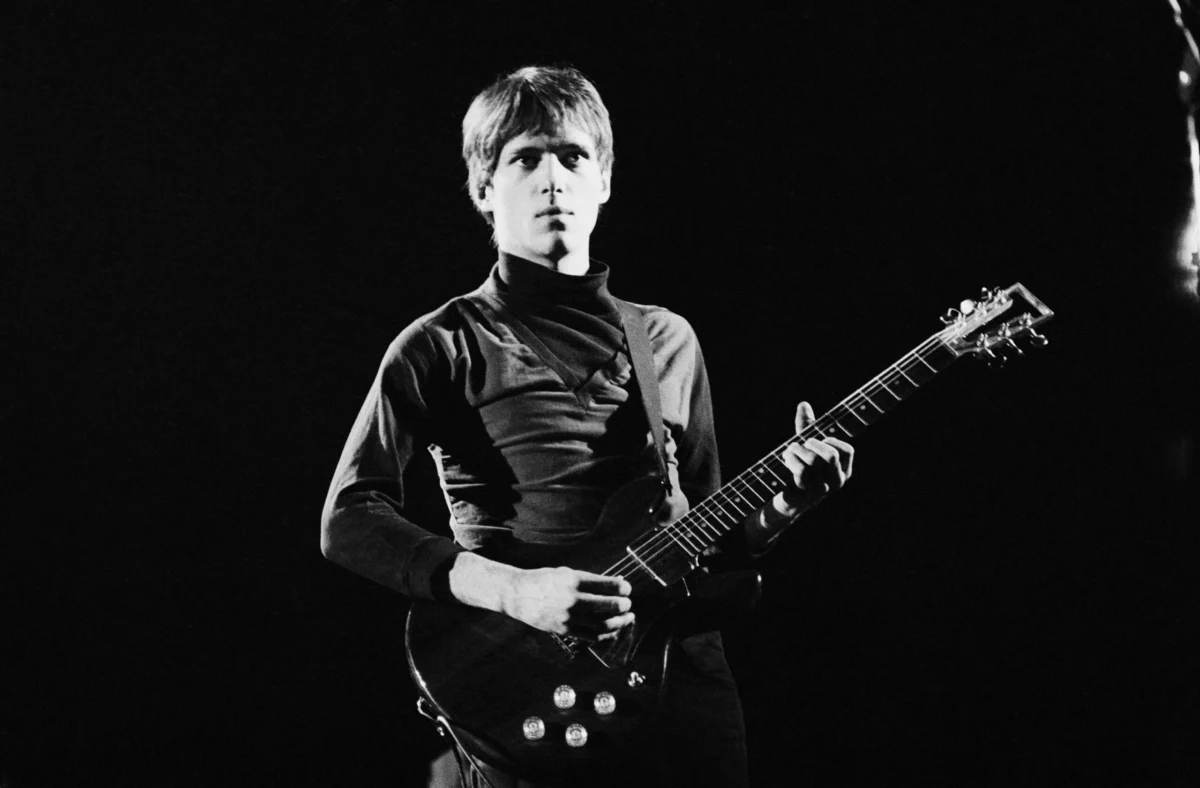
HangupsMusic.com – New York, The landscape of American rock music has lost one of its most sophisticated architects. Richard Lloyd, the guitarist whose intricate, crystalline soloing defined the sound of the legendary New York band Television, has passed away at the age of 75. His death, confirmed following a battle with cholangiocarcinoma—a rare and aggressive form of bile duct cancer—marks the end of an era for the downtown Manhattan music scene that reshaped the world’s understanding of what a guitar could do within the framework of punk and art rock. Lloyd died surrounded by his family, including his wife, Sheila, and his faithful dog, Willie Mays, leaving behind a legacy of technical brilliance and avant-garde exploration.
Born Richard John Alt in Pittsburgh in 1951, Lloyd’s journey to the center of the musical universe began with a childhood move to Greenwich Village. It was there, amidst the bohemian atmosphere of a changing New York, that he first felt the magnetic pull of the electric guitar. Like so many of his generation, the catalyst was the British Invasion. Lloyd often recalled the epiphany of seeing the Beatles and recognizing that the guitar was not merely an instrument, but a "magic wand" capable of casting a transformative spell over an entire culture. This realization sparked a lifelong obsession with the mechanics of melody and the physics of sound, an obsession that would eventually lead him to become one of the most respected stylists in the history of the medium.
The formation of Television in 1973 served as the crucible for Lloyd’s talent. The band emerged from the ashes of the Neon Boys, a group featuring Tom Verlaine, Richard Hell, and Billy Ficca. When Lloyd joined as a second guitarist, the chemistry changed. While many of their contemporaries at the legendary CBGB were stripping rock and roll down to its most primitive, three-chord essentials, Television was moving in the opposite direction. They were building cathedrals of sound. Under the leadership of Verlaine and Lloyd, the band developed a unique language of interlocking guitar parts that were more reminiscent of jazz improvisation or French Impressionist compositions than standard rock tropes.
This duality was the heart of the Television sound. Where Tom Verlaine’s playing was often described as ethereal, spacey, and prone to "space-gazing delirium," Richard Lloyd provided the structural integrity. His playing was characterized by a "chiseled" precision—notes that felt hammered out of stone yet remained fluid and singing. This interplay was never more evident than on their 1977 debut, Marquee Moon. The title track, a ten-minute epic, remains a masterclass in guitar dialogue. Lloyd’s solo on that track is often cited by critics and fellow musicians as a perfect example of melodic construction, moving through peaks and valleys with a logic that felt both improvised and inevitable.
The success of Marquee Moon was not measured in radio hits, but in its profound influence. It was a record that proved "punk" could be intellectual, technical, and expansive. However, the creative friction that fueled their sound also led to internal volatility. Following their second album, 1978’s Adventure, the tensions between Lloyd and Verlaine reached a breaking point, leading to the group’s initial dissolution. While the breakup was a blow to the scene, it allowed Lloyd to explore his own voice as a solo artist and a highly sought-after collaborator.
Lloyd’s solo career began with 1979’s Alchemy, an album that showcased his ability to blend power-pop sensibilities with his trademark guitar pyrotechnics. Over the decades, he would release nine solo albums, each one a testament to his evolving philosophy of the "power note." He became a mentor to a younger generation of players, not just through his recordings, but through formal teaching. He developed a specialized curriculum for guitar instruction that focused on the physics of the fretboard and the spiritual connection between the player and the instrument, often referring to his method as a form of "Guitar Alchemy."
Beyond his own work, Lloyd’s influence was felt in his contributions to the work of others. He was a pivotal figure in the 1990s power-pop revival, most notably through his work with Matthew Sweet. His scorched-earth guitar solos on Sweet’s landmark album Girlfriend introduced his style to a new generation of listeners who may have missed Television’s initial run. His ability to jump into different musical contexts—working with artists as diverse as John Doe of X and the Swiss singer Stephan Eicher—demonstrated a versatility that few of his peers could match.
Despite the various directions his career took, the shadow of Television remained. The band reunited in 1992 for a self-titled third album and continued to perform sporadically over the next few decades. Following the death of Tom Verlaine in 2023, Lloyd felt a renewed sense of duty to the band’s catalog. He often spoke about the responsibility he felt toward the fans, viewing himself as the custodian of a specific musical heritage. In his final year, even as he faced health challenges, he continued to perform, blending his solo material with Television classics to ensure the "spell" he first felt as a child remained unbroken.
The news of his cancer diagnosis in August led to a massive outpouring of support from the music community. A GoFundMe campaign launched to assist with his medical expenses served as a poignant reminder of how deeply his work had touched people. Musicians from across the spectrum of rock, indie, and experimental music contributed, acknowledging that without Richard Lloyd, the trajectory of the electric guitar in the late 20th century would have looked very different.
Lloyd’s approach to the instrument was deeply philosophical. He didn’t just play songs; he investigated the nature of sound. He was known for his "stately and chiming" lines, his avoidance of the mundane, and his pursuit of what he called the "rare power chord." To watch him play was to watch someone in a state of intense concentration, looking for the specific frequency that would unlock a room. He was a player who valued the space between the notes as much as the notes themselves, a rare trait in an era often defined by volume and speed.
As we look back on his career, it is clear that Richard Lloyd was more than just a "punk" guitarist. He was a bridge between the classicism of the 1960s and the experimentalism of the 1980s and beyond. He took the influence of the Beatles and Jimi Hendrix and filtered it through the grimy, artistic lens of the 1970s New York underground to create something entirely new. His work with Television didn’t just influence other bands; it created a new vocabulary for the instrument that continues to be spoken by guitarists today.
The death of Richard Lloyd marks the closing of a chapter in the history of American music, but his recordings remain as vibrant and essential as they were the day they were tracked. From the soaring heights of Marquee Moon to the gritty textures of his solo work, Lloyd’s contribution to the art form is indelible. He was a man who truly believed in the "magic wand" of the guitar, and for over fifty years, he used that wand to conjure a body of work that will continue to inspire, challenge, and enchant listeners for generations to come. He leaves behind a world that sounds a little less resonant without his "chiseled" notes, but a world that is infinitely richer for having heard them.
