
 By admin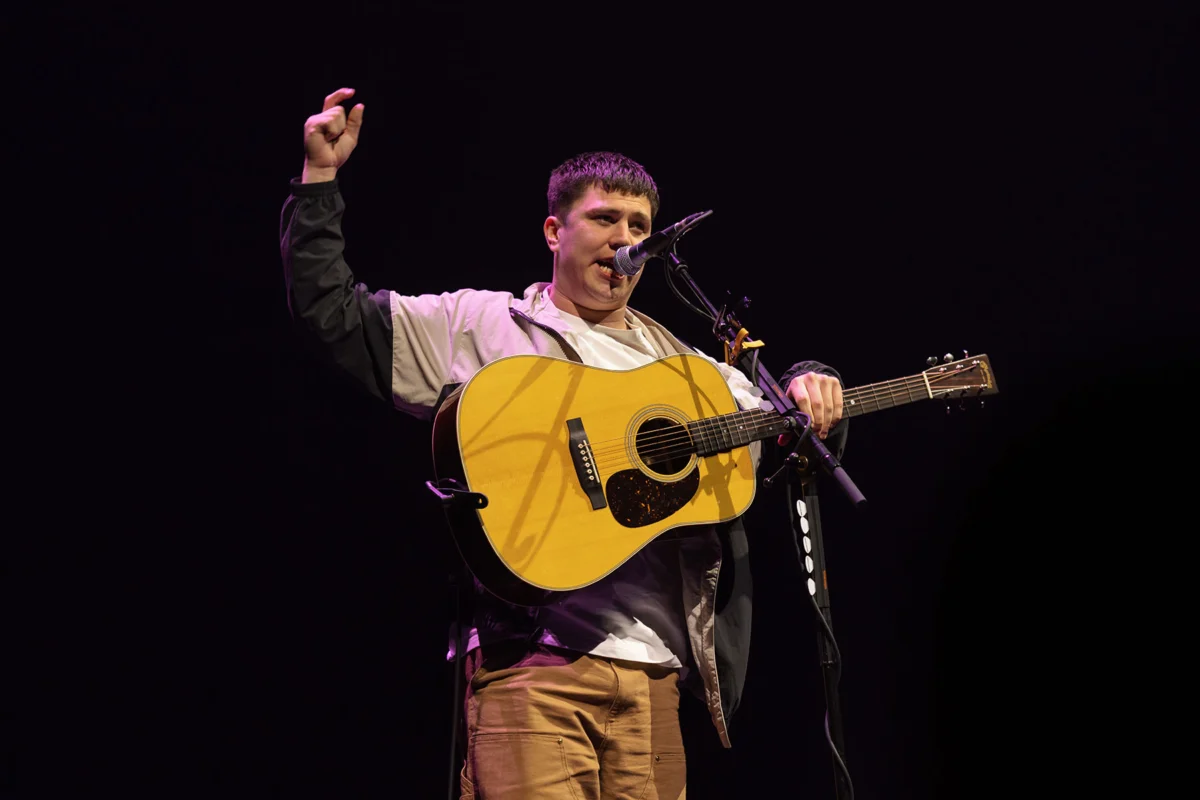
HangupsMusic.com – The contentious removal of Macklemore from Ed Sheeran’s highly anticipated "Loop Tour" continues to send ripples through the music industry, with supporting artist Aaron Rowe stepping forward to redirect public scrutiny away from the global superstar. In a recent statement, Rowe, who himself withdrew from the tour in protest, argued vehemently that the widespread criticism aimed at Sheeran is fundamentally misplaced, suggesting a deeper, more influential hand at play behind the scenes. This intervention marks a significant turn in a saga that has ignited debates about artistic freedom, corporate influence, and the responsibilities of major artists and venues in politically charged times.
The controversy first erupted following Macklemore’s performances on September 4th and 5th at MetLife Stadium in New Jersey, where he not only delivered impassioned pro-Palestinian remarks but also performed his impactful 2024 protest anthem, "Hind’s Hall." The track, a potent critique of perceived complicity and silence regarding the ongoing conflict, quickly garnered attention for its explicit political stance, referencing the siege of Hind Rajab and other harrowing events. Macklemore’s decision to integrate such a powerful political statement into his opening set for a mainstream pop tour immediately sparked a fierce reaction, leading to his abrupt removal from the remaining eight scheduled dates. This move, ostensibly designed to quell any further controversy, instead ignited a firestorm, prompting a wave of solidarity withdrawals from other artists slated to perform alongside Sheeran.
Aaron Rowe was among the first to publicly announce his departure, citing a moral imperative to stand against what he perceived as the silencing of artists. His withdrawal, swiftly followed by those of Lukas Graham and FINNEAS, alongside the Irish band Beoga stepping down from Sheeran’s touring ensemble, underscored the depth of feeling within the artistic community regarding Macklemore’s treatment. Rowe’s initial statement, shared earlier in the week, powerfully articulated his inability to "stand by and allow billionaires to use their position of power to silence" artists expressing views on Palestinian rights. This set the stage for his more recent, pointed critique, which aims to reframe the narrative surrounding the controversy.
In an Instagram video posted on Friday, September 18th, Rowe explicitly challenged the prevailing public discourse. "I’m gonna be honest. I think you are all focusing on the wrong person here," Rowe declared, his voice resonating with conviction. "All I keep hearing is Ed Sheeran this, Ed Sheeran that — when you really should be focusing on the likes of Robert Kraft." This direct naming of Robert Kraft, the billionaire owner of the New England Patriots and the Kraft Group, shifted the spotlight dramatically. Macklemore had previously alleged that Kraft, whose company owns Gillette Stadium – a venue where Macklemore was scheduled to support Sheeran on September 25th and 26th – exerted pressure on tour promoters to have him removed. This assertion was subsequently corroborated, at least in part, by Messina Touring Group, the tour’s promoter, who indicated that venue operators had issued warnings that upcoming concerts would not proceed if Macklemore remained on the bill.

Rowe’s defense of Sheeran delves into the complex web of responsibilities and pressures inherent in large-scale international tours. While acknowledging that Sheeran’s initial public response "could have been a lot better," Rowe was quick to contextualize it, suggesting that a sense of panic within the singer’s extensive team likely contributed to the decision-making process. Rowe expressed a strong personal belief that Sheeran, reflecting on the tumultuous aftermath, now recognizes the removal as a misstep. "I haven’t had a chance to talk to Ed too much, but I fully believe he knows that was a mistake," Rowe stated, offering a glimpse into what he perceives as Sheeran’s internal grappling with the situation. This perspective suggests that Sheeran might have been caught between conflicting demands and commercial imperatives, rather than acting out of personal conviction to silence Macklemore.
Sheeran himself has attempted to clarify his role, maintaining that the decision to remove Macklemore was made by the tour’s promoter, not by him directly. He has publicly stated that he engaged in extensive conversations with venues, promoters, and even activists in an earnest attempt to find a resolution that would allow Macklemore to continue. However, he ultimately conveyed his inability to overrule the collective decision, highlighting the immense leverage that venues and their powerful owners hold over tour logistics and artist lineups. This scenario underscores a critical aspect of the modern music industry: even global headliners like Ed Sheeran operate within a carefully constructed ecosystem where corporate interests, venue policies, and the intricate financial machinery of touring can dictate outcomes, sometimes overriding artistic intent or personal preference.
The financial dimension of this controversy further illustrates the intricate power dynamics at play. Following his removal, Macklemore made a powerful gesture, pledging to donate $1 million in net earnings from the tour to organizations dedicated to supporting Palestinians. He then publicly challenged Robert Kraft to match this contribution, directly confronting the individual he identified as the primary catalyst for his removal. In a subsequent development that garnered significant attention, Kraft announced a $2 million commitment to humanitarian efforts, a move he stated followed a similar request from Ed Sheeran. This exchange of financial commitments, while seemingly positive for the beneficiaries, also highlights the ways in which substantial monetary pledges can become intertwined with public relations strategies and attempts to mitigate reputational damage in the wake of public outcry. It raises questions about the motivations behind such donations and whether they truly address the underlying issues of artistic censorship or merely serve as a means to de-escalate controversy.
The broader implications of this incident extend far beyond the immediate tour. It reignites long-standing debates within the entertainment industry about the intersection of art and activism. As artists increasingly use their platforms to address pressing global issues, the industry faces growing challenges in navigating diverse political viewpoints, particularly when they touch upon sensitive international conflicts. The Macklemore-Sheeran-Kraft saga serves as a stark reminder of the potential for powerful corporate entities to exert influence over artistic expression, and the difficult choices artists, promoters, and venues must make when faced with such pressures. It also highlights the growing demand from artists and audiences alike for greater transparency and accountability from those who control the platforms for cultural exchange.
As the "Loop Tour" attempts to move forward, its path remains uncertain. Sheeran’s tour is scheduled to resume on Saturday night at Lincoln Financial Field in Philadelphia, but conspicuously, no opening acts are currently listed for the concert. This absence underscores the lingering impact of the solidarity withdrawals and the challenges of quickly reconfiguring a major tour’s lineup amidst such intense scrutiny. The decision not to list new openers could be a temporary measure, a strategic pause, or an indication of the difficulty in finding suitable replacements who are willing to step into such a politically charged environment. Regardless, the controversy surrounding Macklemore’s removal and Aaron Rowe’s subsequent defense of Ed Sheeran has irrevocably altered the narrative of the "Loop Tour," transforming it from a mere musical spectacle into a significant cultural flashpoint that reflects broader societal tensions and the enduring struggle for artistic integrity in a commercialized world. The coming weeks will likely reveal whether this incident will lead to lasting changes in how the music industry approaches political expression, or if it will simply become another chapter in the ongoing tug-of-war between art, commerce, and conscience.
