 By admin
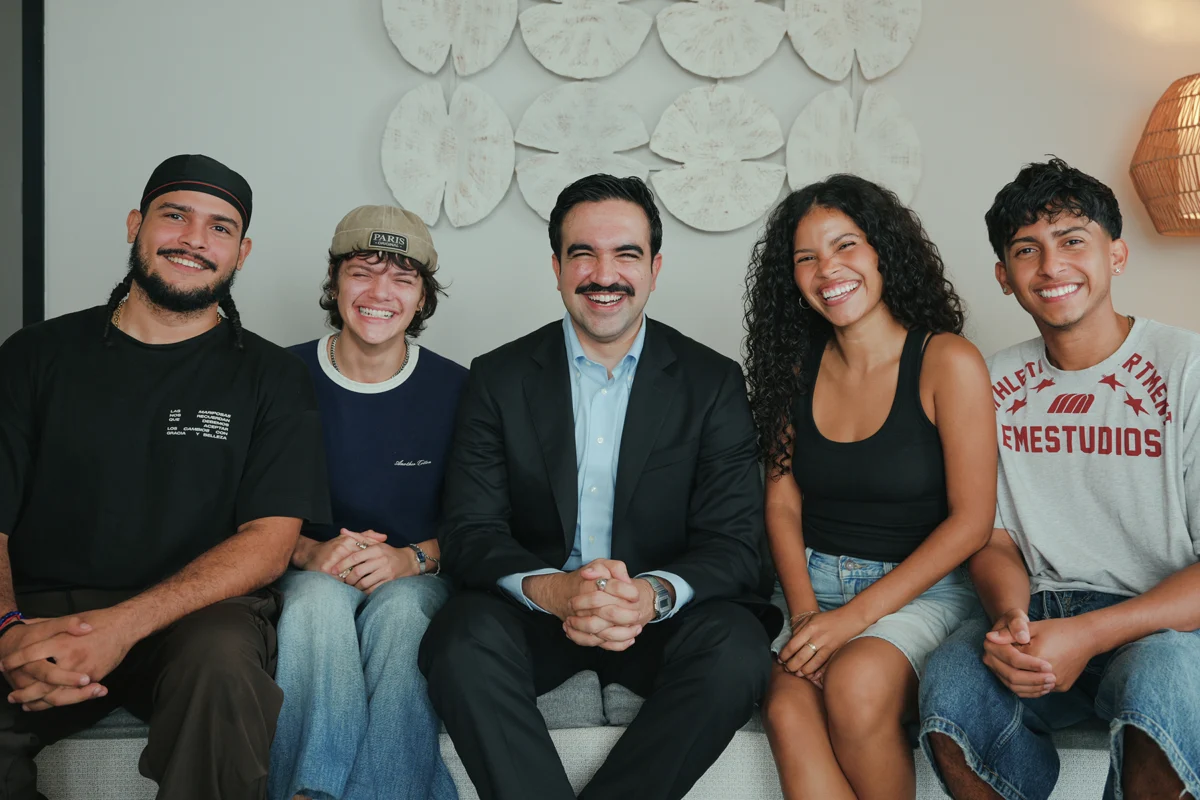
HangupsMusic.com – San Juan, A significant dialogue unfolded in San Juan on Friday, bringing together New York City Mayor Zohran Mamdani and the critically acclaimed Puerto Rican band Chuwi. This pivotal meeting, held against the backdrop of the annual Somos Conference, centered on the multifaceted challenges and future trajectory of Puerto Rico, highlighting the profound connections between the island and its expansive diaspora in New York City. Chuwi, a band comprising siblings Lorén, Willy, and Wester, alongside their close friend Adrián, has rapidly ascended to international recognition, not only through a high-profile collaboration with global superstar Bad Bunny and subsequent tour support but also as potent voices for social and political change on their home island.
Their debut album, Libertad, released just last month, serves as a poignant musical manifesto, fearlessly dissecting issues ranging from pervasive government corruption and the enduring economic and social ramifications of colonialist policies to the existential threats posed by unchecked development and gentrification. This commitment to using their platform for advocacy made them natural interlocutors for Mayor Mamdani, who sought to gain a deeper understanding of Puerto Rico’s current struggles directly from those deeply embedded in its cultural and activist fabric.
Mayor Mamdani’s visit to Puerto Rico was part of a broader itinerary aimed at engaging with local organizations and community leaders. Addressing Rolling Stone during his trip, he articulated his primary objective: "I look forward to listening to Puerto Ricans to hear about what the struggles are that they’re facing and how New York City can be a partner in fighting for working people wherever they may call home." This statement underscores a philosophy of solidarity and active partnership, extending beyond traditional jurisdictional boundaries.
The Somos Conference, a four-day gathering that annually convenes New York State lawmakers with Latino advocates in Puerto Rico, provided the perfect forum for such an exchange. Celebrating its 40th anniversary this year, the conference is designed to foster direct communication between those in positions of power and community representatives, ensuring that critical issues facing Latino communities receive direct attention. It is a long-standing tradition for the Mayor of New York City to attend, a tradition Mamdani upheld by returning for his second consecutive year. Having first visited days after his election, his return 10 months into his first term reflected a clear and focused agenda. His central aim revolved around fortifying the bonds between the Puerto Rican archipelago and the nearly 600,000 Puerto Ricans who call New York City home, tackling shared concerns that resonate across both geographies.
A prominent theme identified by Mayor Mamdani was the escalating crisis of displacement and gentrification. "What I’ve heard from Puerto Rican New Yorkers is a concern about displacement and gentrification, not only in the neighborhoods that they’ve helped to build in New York City, but also right here in Puerto Rico," he noted, articulating a shared vulnerability. Prior to his meeting with Chuwi, the mayor engaged with various activist groups dedicated to combating these very challenges. Organizations such as Defend Cabo Rojo, FURIA, La Tejedora, and PR No Se Vende ("Puerto Rico Is Not for Sale") are at the forefront of the battle against corporate land grabs and unsustainable development. However, the scheduled sit-down with Chuwi was deemed equally crucial, recognizing the band’s unparalleled ability to amplify these messages and galvanize public opinion through their compelling musical narratives.
Chuwi’s meteoric rise to prominence began with their collaboration on "WELTiTA" from Bad Bunny’s Grammy-winning album DeBÍ TiRAR MÁS FOToS, a track that cemented their place in the contemporary music landscape. Their subsequent role as the opening act for his extensive 59-date world tour exposed their unique sound and politically charged lyrics to a global audience. While their earlier EPs hinted at their protest music roots, Libertad marks their most direct and unflinching dive into political commentary, making it a powerful vehicle for the very issues Mayor Mamdani sought to understand.
The conversation commenced with Lorén sharing her experience of being in New York City shortly before the 2025 election, expressing her admiration for the palpable enthusiasm surrounding Mamdani’s campaign. She described it as deeply inspiring for her as a Puerto Rican. Mamdani, in turn, commended Chuwi’s artistry. "What you guys are doing is inspiring," he stated, praising their ability to disseminate crucial messages without sacrificing artistic integrity. He emphasized the unique privilege artists possess: "When you’re not at a desk, it’s easier to tell the truth." He highlighted how their music serves as a vital connection to home for many fans, even recalling Bad Bunny’s own admission that Chuwi’s music evoked homesickness during his time in Los Angeles before DtMF.
Willy seized the opportunity to inquire about the mayor’s impactful term thus far: "Why is it you can do these policies that other mayors couldn’t?" Mamdani responded with a reflection on the disconnect that often plagues elected officials. He described how leaders can become isolated from the communities they serve, often shielded by "tinted SUVs and private hotel rooms." To counteract this, he explained his intentional efforts to remain grounded, citing practices like biking around the city. He articulated a core belief: "Institutions change slower than people," and warned against the perils of complacency, stating, "The more you stay with the people the more you stay impatient. You have to keep [them] around you." This philosophy underscores his commitment to continuous engagement and responsiveness.
Chuwi then steered the conversation towards the pervasive skepticism citizens hold towards politicians, particularly in Puerto Rico, where cynicism has deepened after nearly two decades of economic hardship, exacerbated by the devastating impact of Hurricane María in 2017. Mamdani acknowledged this sentiment, attributing Puerto Ricans’ skepticism to their profound understanding of history. He recognized the chasm between political promises and public expectations. Pondering how to bridge this divide, he asserted that "inspiration" is a more potent force than "disillusionment," vowing to wake up each day "ready to fight" and to "use pressure in a productive way."
Addressing the often-heated nature of political discourse, Willy, familiar with criticism himself, asked how the mayor navigates "mud-slinging and negative rhetoric." Mamdani advocated for a nuanced approach, suggesting that harsh judgment of those who disagree often leads to a winner-loser dynamic, rather than productive dialogue. He stressed the importance of engaging with individuals beyond one’s immediate circle of comfort, fostering broader understanding.
Shifting gears, Mamdani inquired about Chuwi’s future plans. The band hinted at an upcoming major tour of their own, promising returns to cities they had previously visited. With a playful reminiscence, Mamdani shared his own past as an indie rapper, Mr. Cardamom. "I was the opener to the opener to the opener," he quipped, recalling early struggles. "I once performed at 5 p.m. for a band that was playing at 9 p.m. I was singing to the seat savers." He expressed his genuine delight at the prospect of Chuwi’s music reaching diverse countries, believing that "through that, others will hear and see their own struggles."
Lorén expressed her gratitude for the meeting, sharing a personal anecdote about her grandparents, who were part of the post-WWII migration wave to New York City and even married there. Mamdani underscored the indelible contributions of Puerto Ricans to New York’s history, particularly within organized labor movements, a point Lorén affirmed by mentioning her grandfather’s work in a city textile factory.
Willy concluded the meeting by extending thanks to Mayor Mamdani for his engagement with grassroots organizations in Puerto Rico. He passionately articulated the critical importance of their advocacy, which includes pushing for the abolition of Puerto Rico’s controversial tax haven status, safeguarding the vital coastal maritime-terrestrial zone, and halting large-scale developments like Esencia in Cabo Rojo and Moncayo in Fajardo that threaten the island’s precious habitats. He lamented the stark contrast with local politics, noting, "Politicians [in Puerto Rico] won’t meet with them unless it’s in a court room or public hearings."
Following the meeting, Chuwi shared their reflections with Rolling Stone, expressing profound inspiration from Mayor Mamdani’s words. "Being that he’s the mayor of New York, and New York has significant importance in Puerto Rico, it was super important to be able to discuss these matters with him," Wester stated. They also preemptively countered potential critics who might question Mamdani’s involvement in issues seemingly outside his direct jurisdiction. "My counterargument is that we’re a colony of the United States, and New York is – and has always been – extremely important in Puerto Rico. We’re linked," Wester asserted, adding, "The rest of the world is watching what’s happening here on the island, yet our own politicians aren’t addressing it. I think it’s fair game."
Adrián further clarified the distinction, emphasizing that Mamdani’s engagement should not be conflated with previous, more coercive external interventions. "It’s important to understand that this isn’t like the Financial Oversight Board," he explained. "Just because people from outside – rather than locals – are addressing these issues, it doesn’t mean they’re coming here to exert control or anything like that. People hear ‘the United States is coming here to do things in Puerto Rico’ and immediately think, ‘Oh, Junta de Control Fiscal.’ No, it’s not [necessarily] that. It’s about creating a dialogue between the two sides." As the meeting concluded and goodbyes were exchanged, Mayor Mamdani couldn’t resist one final question: whether Chuwi had a New York show on the horizon. The band’s response hinted at a swift reunion, suggesting that the dialogue, and indeed their shared journey, is far from over.
