
 By Azzam Bilal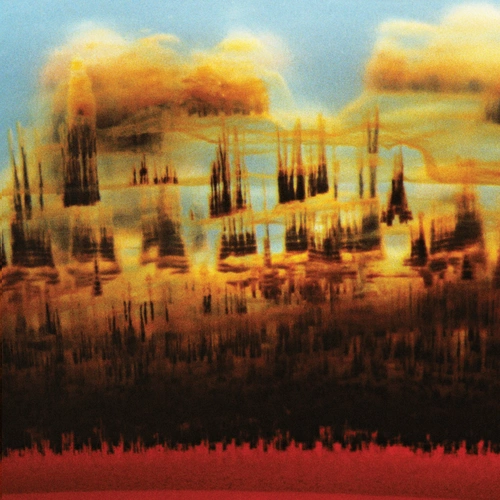
HangupsMusic.com – London, Simon Green, the visionary producer better known to the world as Bonobo, has long occupied a unique space in the firmament of electronic music. Emerging from the trip-hop and downtempo scenes of the early 2000s, Green has spent over two decades meticulously refining a sound that is as cinematic as it is intimate. With the release of his eighth studio album, Distance in Static, the artist finds himself at a precarious crossroads between his legacy as a pioneer of organic electronic music and the contemporary pressures of the modern dance floor. This latest offering is an ambitious, globe-spanning project that seeks to bridge the gap between disparate cultural traditions, yet it simultaneously struggles with the weight of its own polished production.
The trajectory of Bonobo’s career has been one of steady, calculated expansion. From the sample-heavy, dusty grooves of Animal Magic to the lush, orchestral arrangements of Black Sands and the nomadic, atmospheric textures of Migration, Green has consistently pushed the boundaries of what "electronic" music can represent. He has transitioned from a solitary bedroom producer into a bandleader capable of selling out the world’s most prestigious venues, including multi-night residencies at London’s Royal Albert Hall. Distance in Static arrives as the culmination of this journey, a record that aims to reflect the interconnectedness of a digital world while acknowledging the physical distances that still define our human experience.
The album’s greatest strength lies in its curation. Green has always had a keen ear for vocalists who can ground his ethereal compositions, and here he has assembled a truly international cast of collaborators. The guest list reads like a manifesto for a borderless musical future. By bringing together artists from vastly different cultural and sonic backgrounds, Bonobo attempts to create a "musical nirvana"—a space where the classical traditions of the Middle East can coexist with the indie sensibilities of modern London and the folk-inspired minimalism of Japan.
Among the standout contributions is that of Arooj Aftab, the Pakistani-born, Brooklyn-based singer who has recently garnered international acclaim for her haunting blend of Sufi poetry and jazz. Her presence on the album introduces a layer of Middle Eastern classicism that feels both ancient and profoundly contemporary. Similarly, the inclusion of Japanese artist Ichiko Aoba brings an idyllic, almost pastoral quality to the record. Aoba’s work is known for its delicate, dreamlike atmosphere, and under Green’s direction, her voice becomes a guiding light through the album’s more dense arrangements.
The geographical diversity of Distance in Static is not merely limited to its personnel; it is woven into the very fabric of the instrumentation. Green makes effective use of the Chinese guzheng, a traditional plucked zither, to provide a sharp, crystalline texture that contrasts with the warm synthesizers. Furthermore, the incorporation of vintage Iranian music samples adds a sense of historical weight, grounding the album in a lineage of sound that predates the advent of the drum machine. The lyrics themselves reflect this polyglot approach, featuring passages in English, Urdu, and Japanese, reinforcing the theme of a global village connected by shared emotional frequencies.
However, for all its conceptual brilliance and cultural ambition, Distance in Static is a record of significant internal tension. While the "distance" in the title suggests a thematic exploration of space and separation, the "static" may inadvertently describe the friction between Green’s organic instincts and his more formulaic electronic tendencies. There is a palpable sense that the producer is trying to satisfy two masters: the listener seeking a transcendental, world-music-infused journey and the listener looking for the functional, club-ready beats that have become a staple of his recent DJ sets.
This conflict is most apparent in tracks like "Cycles." On paper, the song is a masterclass in texture, featuring a shimmering musical bed that evokes the cyclical nature of time and movement. Yet, the track is anchored by a tech-house beat that feels strikingly conventional. Rather than elevating the intricate melodies, the percussion often feels like a "cookie-cutter" addition, a rhythmic safety net that prevents the song from truly taking flight. In his effort to make the music accessible to the festival circuit, Green occasionally sacrifices the subtlety that made his earlier work so compelling.
This issue persists in the collaboration with Joy Crookes, "Always on Your Side." Crookes possesses a sumptuous, soulful vocal line that carries the weight of classic jazz and R&B. It is a performance that demands a sophisticated, nuanced backdrop. Instead, the track leans into a style of trip-hop that feels uncomfortably close to the polished, inoffensive background music found in high-end retail advertisements. While the production is undeniably professional, it lacks the grit or the unexpected turns that would have allowed Crookes’ performance to truly resonate. It is a beautiful song, certainly, but one that feels somewhat sanitized.
The critique of "leaden beats" is perhaps the most significant hurdle for Distance in Static. Throughout his career, Bonobo has been praised for his ability to make electronic percussion feel human—swinging, swaying, and breathing alongside live instruments. In this latest outing, however, there are moments where the drums feel curiously detached from the emotional core of the music. The heavy-handedness of the electronic production occasionally threatens to overshadow the very artists Green has invited to the party. When Nicole Miglis of Hundred Waters lends her ethereal vocals to the mix, or when Nilüfer Yanya brings her gritty, London-indie edge to a track, there is a desire to hear those elements breathe without the intrusion of a standard four-on-the-floor pulse.
Despite these criticisms, it is impossible to ignore the sheer craft on display. Simon Green remains a master of his equipment, and his ability to weave disparate elements into a cohesive whole is still leagues ahead of most of his peers. The way he integrates the guzheng with sub-bass, or the way he layers Aftab’s vocals over a bed of ambient textures, is a testament to his technical prowess. There is a sense of "utopian" dreaming in this record—an attempt to imagine a world where geographical and cultural barriers are dissolved through the medium of sound.
The album also serves as a reflection of the current state of the "global" electronic scene. As genres become increasingly hybridized and artists from all corners of the world become accessible via a single click, the role of the producer-curator has never been more important. Bonobo is not merely making "beats"; he is acting as a bridge-builder. In this regard, Distance in Static is a noble effort. It introduces listeners to sounds and languages they might not otherwise encounter, and it does so with a deep respect for the source material.
Ultimately, the listener’s appreciation of Distance in Static will likely depend on their tolerance for the intersection of world music and modern house production. For those who have followed Bonobo’s transition into a major-stage electronic act, the album will feel like a natural and sophisticated evolution. For those who pine for the more experimental and understated days of Dial ‘M’ for Monkey, the record may feel a bit too polished, its rougher edges smoothed away by the demands of contemporary fidelity.
In the final analysis, Distance in Static is a beautiful, if flawed, monument to the idea of global connectivity. It succeeds as a showcase for incredible vocal talent and as a testament to Green’s ability to source and integrate diverse musical traditions. While the production choices occasionally feel like a weight around the neck of these delicate compositions, the ambition of the project is undeniable. Bonobo has built a magnificent global village; even if some of the architectural choices feel a bit too commercial, the inhabitants and the stories they tell remain well worth the visit. It is a record that celebrates the world in all its complexity, even as it struggles to find its own rhythmic identity within it.
