
 By admin
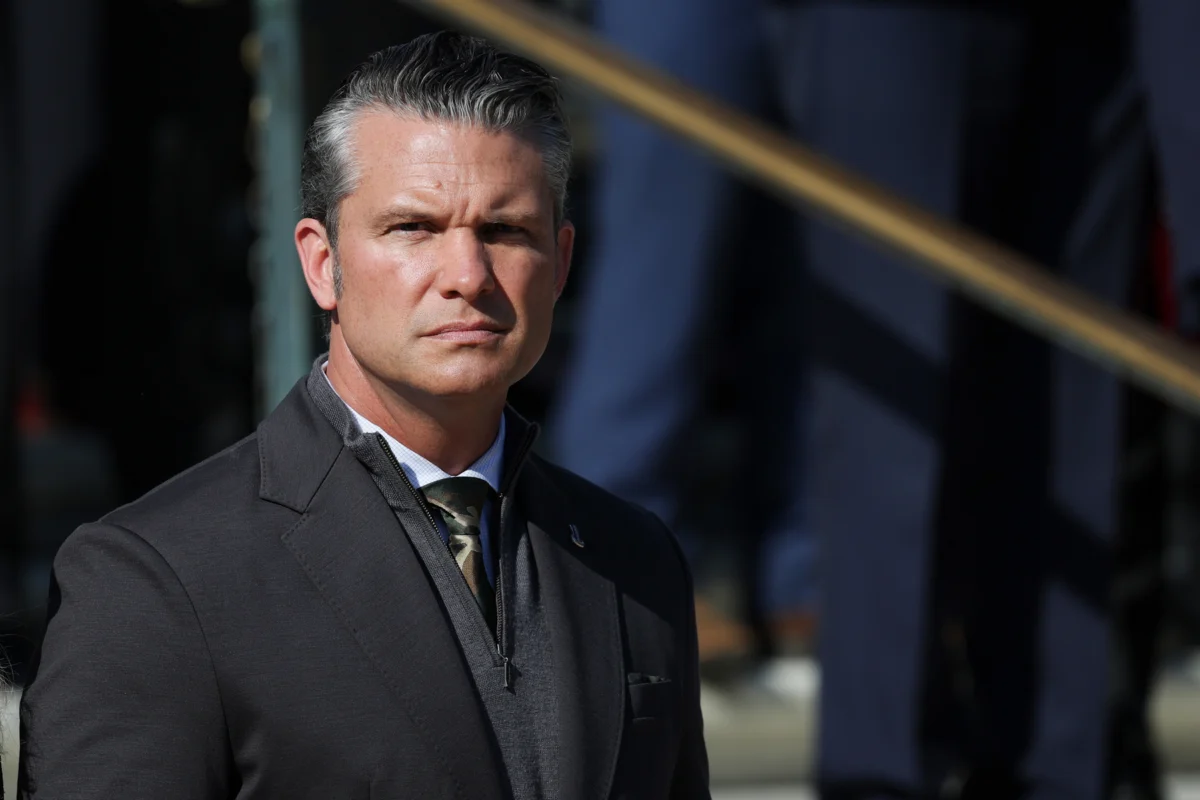
HangupsMusic.com – The solemnity of Veterans Day, a time dedicated to honoring the profound sacrifices of military personnel, was momentarily disrupted this year at one of America’s most revered sites: the Tomb of the Unknown Soldier at Arlington National Cemetery. A high-profile delegation, including Secretary of the Pentagon Pete Hegseth, found itself on the receiving end of a public reprimand from a U.S. Army sentinel, whose stern words echoed across the hallowed grounds. The incident, captured on video and widely circulated, immediately ignited discussions concerning appropriate conduct at national monuments and the weighty responsibilities of public figures.
Veterans Day, observed annually on November 11th, transcends a mere federal holiday; it is a profound national observance dedicated to expressing gratitude for all those who have served in the United States Armed Forces. Across the nation, ceremonies, parades, and moments of quiet reflection mark the day, reminding citizens of the cost of freedom and the enduring courage of military men and women. At the heart of many of these commemorations lies Arlington National Cemetery, a sprawling, sacred landscape just across the Potomac River from Washington D.C. More than just a burial ground, Arlington stands as a poignant testament to American history and sacrifice, its verdant hills dotted with countless white headstones, each marking a life dedicated to service. From heroes of the Civil War to those lost in recent conflicts, Arlington is the final resting place for over 400,000 veterans and their eligible dependents, making it an unparalleled symbol of national remembrance and reverence. Its serene beauty belies the immense emotional weight it carries for families and the nation alike.
Within Arlington’s hallowed expanse, the Tomb of the Unknown Soldier holds a singular, paramount significance. This monument symbolizes the sacrifice of all unknown American service members who have fallen in battle, a poignant acknowledgment that countless heroes gave their lives without their identities ever being recovered. The initial interment occurred on November 11, 1921, when an unknown soldier from World War I was laid to rest, having been carefully selected from four unidentified remains from French battlefields. This act established a tradition, later extended to include unknown soldiers from World War II, the Korean War, and, until its disinterment in 1998, the Vietnam War. Each interment was a moment of national mourning and unity, cementing the tomb’s status as a spiritual heart for a nation’s gratitude and grief.
The unwavering guardianship of the Tomb is a cornerstone of its sanctity. Since 1948, soldiers from the elite 3rd U.S. Infantry Regiment, known as "The Old Guard," have maintained a continuous vigil, 24 hours a day, 365 days a year, regardless of weather conditions or national events. These sentinels are not merely guards; they are meticulously trained, highly disciplined individuals who undergo an exceptionally rigorous selection and training process. Their movements are precise, their uniforms immaculate, and their dedication absolute. Each sentinel commits to a demanding routine, performing a ceremonial walk with impeccable timing and solemnity. The changing of the guard, a captivating and moving ritual that occurs every half-hour during daylight and hourly at night, draws silent crowds, all bearing witness to this unbroken chain of honor. The rules governing visitor conduct at the Tomb are explicitly clear and universally understood: an atmosphere of absolute silence and profound respect must be maintained at all times, reflecting the gravity of the sacrifices it represents.
It was against this backdrop of solemn tradition and national reverence that Secretary of the Pentagon Pete Hegseth, accompanied by his wife Jennifer Hegseth, Chief of Staff Ricky Buria, Deputy Chief of Staff Patrick Weaver, and Senior Adviser Tami Radabaugh, arrived at the Tomb following a Veterans Day ceremony. Hegseth, a decorated veteran himself and a prominent public figure whose recent political battles had drawn considerable attention, was expected to embody the very decorum the site demands. Only the preceding day, Hegseth had been in a celebratory mood after the House of Representatives effectively derailed an impeachment effort against him, an outcome he reportedly discussed with former President Donald Trump. However, the atmosphere shifted dramatically on Wednesday afternoon as CNN aired footage, sourced from CSPAN, that swiftly became a focal point of national discussion.
The video depicted Hegseth and his entourage positioned near the sacred burial site. Following a period where photographs were being taken, distinct laughter could be heard emanating from the group. Almost instantaneously, the calm of the moment was shattered by the sharp, authoritative voice of the sentinel on duty. "All visitors will maintain an atmosphere of silence and respect at all times!" the sentinel commanded, his voice cutting through the air with an unmistakable gravity. The reprimand was delivered with military precision, reflecting the sentinel’s unwavering commitment to his duty and the sanctity of the Tomb. The group, visibly chastened, then proceeded up the steps leading away from the memorial, the laughter having ceased abruptly. The incident quickly circulated across social media platforms and news outlets, drawing immediate and widespread commentary.
The footage provoked a swift and often critical public response. Many viewers expressed dismay that high-ranking government officials would demonstrate such a perceived lack of reverence at a site of profound national significance, particularly on Veterans Day. Critics highlighted the stark contrast between the sentinel’s unwavering discipline and the group’s momentary lapse in decorum, arguing that those entrusted with national leadership should set an example of impeccable respect for military sacrifice. Social media was awash with comments condemning the behavior and praising the sentinel for upholding the sacred protocols. The incident became a touchstone for broader discussions about respect for institutions, military service, and the conduct expected of public servants. For a nation that holds its veterans and their memorials in such high esteem, the visual of a high-ranking official’s group being publicly admonished struck a dissonant chord.
The Veterans Day incident unfolded just hours after a significant political victory for Secretary Hegseth. On Tuesday night, efforts to impeach him were successfully blocked in the House of Representatives. Republican lawmakers, facing articles of impeachment filed by Rep. Thomas Massie (R-Ky.), voted to send the resolution to committee, a procedural move that effectively halted the impeachment process. The articles of impeachment leveled serious accusations against Hegseth, including alleged violations of the War Powers Agreement of 1973, a critical piece of legislation designed to limit the President’s power to commit the United States to armed conflict without the consent of Congress. Furthermore, the charges included failing to minimize civilian casualties in military operations and conducting extrajudicial killings, allegations that, if proven, would represent grave breaches of international law and ethical conduct. The swift action by the Republican majority to table or committee the resolution underscored the deep partisan divides within Washington and the high stakes involved in Hegseth’s continued tenure at the Pentagon. This political backdrop provided a complex layer to the subsequent incident at Arlington, with some commentators drawing connections between the perceived celebratory mood following the impeachment block and the subsequent lapse in judgment at the memorial.
In the aftermath of the viral video, the Pentagon issued an official statement addressing the incident. Sean Parnell, the chief Pentagon spokesman, provided a carefully worded response to Rolling Stone, asserting the department’s unwavering commitment to honoring military sacrifices. "The secretary and the entire department have always honored – and will always honor – the sacrifices our military men and women have made to keep America safe," Parnell stated. He then acknowledged the incident itself, framing it as a necessary correction: "While commemorating this solemn day, a soldier correctly and respectfully reminded everyone to maintain decorum." The statement sought to reaffirm the Pentagon’s respect for military service while subtly validating the sentinel’s actions without explicitly apologizing for the group’s behavior.
The incident at the Tomb of the Unknown Soldier serves as a potent reminder of the profound reverence due to sites of national memory and sacrifice. It underscored the unyielding dedication of those who guard these sacred spaces and the expectation that all visitors, regardless of their position or status, adhere to the solemn atmosphere. For Secretary Hegseth and his team, what began as a moment of remembrance and political reprieve quickly transformed into a public lesson in humility and the enduring power of respect for those who have given their all. The event, though brief, resonated deeply, emphasizing that some traditions and solemnities transcend political victories or personal celebrations, demanding an unbroken chain of silence and honor.
